


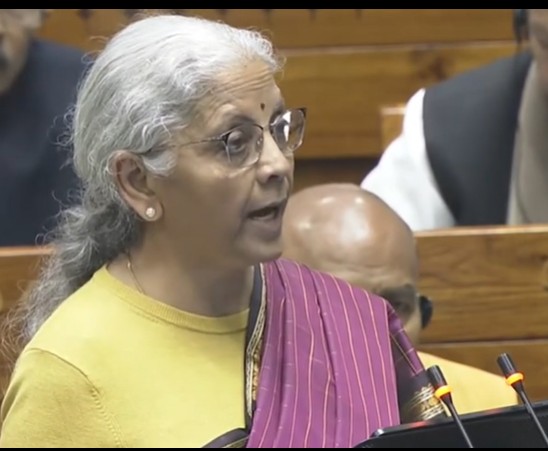
Feb 1: India’s infrastructure story received a strong acceleration in Union Budget 2026, as Finance Minister Nirmala Sitharaman announced a sharp increase in capital expenditure (capex) to ₹12.2 lakh crore, reinforcing the government’s commitment to long-term economic growth and improved connectivity.
The infrastructure-led growth strategy focuses on modern transport systems, logistics efficiency, and multimodal connectivity, positioning infrastructure as a key driver of employment, productivity, and regional development.
Capex Raised to ₹12.2 Lakh Crore to Fuel Economic Expansion
The enhanced capital expenditure allocation marks one of the highest infrastructure investments in India’s history. The increased capex is expected to stimulate demand across core sectors such as steel, cement, construction, and engineering, while also strengthening public infrastructure across urban and rural regions.
This sustained investment signals policy continuity and long-term planning, providing confidence to private investors and infrastructure developers.
Seven High-Speed Rail Corridors to Transform Inter-City Travel
To modernise passenger transport, seven new high-speed rail corridors have been proposed to improve connectivity between major cities. These corridors aim to significantly reduce travel time, promote regional integration, and support economic activity along key growth routes.
The expansion of high-speed rail is also expected to support urban development, tourism, and employment generation while reducing congestion on existing rail networks.
20 New National Waterways to Strengthen Inland Water Transport
In a major push toward cost-effective and sustainable logistics, the government announced the operationalisation of 20 new national waterways. Inland water transport offers a lower-carbon and economical alternative to road and rail, helping reduce logistics costs for industries and agricultural producers.
The waterways initiative will improve freight movement, enhance last-mile connectivity, and support the development of river-based economic clusters.
Dedicated Freight Corridor from Dankuni to Surat Announced
To ease freight congestion and boost logistics efficiency, a dedicated freight corridor (DFC) from Dankuni in West Bengal to Surat in Gujarat has been announced. This corridor will strengthen east–west connectivity, improve port linkages, and support faster movement of goods across industrial hubs.
The new DFC is expected to enhance supply chain resilience, reduce transit time, and lower transportation costs for exporters and manufacturers.
Driving Growth Through Connectivity
The infrastructure and connectivity announcements in Budget 2026 underline the government’s belief that world-class infrastructure is central to India’s growth ambitions. By combining higher capex with modern transport solutions and multimodal logistics, the budget lays the groundwork for faster, more inclusive, and sustainable economic development.
Conclusion
With a ₹12.2 lakh crore capex allocation, new high-speed rail corridors, expanded inland waterways, and a strategic freight corridor, Budget 2026 places infrastructure at the heart of India’s growth strategy. These initiatives are set to strengthen connectivity, improve logistics efficiency, and unlock new economic opportunities across regions.