


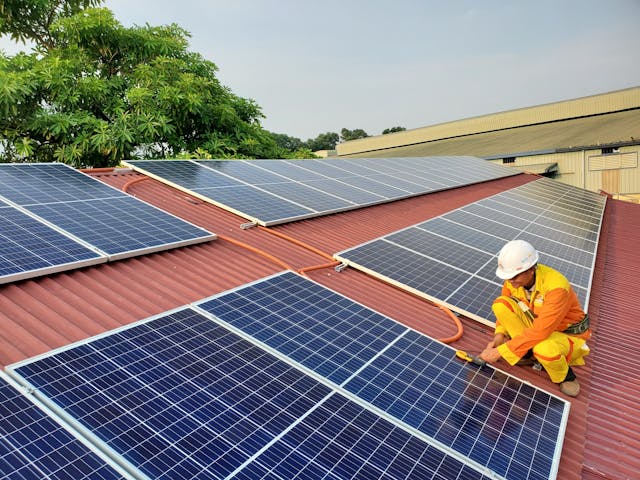
India’s energy landscape is quietly but decisively changing. Long dominated by coal-based power, the country’s electricity mix is now tilting toward renewables at an accelerating pace. With clean energy capacity additions gathering momentum, experts expect the share of thermal power in India’s generation mix to fall below 70 per cent in the coming years—a milestone that signals a structural transition rather than a short-term trend.
Renewables Pick Up Speed
India’s renewable energy push is entering a high-growth phase. Industry estimates suggest annual capacity additions are likely to remain in the 40–45 gigawatt (GW) range, keeping the country firmly on track to achieve its ambitious target of 500 GW of non-fossil fuel capacity by 2030.
So far this year, renewable installations have progressed steadily, supported by a strong project pipeline and sustained investor interest. The pace of execution reflects growing confidence in India’s clean energy ecosystem, underpinned by supportive policy frameworks and improving project economics.
Old Bottlenecks Begin to Fade
According to industry experts, several long-standing hurdles that once slowed renewable adoption are easing. Land acquisition and financing, traditionally seen as major roadblocks, are no longer as restrictive as they once were.
Government initiatives such as solar parks, hybrid renewable projects, and land aggregation programmes have streamlined project development. At the same time, capital availability has improved markedly, with both domestic and global investors willing to fund renewable assets backed by long-term contracts.
Transmission Emerges as the Next Constraint
As renewable generation expands, attention is shifting to infrastructure readiness—particularly grid connectivity and transmission capacity. In many instances, generation capacity is being commissioned faster than transmission networks can be completed, creating bottlenecks in power evacuation.
This imbalance has already begun to affect certain regions, highlighting the need for faster development of both inter-state and intra-state transmission systems to support the next phase of growth.
The Intermittency Challenge
With solar and wind accounting for a growing share of electricity generation, intermittency is emerging as a key operational challenge. Power generation from renewables varies with weather conditions, making grid management more complex.
Industry analysts note that curtailment of renewable power has already been observed in states with high solar and wind capacity, such as Rajasthan and Gujarat. These issues largely stem from gaps between available generation capacity and transmission readiness, as well as temporary grid access constraints.
Looking ahead, renewables are expected to contribute 35–40 per cent of India’s total power generation within the next four to five years, making grid stability and flexibility increasingly critical.
Energy Storage Moves to Centre Stage
Energy storage is quickly becoming a cornerstone of India’s renewable strategy. Falling battery prices have boosted participation in standalone battery storage tenders, with tariffs turning increasingly competitive.
While pumped storage projects involve longer gestation periods, both battery and pumped storage solutions are expected to play a vital role in managing intermittency and ensuring reliable power supply as renewable penetration rises.
Thermal Power Feels the Pressure
Recent demand trends underline the evolving dynamics of India’s power sector. Power demand softened during periods of unseasonal weather, reducing the need for cooling and impacting thermal generation. Plant load factors at coal-based stations came under pressure, even as thermal power continued to supply the bulk of electricity.
Despite these short-term fluctuations, thermal power still accounts for around 70 per cent of India’s energy mix. However, as renewable capacity continues to expand and storage solutions mature, this share is expected to gradually decline.
Why Investors Still Favour Renewables
Renewable energy projects typically offer lower headline returns compared to fossil fuel-based assets. Yet, investor appetite remains strong. The appeal lies in predictable, long-term cash flows secured through power purchase agreements (PPAs), which suit the risk profiles of institutional investors such as pension funds and sovereign wealth funds.
In contrast, fossil fuel investments face rising regulatory uncertainty, carbon pricing risks, and the threat of asset stranding, prompting investors to reassess long-term exposure.
A Defining Decade for India’s Energy Transition
India’s renewable energy journey is entering a defining phase. While challenges around transmission infrastructure and storage deployment remain, the overall direction is clear. Strong policy backing, improving economics, and sustained capital inflows are reshaping the country’s power sector.
As renewables gain scale and thermal power gradually recedes, India is moving toward a cleaner, more resilient, and future-ready energy system—one that balances growth, energy security, and sustainability.