


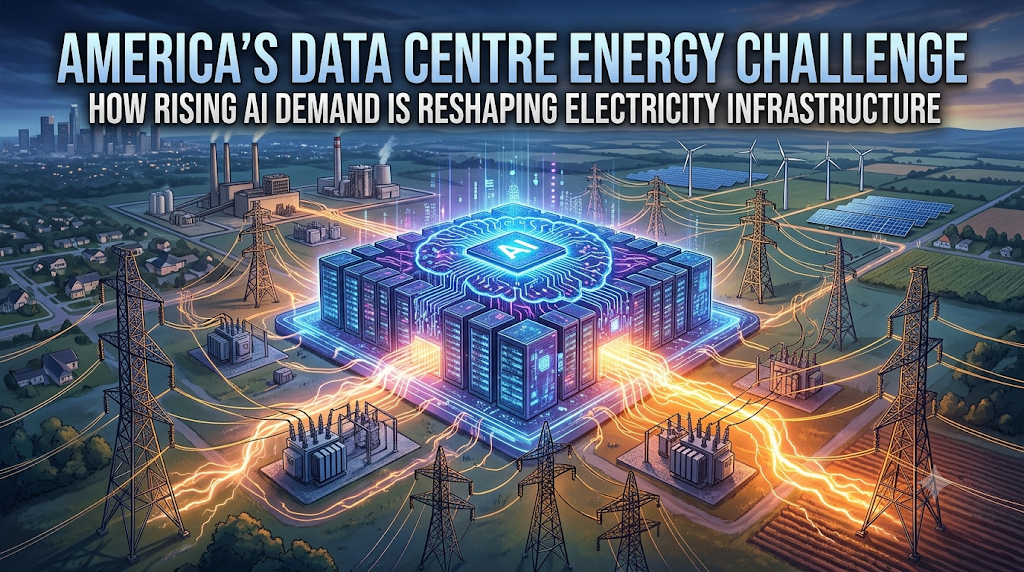
US data centre energy demand is rising rapidly as artificial intelligence (AI), cloud computing and digital services expand across the country, creating new challenges and business opportunities for America’s energy sector. Technology companies are investing heavily in large-scale data centres, advanced computing systems and AI infrastructure, increasing the need for reliable and affordable electricity. This growing demand is putting pressure on existing power grids and encouraging utilities, energy producers and infrastructure developers to accelerate investment in electricity generation, transmission networks and energy storage.
The changing energy landscape is also creating a new business opportunity beyond the technology industry. Natural gas, renewable energy, battery storage and nuclear power are gaining attention as potential solutions to meet the electricity requirements of data centres. For businesses and investors, this shift is opening opportunities across power generation, electrical equipment, engineering, construction and energy management.
How AI Is Increasing US Data Centre Energy Consumption
The rapid adoption of artificial intelligence is transforming electricity consumption across the United States. Training advanced AI models, processing large datasets and running generative AI applications require powerful computing systems that operate continuously.
As technology companies expand their digital infrastructure, data centres are becoming increasingly electricity-intensive facilities. Their operations depend on high-performance servers, specialised cooling systems and reliable power distribution networks.
Unlike many conventional commercial buildings, data centres cannot easily interrupt their electricity consumption during peak demand. Any disruption can affect computing operations, cloud services and customer-facing digital platforms.
Consequently, access to dependable electricity is becoming a major consideration for companies planning new data centre investments. Locations with sufficient power capacity and reliable grid connections are gaining importance in corporate expansion strategies.
US Power Grid Modernisation Creates Investment Opportunities
The increasing demand for data centre electricity is exposing limitations in parts of America’s existing power infrastructure. Ageing transmission networks, limited grid capacity and lengthy approval processes can delay new infrastructure projects.
To accommodate growing electricity requirements, utilities must invest in transmission lines, substations, transformers and modern distribution systems. These upgrades are creating opportunities for electrical equipment manufacturers, engineering companies and infrastructure contractors.
Businesses specialising in smart grids, automated power management and electricity monitoring systems can also benefit from the modernisation cycle.
For investors, grid infrastructure is becoming an important part of the AI growth story because the expansion of digital services depends on the availability of reliable electricity.
Natural Gas Generation Supports Data Centre Power Requirements
Natural gas is attracting attention as a practical option for meeting immediate electricity requirements. Gas-fired power plants can provide dispatchable electricity, helping data centres maintain operations when demand increases or renewable generation fluctuates.
Some data centre developers are also considering on-site natural gas power generation to reduce dependence on constrained local electricity networks.
This trend is creating opportunities for gas producers, turbine manufacturers, power equipment suppliers and engineering companies.
However, natural gas also presents commercial and environmental challenges. Fuel price volatility, carbon emissions and infrastructure costs must be considered when evaluating long-term energy investments.
As a result, natural gas is likely to remain one component of a broader electricity strategy rather than a complete solution to America’s growing data centre energy requirements.
Renewable Energy and Battery Storage Are Gaining Momentum
Renewable energy is becoming increasingly important as technology companies look for ways to secure electricity while meeting sustainability commitments.
Solar and wind power projects are attracting corporate interest through long-term electricity purchasing agreements. These arrangements can provide renewable energy developers with more predictable demand and support investment in new generation capacity.
However, renewable electricity production varies depending on weather conditions and the time of day. Data centres require continuous power, making energy storage an important part of the solution.
Battery storage systems can help balance electricity supply, support renewable energy integration and provide backup power during periods of grid pressure.
This is creating business opportunities for battery manufacturers, energy storage developers and companies offering advanced energy management technologies.
Nuclear Energy Investment Gains Attention in the United States
Nuclear power is receiving renewed attention as the United States searches for reliable, low-carbon electricity to support the expansion of AI infrastructure.
Nuclear facilities can generate electricity continuously, making them attractive to data centre operators seeking stable long-term power supplies. Technology companies are exploring partnerships and electricity agreements with nuclear energy providers to secure future capacity.
Small modular reactors (SMRs) are another emerging area of interest. These systems are being developed as potentially more flexible nuclear power solutions, although commercial deployment still faces regulatory, financing and technological challenges.
The growing interest in nuclear energy could create opportunities for engineering firms, specialised manufacturers and infrastructure developers. However, high construction costs and lengthy approval processes mean that nuclear power is primarily a longer-term investment opportunity.
Rising Electricity Costs and Regulatory Challenges
Increasing US data centre energy demand is also raising concerns about electricity affordability and infrastructure costs. Utilities may need substantial investment to expand generation and transmission capacity, creating questions about how these expenses should be distributed.
Residential consumers and smaller businesses are concerned that infrastructure upgrades could contribute to higher electricity bills if large industrial users do not bear an appropriate share of the costs.
For data centre operators, rising electricity prices can directly affect operating expenses and profitability. Access to affordable power is therefore becoming an important factor in determining the commercial viability of new projects.
Regulators must balance the economic benefits of attracting technology investments with the need to protect electricity consumers and maintain reliable power networks.
Business Opportunities in America’s Data Centre Energy Market
The expansion of AI infrastructure is creating opportunities across several interconnected industries.
-
Electrical equipment: Manufacturers of transformers, cables, switchgear and power distribution systems can benefit from increased infrastructure spending.
-
Engineering and construction: New data centres, power plants and transmission projects are generating demand for specialised contractors.
-
Renewable energy: Solar and wind developers can secure new commercial opportunities through corporate electricity agreements.
-
Battery storage: Energy storage companies can help data centre operators improve power reliability and manage electricity consumption.
-
Power generation: Natural gas and nuclear energy developers may benefit from growing demand for dependable electricity.
-
Energy technology: Companies providing smart grid software, automation, cybersecurity and energy monitoring solutions can support infrastructure modernisation.
Small and medium-sized businesses can also benefit by supplying equipment, providing maintenance services and participating in larger infrastructure supply chains. Companies with specialised technical capabilities and reliable delivery systems may find opportunities as utilities and data centre developers expand their operations.
The Future of US Data Centre Energy Infrastructure
The rapid expansion of artificial intelligence is making electricity availability a strategic business priority in the United States. Growing US data centre energy demand is encouraging investment in power generation, grid modernisation and alternative energy solutions, while creating opportunities for companies across the wider infrastructure ecosystem.
For businesses and investors, the next phase of growth will extend beyond data centre construction and computing technology. Energy producers, electrical equipment manufacturers, engineering firms and storage technology providers will play an increasingly important role in supporting America’s digital expansion.
Ultimately, the competitiveness of the US AI industry will depend not only on advanced computing capabilities but also on access to reliable, affordable and sustainable electricity. Companies that can deliver efficient energy solutions and help modernise existing infrastructure will be well positioned to benefit from this emerging investment cycle.