


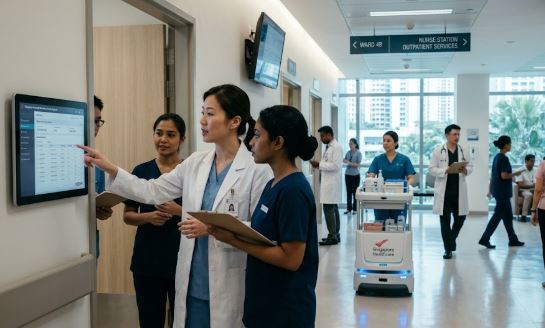
Singapore’s healthcare industry is entering a new phase of growth as hospitals, medical centres and healthcare companies increasingly adopt technology to improve services and manage rising operating costs. An ageing population, growing demand for medical care and pressure on healthcare professionals are encouraging businesses to rethink traditional healthcare delivery.
From artificial intelligence (AI) and medical robotics to digital health platforms and remote patient monitoring, technology is changing how healthcare organisations operate. These developments are not just improving patient experiences; they are also opening new revenue opportunities, supporting business expansion and creating demand for specialised technology services.
For healthcare companies, the focus is gradually shifting towards delivering better outcomes while controlling costs, improving productivity and making services more accessible.
AI Is Helping Healthcare Businesses Work Smarter
Managing patient records, preparing medical reports and handling routine documentation can take up a significant amount of time for healthcare professionals. AI-powered tools are helping reduce some of this workload by assisting with clinical documentation, summarising patient information and organising administrative tasks.
Singapore’s healthcare institutions are exploring generative AI applications to make everyday processes more efficient. By reducing repetitive paperwork, these solutions can give doctors and nurses more time to concentrate on patient care.
AI is also creating opportunities in medical diagnostics. Advanced imaging systems can help specialists examine scans and identify areas that may need further investigation. This can support faster reviews and improve workflow efficiency, although final clinical decisions remain with qualified medical professionals.
For businesses, the growing use of AI creates demand for healthcare software, medical data analysis, workflow automation and specialised technology integration services. Startups that develop practical solutions for hospitals, clinics and diagnostic centres could find opportunities in this expanding market.
Smart Hospitals Are Reducing Operational Pressure
Running a hospital involves much more than treating patients. Healthcare administrators must manage beds, staff schedules, admissions, medical equipment and the movement of supplies. Delays in any of these areas can increase costs and affect the quality of service.
Smart hospital technologies are helping organisations manage these responsibilities more effectively. Digital command centres can provide real-time information about patient movement, bed availability and hospital operations, allowing administrators to identify bottlenecks and respond quickly.
Robotics and automated systems are also supporting hospital operations. They can assist with material handling, internal logistics and selected routine activities, reducing the amount of manual work required from hospital staff.
For healthcare businesses, these technologies offer a clear operational advantage. Better resource management can help reduce unnecessary delays, improve staff productivity and make existing infrastructure more efficient. Companies offering hospital automation, robotics and integrated management systems can benefit from the growing demand for smarter healthcare facilities.
Preventive Healthcare Is Creating a Growing Market
Healthcare businesses are increasingly recognising that long-term growth does not depend only on treating patients after they become ill. Preventive care, regular health monitoring and early intervention are becoming important parts of modern healthcare services.
Singapore’s Healthier SG initiative supports this shift by encouraging residents to take greater responsibility for their health through regular screenings, preventive care and stronger connections with primary healthcare providers.
Technology is helping businesses support this approach. Wearable devices, remote monitoring platforms and digital health applications allow patients to track selected health indicators and share relevant information with healthcare professionals.
This creates opportunities for companies operating in digital wellness, remote patient monitoring, health analytics and personalised healthcare services. Clinics and healthcare providers can also use these solutions to maintain better communication with patients and support ongoing care beyond traditional hospital visits.
For startups, preventive healthcare offers scope to build subscription-based platforms, monitoring services and digital solutions that support patients over longer periods.
Digital Health Records Are Driving Demand for Secure Technology
As patients receive treatment from multiple healthcare providers, access to accurate medical information becomes increasingly important. Digital health records help authorised professionals access relevant patient information, reducing information gaps and supporting better coordination.
Singapore’s National Electronic Health Record (NEHR) plays an important role in connecting healthcare providers through shared patient information. The wider adoption of digital health systems is encouraging hospitals, clinics and technology companies to invest in secure data infrastructure.
However, the growth of digital healthcare also increases the responsibility to protect sensitive medical information. Healthcare organisations need reliable cybersecurity systems, secure cloud infrastructure and effective data management practices.
This is creating business opportunities for technology providers specialising in healthcare cybersecurity, cloud services, data integration and compliance support. Small and medium-sized technology firms can also participate by helping healthcare providers upgrade existing systems and connect different digital platforms.
Where Businesses Can Find New Opportunities
Singapore’s healthcare technology market offers opportunities across several business segments.
-
AI and healthcare software: Companies can develop solutions for medical documentation, patient management, diagnostic support and administrative automation.
-
Medical robotics: Businesses can explore automation for hospital logistics, specialised medical procedures and routine operational activities.
-
Digital health platforms: Telehealth, appointment management and remote monitoring services can help healthcare providers reach and support more patients.
-
Cybersecurity services: Growing dependence on digital records is increasing the need for data protection, secure networks and healthcare-focused security solutions.
-
Preventive healthcare: Wearable technology, digital wellness applications and health monitoring services offer opportunities in the expanding preventive care market.
-
Healthcare data management: Businesses can provide system integration, cloud infrastructure and analytics services to hospitals and medical centres.
These opportunities are not restricted to large corporations. Startups and SMEs can enter the market by focusing on specific healthcare challenges, developing specialised products or partnering with established medical institutions.
Investment Decisions Must Focus on Practical Returns
Although healthcare technology offers significant growth potential, businesses must look beyond the excitement surrounding new innovations. Implementing AI systems, robotics and digital infrastructure requires investment in software, equipment, cybersecurity and employee training.
Healthcare providers need to evaluate whether a technology can reduce administrative expenses, improve staff productivity, increase service capacity or enhance patient engagement. Solutions that are difficult to use or cannot integrate with existing systems may create additional costs rather than deliver meaningful benefits.
Data privacy and patient safety are equally important. AI applications must be appropriately evaluated, while sensitive medical information needs strong protection. Healthcare companies must also ensure that technology supports qualified professionals instead of replacing essential clinical judgement.
For technology startups, understanding healthcare regulations and building trust with medical institutions will be important for securing long-term business relationships.
Singapore’s Healthcare Transformation Offers Long-Term Business Potential
Technology is becoming an important driver of growth and competitiveness in Singapore’s healthcare industry. Hospitals are looking for smarter ways to manage operations, clinics are exploring digital patient services, and technology companies are developing solutions to address the changing needs of healthcare providers.
The biggest opportunities will come from technologies that solve real business problems. AI tools that reduce paperwork, digital platforms that improve patient access and secure systems that connect healthcare providers can deliver practical value across the sector.
As Singapore continues to strengthen its healthcare infrastructure, businesses that combine technological innovation with reliability, affordability and patient-focused services will be well positioned to participate in the industry’s next phase of growth.