


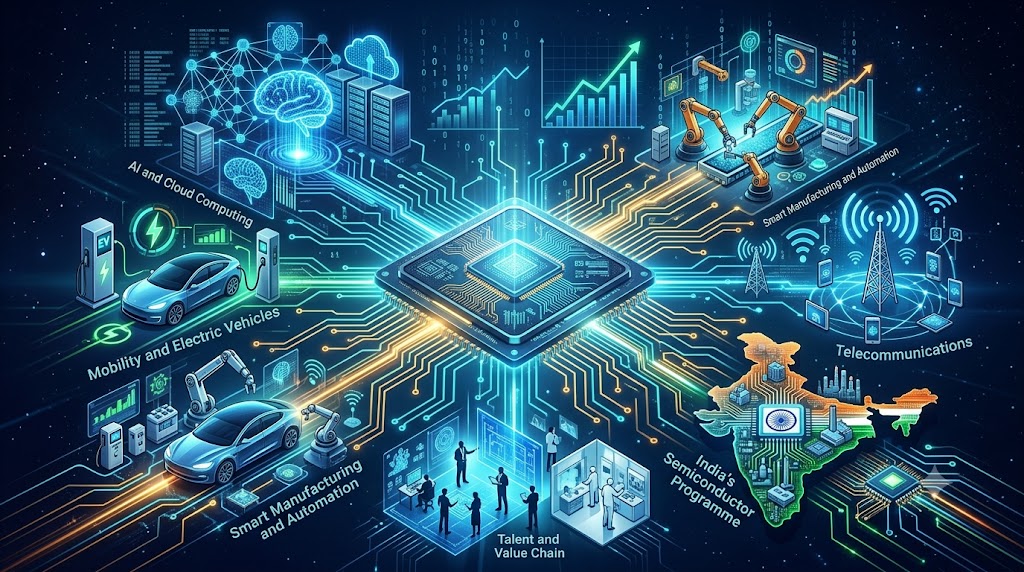
Semiconductor innovation is becoming a major force behind technological progress and business transformation. From artificial intelligence (AI) and cloud computing to electric vehicles, telecommunications and smart manufacturing, advanced chips are helping businesses develop smarter products, improve operational efficiency and compete in an increasingly digital economy.
As industries embrace automation and data-driven operations, semiconductors have evolved from electronic components into strategic assets. Their performance influences everything from the speed of AI applications to the energy efficiency of electric vehicles and the reliability of industrial equipment.
The scale of this transformation is reflected in the global semiconductor market, which recorded sales of approximately $795.6 billion in 2025. Growing investment in AI infrastructure, data centres, connected devices and advanced computing is creating fresh opportunities for chip designers, manufacturers, equipment suppliers and technology businesses.
AI Innovation Accelerates Demand for Advanced Chips
Artificial intelligence is reshaping business operations, customer experiences and product development. Behind this transformation are advanced semiconductors that enable computers to process enormous amounts of data, train AI models and deliver results at high speed.
Specialised processors, graphics processing units and AI accelerators are becoming increasingly important for data centres, cloud platforms and enterprise applications. As businesses invest in generative AI and automation, demand is growing for chips that offer greater computing power without significantly increasing energy consumption.
This shift is opening opportunities across the semiconductor value chain, including chip design, advanced packaging, cooling systems and data-centre infrastructure. Companies that develop specialised hardware for AI workloads can tap into emerging markets, while technology users can benefit from faster processing and more efficient digital services.
For businesses, the impact goes beyond computing performance. More efficient chips can help optimise infrastructure costs, support real-time analytics and enable products that were previously difficult or expensive to develop.
Smart Manufacturing Creates New Business Opportunities
Semiconductors are at the heart of modern industrial automation. Sensors, embedded processors and control chips enable machines to collect data, monitor performance and respond to changing production conditions.
Manufacturers can use these technologies to identify equipment problems before they cause major disruptions, improve quality control and reduce unnecessary downtime. Connected production systems also help businesses track resources more accurately and make better use of manufacturing capacity.
These capabilities are particularly valuable as companies seek to improve productivity while managing labour, energy and operating costs. For small and medium-sized enterprises, access to affordable semiconductor-powered equipment could make automation more practical and improve competitiveness.
The growing demand for industrial electronics is also creating opportunities for engineering firms, component suppliers and technology service providers that support factory modernisation.
Electric Vehicles and Telecom Drive Semiconductor Demand
The expansion of electric mobility is creating another important market for semiconductor innovation. Electric vehicles depend on power-management chips, battery-monitoring systems, microcontrollers and sensors to control energy consumption, improve safety and manage vehicle performance.
Advances in silicon carbide and gallium nitride semiconductors are also supporting more efficient power electronics in suitable applications. These technologies can help improve energy conversion and reduce power losses, making them relevant to electric vehicles, charging infrastructure and renewable energy systems.
Telecommunications is another major growth area. Expanding 5G networks, connected devices and rising data consumption require advanced chips for signal processing, networking and communication equipment. Research into 6G technology is expected to create additional demand for specialised computing and radio-frequency components over time.
For businesses, these developments offer opportunities to build products and services around automotive electronics, communication systems, smart devices and industrial connectivity.
India Expands Its Semiconductor Manufacturing Ambitions
India is working to establish a stronger position in the global semiconductor industry through investments in chip manufacturing, assembly, testing, packaging and design.
The government’s Semicon India Programme was launched with an outlay of ₹76,000 crore to encourage investment and develop domestic semiconductor capabilities. The initiative aims to build a broader ecosystem that connects manufacturing facilities with suppliers, research institutions, skilled workers and electronics companies.
The opportunity extends beyond chip fabrication. Semiconductor projects can create demand for specialised materials, precision equipment, cleanroom infrastructure, testing services, industrial utilities and logistics. Indian businesses that develop the technical expertise and quality standards required by this sector could become important suppliers to domestic and international manufacturers.
India’s expanding electronics market also provides a potential demand base for semiconductor applications in consumer devices, automobiles, telecommunications and industrial equipment. However, converting this demand into competitive domestic production will require sustained investment, technical expertise and reliable infrastructure.
Investment and Employment Opportunities Across the Value Chain
Semiconductor manufacturing requires substantial capital, advanced equipment and highly specialised expertise. Yet its economic impact can reach far beyond individual factories.
New projects can generate business for construction companies, engineering contractors, equipment suppliers and industrial service providers. Over time, a stronger ecosystem could also create opportunities in chip design, research and development, testing, maintenance and specialised manufacturing.
For startups, semiconductor innovation offers opportunities in embedded systems, chip-design services, electronic design automation, semiconductor intellectual property and application-specific solutions. Businesses do not necessarily need to manufacture chips themselves to participate in the industry.
Developing the right workforce will be equally important. Chip designers, process engineers, equipment technicians and materials specialists will be needed to support the sector’s growth. Industry-led training and partnerships between companies and educational institutions can help bridge the gap between academic learning and practical manufacturing requirements.
Supply-Chain Resilience Becomes a Business Priority
The semiconductor industry relies on complex international supply chains involving specialised machinery, raw materials, manufacturing facilities and advanced packaging capabilities. Disruptions at any stage can affect production schedules and increase costs for businesses across multiple industries.
Developing domestic capabilities could help India diversify its supply sources, strengthen supply-chain resilience and attract companies seeking additional manufacturing locations. However, reducing import dependence across all semiconductor categories will take time because different chips require different technologies and production capabilities.
India’s long-term competitiveness will depend on several factors, including reliable electricity and water supplies, access to skilled professionals, research investment, efficient logistics and consistent policy support. Strong partnerships with established international players will also be important for accessing technology and developing manufacturing expertise.
The Future of Semiconductor Innovation and Business Growth
Semiconductors are increasingly influencing how businesses innovate, manufacture products and deliver services. As AI adoption accelerates and electric mobility, telecommunications and industrial automation expand, demand for specialised and energy-efficient chips is likely to remain an important driver of technology investment.
For India, the opportunity lies in building an ecosystem that connects chip design, manufacturing, testing, packaging and end-user industries. Progress in these areas could support high-value employment, encourage investment and strengthen the country’s participation in global technology supply chains.
The next phase of growth will depend on turning ambitious investment plans into commercially competitive capabilities. Businesses that combine technical expertise, reliable execution and practical innovation will be better positioned to benefit from the transformation.
Ultimately, semiconductor innovation is not just about making smaller or faster chips. It is about enabling better products, more productive industries and new business models that can support long-term economic growth.