


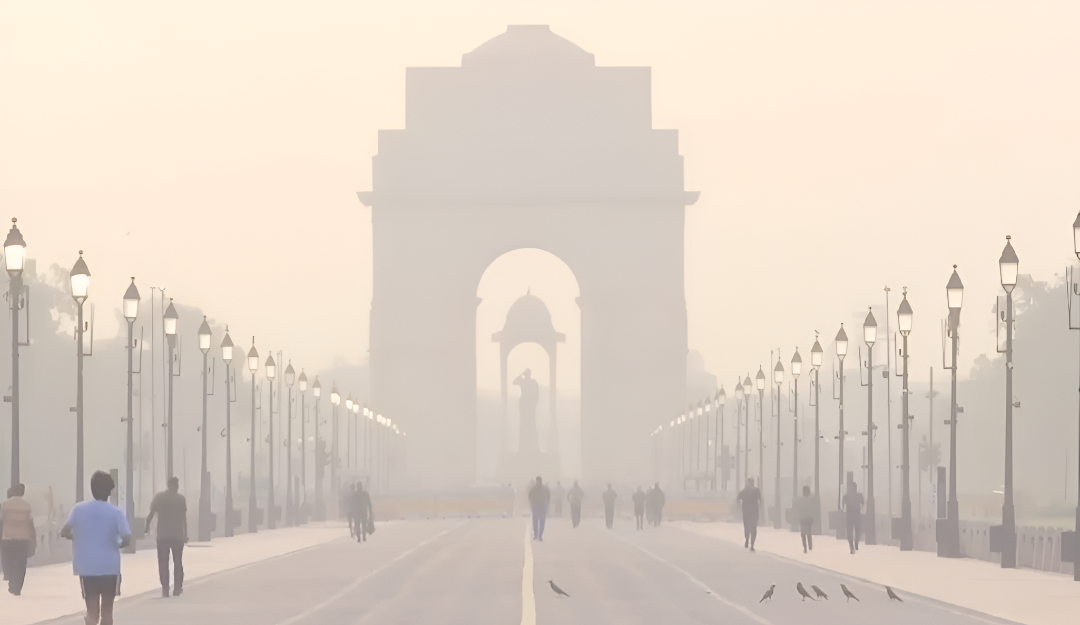
New Delhi: Minimum temperatures are dropping rapidly across Delhi-NCR as winter arrives. Unfortunately, the cold brings a sharp decline in air quality. In some areas of Delhi, the Air Quality Index (AQI) has soared past 400 mark. Residents face both chilly mornings and hazardous pollution. Consequently, health risks rise, urging caution while stepping outdoors.
According to the latest report from the India Meteorological Department (IMD) November 8, 2025, the minimum temperature in Delhi-NCR will remain around 13°C for the next week. Meanwhile, cold morning and evening winds are intensifying the winter chill. Moreover, no rain is expected, and the region is likely to stay foggy.
Delhi recorded its coldest night of the season on Thursday, with temperatures dropping to 12.7°C. Significantly, this marks the first time this winter that mercury fell below 15°C. Consequently, residents are experiencing chilly mornings and evenings, adding to winter discomfort.
At the same time, the Air Quality Index (AQI) has reached very poor levels across Delhi, Noida, and Ghaziabad. Data from the Central Pollution Control Board (CPCB) shows AQI levels between 350 and 400 at several Delhi monitoring stations, placing them in the ‘severe’ category. Areas like Bawana (403) and Ashok Vihar (363) face the worst pollution.
Similarly, pollution in Ghaziabad and Noida remains concerning. In Ghaziabad, Vasundhara and Loni report severe AQI levels of 368 and 336 respectively. Noida sectors like 125 and 116 show AQI readings above 320. Therefore, the air quality poses serious risks of respiratory and cardiovascular diseases.
Health experts warn that prolonged exposure to such pollution can harm lungs and worsen heart or respiratory conditions. Children, the elderly, and people with asthma face the highest risks. Accordingly, residents should limit outdoor activities, wear protective masks, and avoid polluted areas, especially during mornings and evenings.
The IMD explains that falling temperatures and reduced wind speed trap pollutants near the surface. Consequently, the combination of fog and smog creates dense haze. Furthermore, construction activities and vehicular emissions continue to contribute heavily to poor air quality.
In conclusion, Delhi-NCR faces cold mornings and hazardous pollution together. Residents are advised to stay cautious, monitor AQI updates, and follow health safety measures. Immediate action can help reduce risks until air quality improves naturally.