


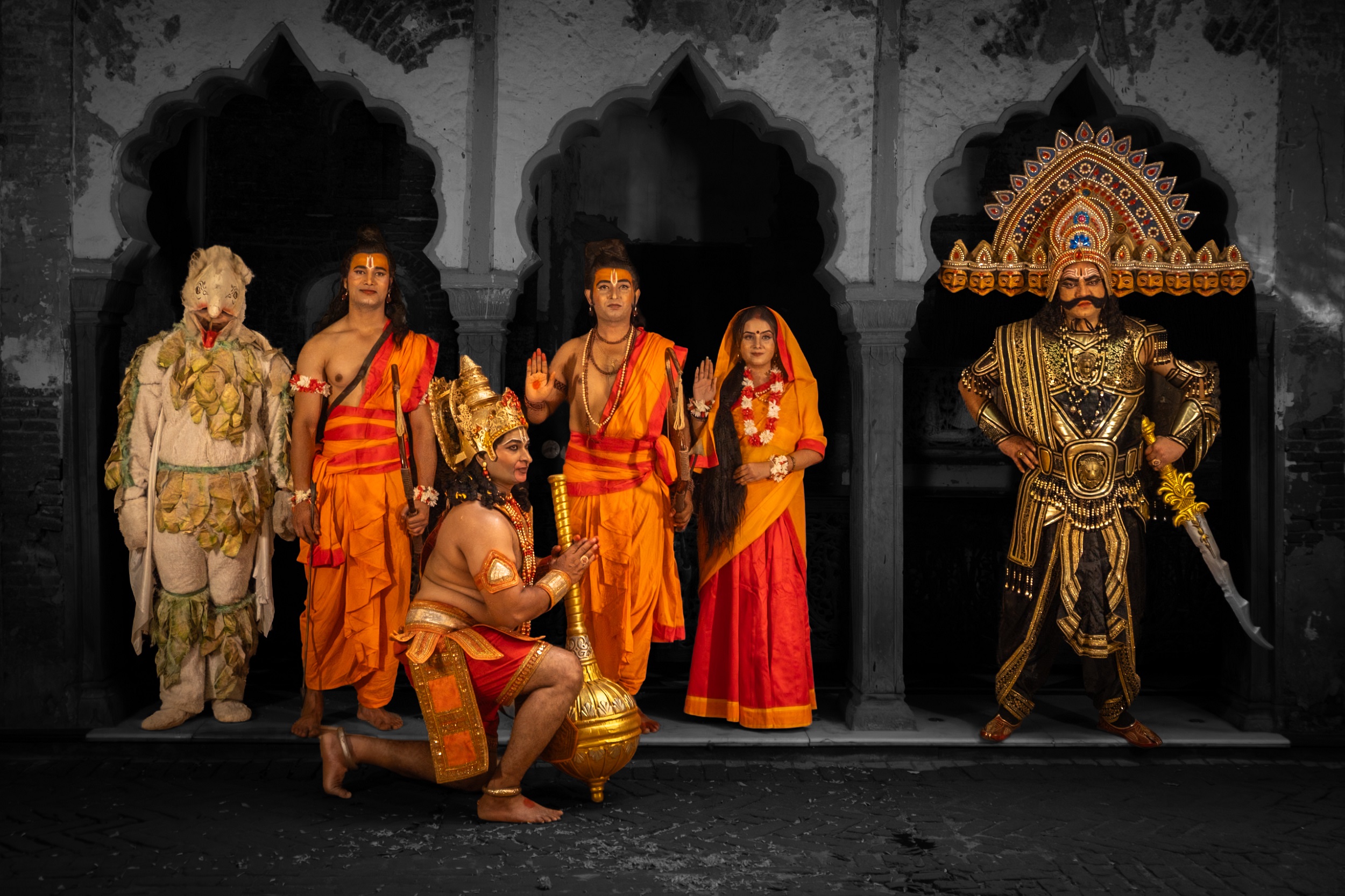
GODS WERE HERE
by Promila Bahri
Photographer and visual artist Promila Bahri revisits the Ram Leela traditions of Old Delhi, tracing the artisans, materials and labour behind its larger-than-life figures—and asking what remains when the celebration ends.
Promila Bahri presents Gods Were Here, a photographic project that revisits the cultural world of Ram Leela through the artist’s personal memories of growing up around the illuminated Jhakis, painted faces, larger-than-life characters and evening celebrations of Old Delhi.
Gods Were Here will be on display from 11th to 20th October 2026 at the Red Fort, as part of the annual celebrations organized by the Shri Dharmic Leela Committee. Come and experience art in public space.
Rooted in childhood memories, the project looks beyond the spectacle of Ram Leela to focus on the artisans, inherited skills, materials, livelihoods and labour that make the festival possible. Through her photographs, Bahri explores the ecosystem behind the celebration, particularly the workshops of Titarpur–Rajouri Garden, where bamboo, paper, cloth and colour are transformed into the monumental figures that briefly inhabit the imagination of an entire community.
For Bahri, the festival begins long before the first Jhanki is illuminated. It begins in the hands of the makers—the bending of bamboo, layering of paper, mixing of colour and painstaking construction of faces and forms. These skills are passed through families, through observation, repetition and generations of embodied knowledge. The project captures this quiet pedagogy of making while also examining the changing realities of the festival and the communities that sustain it.
On Display: 11th- 20th October 2026 Venue: Ram Leela Ground, New Delhi Organized by: Shri Dharmic Leela Committee Entry: Open to all
“My childhood unfolded between Old Delhi’s lanes and the theatre of Ram Leela. Returning today, I find myself looking beyond the spectacle—to the hands that create it, the materials that give it form, and the lives and livelihoods that sustain this tradition. Gods Were Here is an attempt to photograph not only the gods we see during the festival, but also the human labour and fragile ecosystem that bring them into being.” — Promila Bahri
From Mythological Figures to Human Stories
The figures of Ravan, Hanuman, Ram, Sita, Laxman and Garud, familiar from Bahri’s childhood, become more than mythological characters within the project. They are also embodiments of human qualities—power, devotion, dharma, resilience and protection. Before they emerge as larger-than-life beings, however, they exist as fragile structures held together by human hands.
Bahri’s photographs will move between Titarpur’s workshops, Ram Leela grounds and the historic architecture of Old Delhi, bringing artisans, materials, performers and finished figures into a single visual continuum.
The project will pay particular attention to the moments that remain largely unseen: bamboo frameworks, unfinished faces, paint-stained hands, discarded fragments and artisans at work. It will then follow the transformation—the moment when these handmade constructions acquire presence, scale and meaning before an audience.
Finally, the photographs will turn towards what remains after the celebration.
The Question of Impermanence
At the centre of Gods Were Here is an exploration of impermanence. A world created through extraordinary human labour exists for only a brief season before the figures are dismantled, discarded or transformed.
The project also considers the changing relationship between festival traditions, materiality and environmental responsibility. As the city becomes increasingly conscious of sustainability, questions emerge around how these figures are produced, what materials are used, what happens to them after the celebration and how traditional practices might evolve without losing their cultural essence.
A Visual Language of Memory and Transformation
Bahri proposes a visual language that places the architecture of Old Delhi in black and white against the saturated colours of the Ram Leela characters. This contrast allows the figures to emerge almost like apparitions within a changing city, connecting childhood memory with the present-day realities of the festival.
The photographic journey moves through three stages: the making, the transformation and the aftermath.
It begins before the gods arrive—with raw materials, unfinished structures and the people who make them. It follows the moment when these constructions come alive through colour, performance, light and collective imagination. And it concludes when the lights go out, the crowds disperse, and the structures come down.
Perhaps, Bahri suggests, the most poignant part of a festival is not only its celebration, but its impermanence.
For a few evenings, these gods are everywhere.
Then the lights disappear, the crowds disperse, the structures come down—and the city continues.
GODS WERE HERE.