


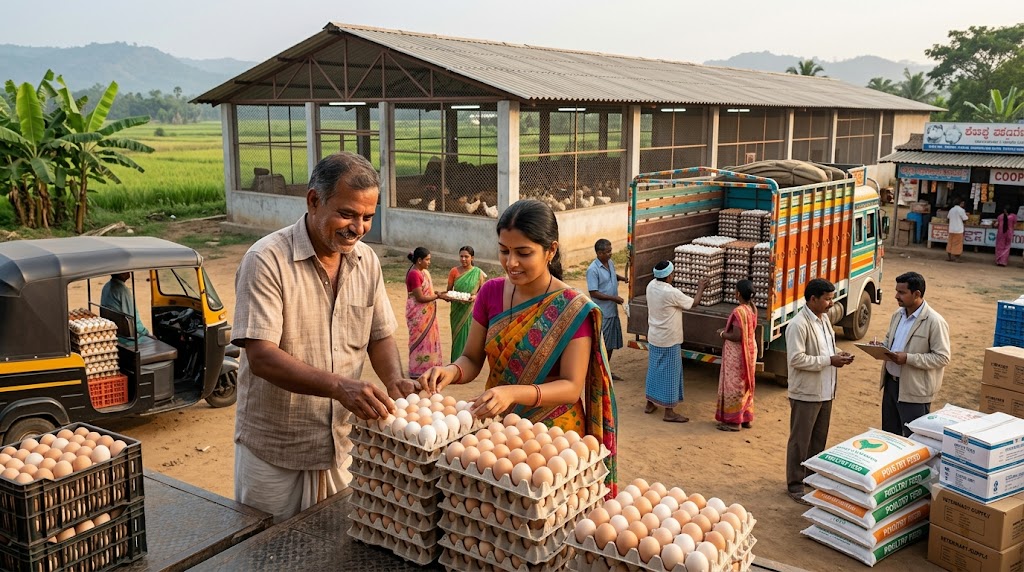
India’s poultry industry is emerging as an important driver of agricultural growth, rural employment and nutritional security, with rising egg production creating new opportunities for farmers, small businesses and allied industries. State-level initiatives in Assam and Andhra Pradesh highlight how poultry farming is becoming an increasingly significant part of India’s rural economy.
Assam is moving towards a new phase of growth in egg production, with Chief Minister Himanta Biswa Sarma highlighting a 28% increase in the state’s output. The growth reflects efforts to strengthen poultry farming, improve rural livelihoods and increase the availability of affordable protein. Meanwhile, Andhra Pradesh continues to hold a leading position in India’s egg production, underlining the economic importance of a well-developed poultry sector.
The expansion of egg production is helping strengthen the connection between agriculture, food processing, distribution and rural entrepreneurship.
Poultry Farming Creates New Income Opportunities
The poultry industry offers farmers an additional source of income alongside traditional crop cultivation. Small-scale poultry units can generate regular earnings through the sale of eggs, while larger commercial farms contribute to organised production and supply networks.
The sector also supports a wide range of related businesses, including poultry feed manufacturing, veterinary services, hatcheries, transportation, packaging and wholesale distribution. As production expands, demand for these services can create further employment opportunities in rural and semi-urban areas.
For farmers, poultry farming can provide a way to diversify income and reduce dependence on a single agricultural activity. However, profitability depends on feed prices, disease management, farm productivity, access to markets and the cost of maintaining poultry facilities.
Improved veterinary support, better farm management and access to affordable credit can help small producers participate more effectively in the growing market.
Assam’s Egg Production Growth Supports Rural Development
Assam’s reported 28% increase in egg production highlights the potential of poultry farming to support economic development in the Northeast. Expanding local production can help create income opportunities for rural households while improving the availability of eggs for consumers.
The development of poultry farms can also stimulate demand for locally supplied feed, veterinary products, equipment and transport services. Stronger supply chains may reduce dependence on supplies transported from distant production centres, although the extent of this benefit depends on local production costs and distribution efficiency.
For the state, the next priority is to build a sustainable poultry ecosystem through farmer training, improved breeding facilities, disease prevention and better access to organised markets. Strengthening storage and transportation infrastructure can also help producers reach consumers more efficiently.
Andhra Pradesh Strengthens Its Position in Egg Production
Andhra Pradesh remains one of India’s major egg-producing states. Figures cited in the supplied information put its production at approximately 2,739 crore eggs, representing more than 18% of the national total of 14,911 crore eggs.
Its established poultry ecosystem supports commercial farms, feed suppliers, veterinary services and distribution networks. Large-scale production also helps supply eggs to retail markets, institutional buyers and food businesses.
The state’s experience demonstrates how investment, organised production and established market connections can help build a competitive poultry industry. Maintaining this position will require continued attention to animal health, feed efficiency, farm hygiene and market access.
The contrast between Andhra Pradesh’s established production base and Assam’s reported growth also illustrates the different ways states can contribute to India’s poultry economy: through large-scale output as well as the expansion of emerging regional production centres.
Egg Production and India’s Nutrition Economy
Eggs are an important source of protein and provide nutrients such as vitamin B12, choline and selenium. Increasing their availability can support efforts to improve dietary diversity, particularly among households where access to varied protein sources may be limited.
The economic value of higher production therefore extends beyond farm revenues. A reliable supply of eggs can support food retailers, restaurants, institutional kitchens and nutrition programmes, while creating a larger market for producers.
However, higher output does not automatically guarantee better nutrition. Affordability, household purchasing power, distribution and awareness of balanced diets also influence consumption. Linking production growth with accessible markets can help ensure that the benefits reach consumers as well as farmers.
Challenges and the Road Ahead
Despite its growth potential, the poultry industry faces several challenges. Feed is a major operating expense, making profitability sensitive to fluctuations in the prices of maize, soybean meal and other ingredients. Disease outbreaks, extreme weather, transportation costs and unstable farm-gate prices can also affect producers.
Investment in biosecurity, vaccination, scientific feeding practices and modern farm infrastructure can improve productivity and reduce avoidable losses. Farmer cooperatives and producer groups may also help small businesses negotiate better input prices and reach larger buyers.
Value addition presents another opportunity. Processed egg products, improved packaging, cold-chain facilities and stronger links with food manufacturers can expand market opportunities beyond the sale of fresh eggs.
A Growing Contributor to India’s Rural Economy
India’s Silver Revolution, traditionally associated with the expansion of egg and poultry production, reflects the growing importance of poultry farming in the country’s agricultural economy. The sector links farmers with feed producers, transporters, retailers and food businesses, creating economic activity across the supply chain.
Assam’s reported production growth and Andhra Pradesh’s substantial contribution demonstrate the importance of state-level investment and farm development. With better infrastructure, scientific farming practices and efficient market connections, poultry production can support rural incomes, generate employment and strengthen food availability.
The long-term opportunity lies not simply in producing more eggs, but in building a profitable, resilient and inclusive poultry industry that benefits farmers, businesses and consumers alike.