


Bengaluru, Sep 22: What nature might look like in the future? How could machines change the way we live? What should we remember, what traditions might sustain, and what might our cities look like?
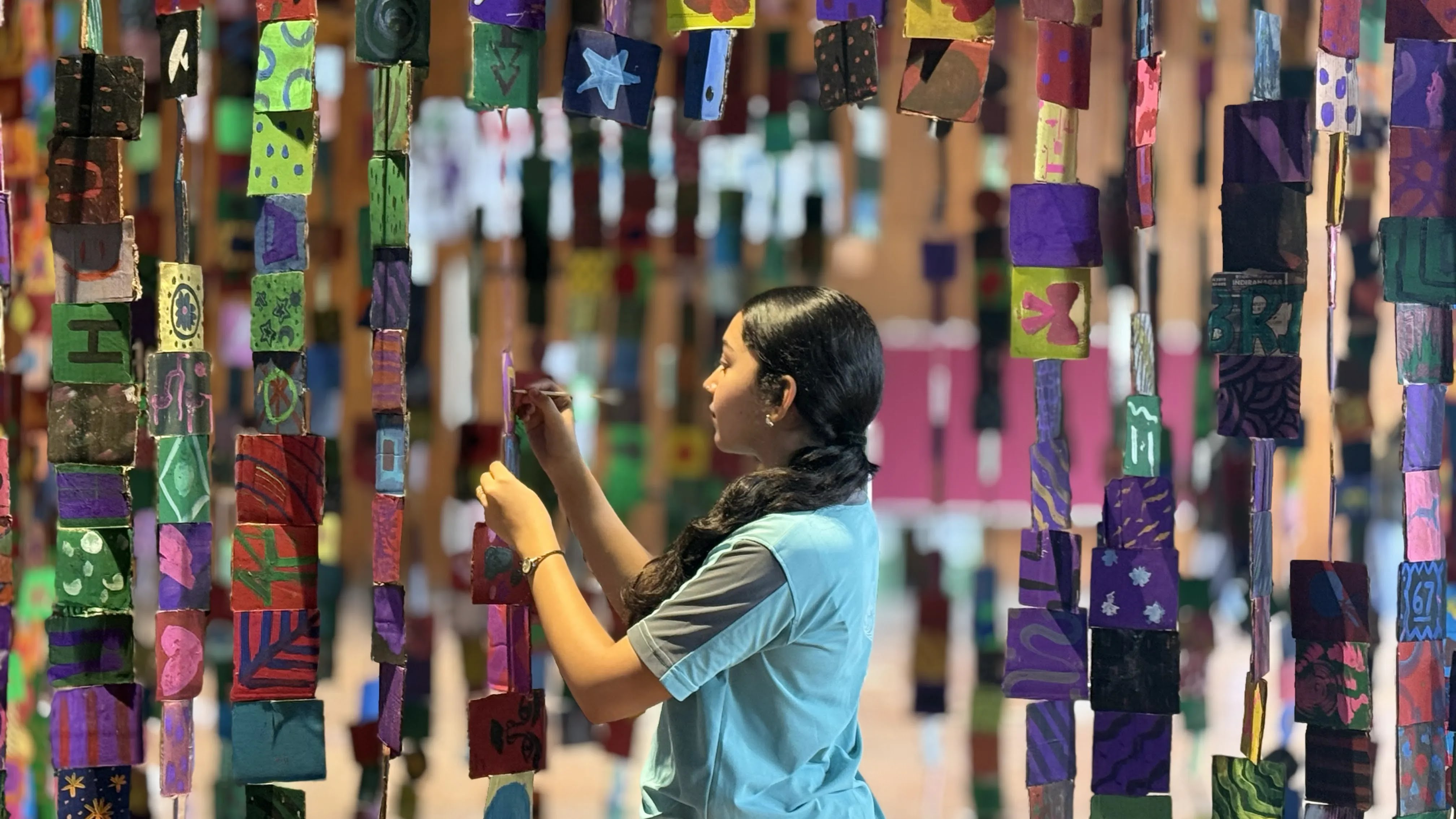
Across eight school campuses in Bengaluru, children have been working on these questions through art, design, installations, technology, movement and storytelling. Their art work comes together at the Ekya Children’s Biennale 2026, where more than 1,000 children aged 2.5 to 18 have taken on the role of artists and interpreted the question: What does the future feel like?
The Biennale opened to the public in August and has already seen nearly 3,000 visitors across campuses. It will be open every Saturday from 9 AM to 3 PM until October 31, 2026, allowing families, educators and members of the wider Bengaluru community to visit the participating campuses.
Visitors will also receive a Future Hopper Passport, with stamps available across all campuses.
The Biennale brings together seven themes across the participating campuses. At Ekya School, NICE Road and Ekya Vana Early Years, children explore the Future of Nature. Ekya Nava, Varthur looks at the Future of Machines, while Ekya School, Byrathi explores the Future of Memory. At Ekya School, BTM Layout, children have created work around Future Cities, while the ITPL campus focuses on Future Rituals & Culture. CMR National Public School, HRBR Layout takes up Future Play, and Ekya School, JP Nagar explores the Future of Connection.
The themes are different, but the starting point is the same: giving children the freedom to think about the future in their own way.
For seven to eight weeks, students worked through conversations, observations and questions before developing their work. Rather than reproducing prescribed artworks, they were encouraged to decide what they wanted to say and how they wanted to express it. Educators supported them with materials and guidance, while the ideas and creative choices remained solely with the children.
The result is a collection of work that reflects how differently children can respond to the same question. For some, the future is closely connected to nature. For others, it lies with technology, cities or machines. Memory, culture, play and human connection offers distinct ways of looking ahead.
“We are not building an art show. We are asking children to imagine the future they will grow up in and, importantly, to tell us what they want it to feel like,” said Dr Tristha Ramamurthy, Founder, Ekya Schools and Vice President, CMR Group of Institutions.
“When children become the artists and their ideas become the work, learning takes on a very different meaning. The Biennale is an expression of what becomes possible when we give children the space to think, create and shape their own ideas.”
The Biennale creates a whole new way to experience the schools. Classrooms and school spaces that are usually associated with everyday learning now accommodate installations and artworks created by students. Children see their work as part of the spaces they use every day, while visitors can walk through the campuses and experience the ideas & concepts developed by students across different age groups.
“For me, this was about watching children realise their ideas are worth taking seriously. When you hand them the space and the materials, they don’t just make art they show you what the future could look like,” said Vilas Nayak, Artist.
A platform that can grow beyond the first edition
The first edition of the Biennale is also intended as the beginning of a larger initiative. Ekya’s long-term ambition is to create a platform where children from schools and communities across Bengaluru can come together to make, share and exhibit their work. The idea is to open the Biennale beyond the participating campuses and give more children an opportunity to present their ideas through art and other creative forms.
This approach reflects Ekya’s “One Together” philosophy, which emphasises bringing children, educators and communities together around shared ideas and experiences.
For now, the first Biennale offers a starting point: eight campuses, seven themes and more than 1,000 young artists looking at one question from very different perspectives…What does the future feel like?
At the Ekya Children’s Biennale, Bengaluru can see some of the answers through the eyes of its children.