


Mumbai, Sep 17: Indian stock markets started Thursday’s trading session on a cautious note, with benchmark indices opening in negative territory as investors reacted to the US Federal Reserve’s latest rate decision and remained watchful of ongoing geopolitical developments.
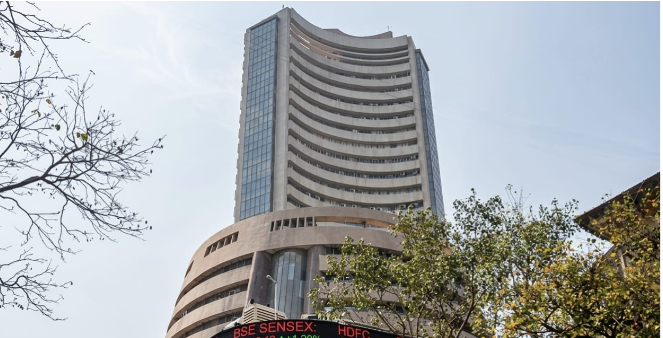
The Sensex opened at 74,182.62, down more than 150 points, or 0.21 per cent, while the Nifty 50 opened at 23,195.25, registering a decline of 22.35 points, or 0.10 per cent.
The early session saw weakness across several sectors. Nifty Media declined nearly 1 per cent, emerging as the biggest laggard, while Nifty IT slipped 0.56 per cent. The Consumer Durables index was also down 0.31 per cent.
Private banks, mid- and small-cap IT and telecom stocks, financial services and pharmaceutical companies also traded under pressure in early deals.
However, buying interest was visible in select sectors. PSU Bank gained 0.37 per cent, while the Chemical index advanced 0.22 per cent. Oil & Gas stocks rose 0.17 per cent and FMCG gained 0.13 per cent.
Market experts said the Federal Reserve’s 25-basis-point interest rate hike was largely expected. However, continued inflationary pressure, a resilient US economy and cautious signals from Fed officials have kept investors concerned about the possibility of tighter financial conditions for longer.
The US 10-year Treasury yield, which remained around 5 per cent, is another factor being closely watched by equity investors. Higher bond yields can influence global capital flows and increase pressure on risk assets. Meanwhile, resilient corporate earnings and a relatively strong US economy could provide some support to global markets.
Foreign investor activity remained another key factor for Indian equities. In the previous session, foreign institutional investors sold shares worth around Rs 2,000 crore, while domestic institutional investors emerged as buyers, purchasing equities worth approximately Rs 3,900 crore.
Crude oil prices remained elevated amid geopolitical uncertainty. Brent crude was trading 0.2 per cent lower at $105.62 per barrel, while WTI crude futures declined 0.3 per cent to around $102 per barrel.
For the Indian economy and markets, elevated crude prices remain an important factor as higher oil costs can influence inflation, import expenditure and corporate margins.
Investors are expected to closely monitor global interest-rate signals, movements in US bond yields, crude oil prices and institutional fund flows as the trading session progresses.