


Pune, Sep 16: Aesthetics Medispa, Pune has introduced Celluma LED therapy, a non-invasive light-based treatment for selected skin conditions, post-procedure recovery and pain management. The therapy was introduced under the clinical direction of Dr Sheetal Jalori at an event held at the clinic in Pune.
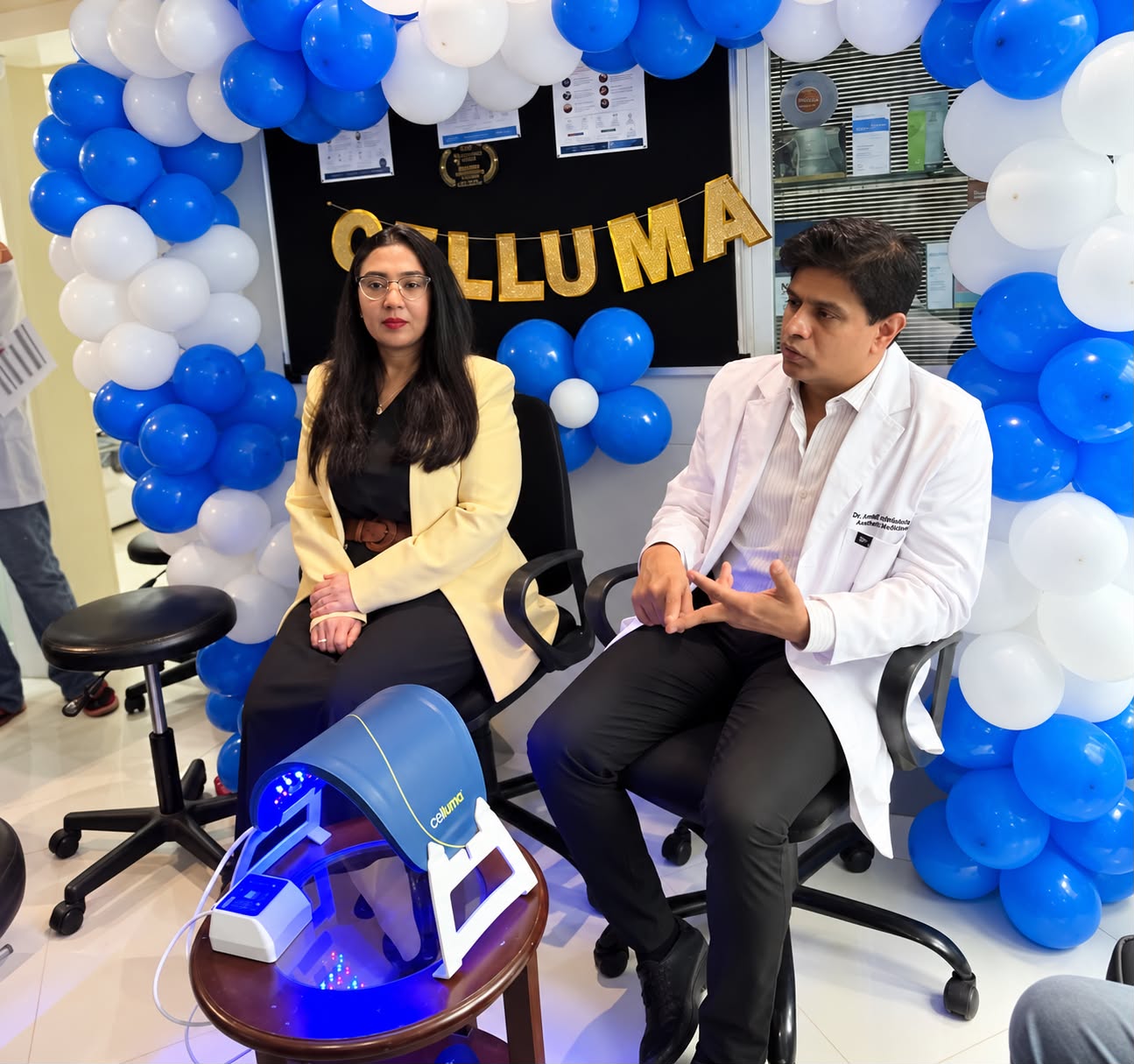
The therapy uses three wavelengths of light — blue, red and near-infrared — which have different clinical applications. Blue light is primarily used for acne, while red light is used for skin rejuvenation and to support recovery. Near-infrared light penetrates deeper and can be used as part of pain management and recovery protocols.
Speaking about the launch, Dr Sheetal Jalori, (Designation), Aesthetics Medispa, said:
“LED therapy has been used for several years, and with better understanding of its applications, it can be considered in selected cases. The important part is to identify the right indication and use it appropriately. It can be a useful addition to the treatment plan, particularly when a non-invasive approach is required.”
At Aesthetics Medispa, the therapy is being used in selected cases of acne and skin rejuvenation, as well as following procedures such as chemical peels, microneedling and radiofrequency treatments. It is also being used as an adjunct to pain management, depending on the clinical requirement.
“For patients undergoing procedures such as chemical peels or microneedling, recovery is an important part of the treatment. In selected cases, LED therapy can be used to support this process. Similarly, for acne, it can be considered along with other treatments depending on the patient’s condition,” said Dr Jalore.
Further, she added:
“The therapy is intended to be used as part of an overall treatment plan and not as a replacement for established medical treatments. Every patient has a different requirement, and there is no single treatment that works for everyone. A proper assessment is important before deciding whether LED therapy is appropriate. It can be used as an additional treatment in selected cases, depending on the condition and the patient’s overall treatment plan.”