


New Delhi, Sep 16: His Highness Prince Rahim Aga Khan V, the 50th hereditary Imam of the Shia Ismaili Muslims and Chair of the Aga Khan Development Network, concluded his first official visit to India since assuming the Imamat in 2025, reaffirming the depth of the 120-year relationship between the Ismaili Imamat and India and its relevance to the country’s development ambitions towards Viksit Bharat 2047.
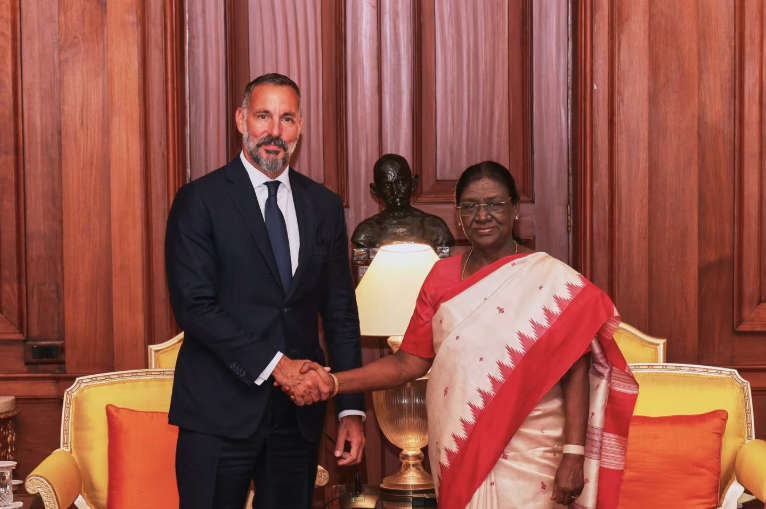
During his visit from 9 to 15 September, His Highness met Prime Minister Narendra Modi, President Droupadi Murmu, Vice President C. P. Radhakrishnan, Union Home Minister Amit Shah and External Affairs Minister Dr S. Jaishankar, as well as Governors and Chief Ministers in Gujarat, Maharashtra and Telangana. The engagements focused on strengthening future collaboration in areas where AKDN has built longstanding expertise and demonstrated impact, including healthcare, agriculture and rural development, education, women and youth empowerment, climate resilience, water management, heritage conservation and
economic opportunity.
His Highness also met members of the Ismaili community in India during the visit, providing an opportunity to connect with community members and reflect on the longstanding relationship between the Ismaili Imamat and the community in India. The engagements highlighted the shared values of service, education and community development that have shaped this relationship over generations.
In his meeting with Prime Minister Narendra Modi, His Highness Prince Rahim Aga Khan V discussed opportunities to further strengthen the longstanding partnership between India and the Aga Khan Development Network, including in healthcare, agriculture, rural development, youth empowerment and women’s empowerment. The discussions also explored areas for continued collaboration in support of India’s development priorities and the shared objective of improving quality of life.
Reflecting on the visit, His Highness Prince Rahim Aga Khan V said:
“I am very happy to be back in India, a country with which the Ismaili Imamat has a long history. I am most grateful to the Prime Minister and other senior leaders of the country for our engaging and productive discussions. I look forward to building on this longstanding partnership and working together to improve quality of life in India and around the world.”
The forward-looking exchanges with India’s national leadership explored opportunities to build on AKDN’s experience in youth upskilling, rural entrepreneurship and women’s empowerment, while also identifying areas where public private partnerships can further strengthen climate resilience, natural farming, reforestation and sustainable development. AKDN’s work in heritage conservation and urban regeneration, its experience in the cooperative sector, professional development of educators and specialised medical care were also recognised as areas where its institutional experience and expertise could be of wider value.
The discussions also reflected the international dimension of the Ismaili Imamat’s development experience. Given the geographic span of India’s own development interests and international partnerships, the engagements enabled a mutual identification of regions in Asia and Africa where institutions of the Ismaili Imamat could explore productive opportunities for collaboration.
The visit marked a significant moment in a relationship that has evolved over more than a century. Institutions of the Ismaili Imamat have been present in India since the 19th century, while AKDN’s institutional development work dates to 1905, when the first Aga Khan school was established in Mundra, Gujarat. Over the decades, this engagement has expanded across education, health, rural livelihoods, economic inclusion, habitat, culture, heritage and climate resilience. Today, AKDN programmes reach more than nine million people in India
annually.
The experience accumulated over these 120 years has increasingly intersected with the priorities of a changing India. From strengthening human capability and rural prosperity to improving healthcare, building climate resilient communities, conserving cultural assets and creating economic opportunity, AKDN’s work reflects a development approach centred on
institutions, partnerships and long-term impact.
This alignment with India’s future development priorities was a recurring theme during the visit. AKDN has identified Viksit Bharat 2047 as an important context for deepening its contribution in India, particularly in areas where long term institutional capacity, community participation and partnerships can help translate development ambitions into sustained outcomes.
The scale of AKDN’s current work reflects this breadth. Its programmes support hundreds of thousands of people through agriculture and food security initiatives, reach millions of children through early childhood development, operate schools serving thousands of students, support health and sanitation programmes, and contribute to the conservation and revitalisation of major cultural and urban heritage sites across the country.
His Highness expressed his sincere appreciation to Prime Minister Narendra Modi for the warm welcome extended during the visit, and to President Droupadi Murmu, Vice President C. P. Radhakrishnan, Union Home Minister Amit Shah and External Affairs Minister Dr S. Jaishankar for their hospitality and constructive engagements. Appreciation was also extended to the Governors and Chief Ministers of Gujarat, Maharashtra and Telangana, and to the officials and institutions whose support contributed to the visit.
For the Ismaili Imamat and the Aga Khan Development Network, the next chapter of the India relationship is therefore not simply about carrying forward a legacy. It is about applying that legacy to the India of the future.