


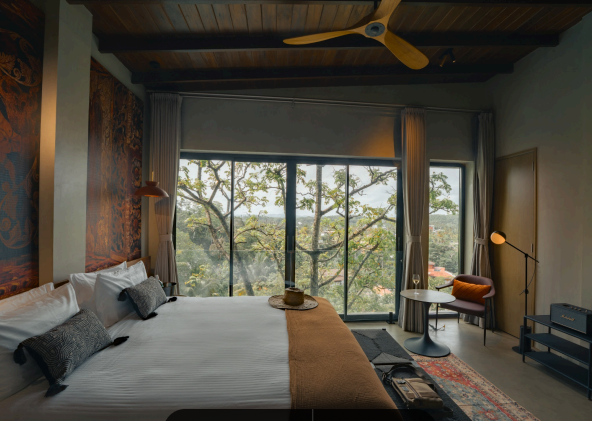
Mirissa, Sri Lanka:The hotel is no longer simply a backdrop to a holiday.
Across emerging destinations, a new generation of independent properties is using architecture, interiors, craftsmanship, food and landscape to create a deeper sense of place — turning where you stay into an extension of where you are.
Rather than replicating the same idea of luxury from one destination to another, design-led hotels are beginning with their surroundings. Local materials and craft traditions inform the aesthetic; the landscape shapes the architecture; and food and experiences become part of the property’s relationship with its destination.
Sri Lanka’s South Coast is emerging as an especially interesting canvas for this evolution. As Mirissa develops beyond its traditional identity as a beach and surf destination, design,
gastronomy, independent hospitality and local experiences are contributing to a new visual and cultural identity for the region.
NiiRA Mirissa is an expression of this thinking.
Set overlooking Mirissa Bay, where the Indian Ocean meets tropical jungle, the independent lifestyle hotel draws directly from its surroundings. Its contemporary tropical design is complemented by authentic Sri Lankan craftsmanship, while its experiences are designed to connect guests with the wider landscape and culture of the South Coast.
Even its name reflects this connection. Inspired by Neer, the Sanskrit word for water, NiiRA embraces the rhythm of its coastal setting, while its philosophy of ‘Pause. Rewind. Play.’ shapes a stay that moves naturally between stillness, discovery and social energy.
That connection continues throughout the experience — from mornings spent in the ocean and afternoons exploring the South Coast to evenings over local flavours at ARIA and sunset cocktails at TERAS.
The significance of design-led hospitality lies in this sense of belonging. The strongest independent hotels don’t simply look like their destinations; they feel like them.
For places such as Mirissa, this creates an opportunity for hospitality to play a larger role in destination-making — giving travellers another reason to stay longer, explore further and engage with the character of the region.
The future of hotel design may therefore be less about creating an impressive world within a property, and more about creating a property that could only exist in that particular place.