


NEW DELHI, Sep 10: India is giving a major push to railway infrastructure with projects worth Rs 20,804 crore, a move expected to improve connectivity, ease congestion and strengthen the movement of people and goods across nine states, including Odisha.
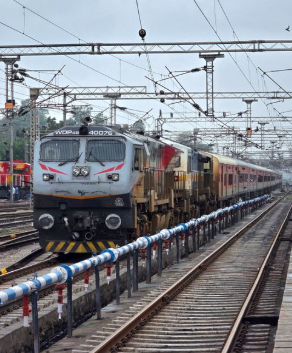
The Centre has approved eight multitracking projects covering nearly 1,196 km of railway lines. The projects will pass through 31 districts and are planned for completion by 2029-30.
For Odisha, the expansion is particularly significant as the state plays a major role in the country’s mining, metals, manufacturing and freight economy. Stronger railway links can help industries move raw materials and finished products more efficiently while improving connections between production centres and major markets.
Three of the approved projects, with a combined investment of Rs 10,783 crore, will add around 656 km of railway capacity across West Bengal, Jharkhand, Odisha, Madhya Pradesh and Chhattisgarh. These routes are important for the movement of coal, iron and steel, cement and other industrial commodities.
The government has not announced a separate Odisha-wise allocation from the Rs 10,783-crore package. However, the inclusion of Odisha in these important railway corridors is expected to increase capacity and reduce bottlenecks on routes that support the state’s industrial and mineral-based economy.
The projects under the five-state package are expected to enable an additional 27 million tonnes of freight movement every year. They are also estimated to reduce oil imports by around 12 crore litres annually and cut carbon dioxide emissions by approximately 62 crore kg.
The wider railway expansion is expected to facilitate around 74 million tonnes of additional freight traffic annually. This could provide a major boost to industries that depend on reliable and cost-effective transportation, particularly mining, steel, cement, power and manufacturing.
For ordinary passengers, additional railway tracks can also mean smoother train operations, fewer bottlenecks and improved reliability on busy routes. Better connectivity can further benefit smaller towns and villages by providing easier access to education, employment, healthcare, markets and tourism opportunities.
The projects are expected to improve connectivity for thousands of villages and benefit millions of people living along the railway corridors. For Odisha, improved rail infrastructure could help local businesses reach wider markets and support new investment and employment opportunities.
The railway expansion is also aligned with the PM Gati Shakti National Master Plan, which focuses on creating better coordination between different modes of transport and improving the country’s overall logistics network.
The latest investment reflects India’s broader effort to build infrastructure that can keep pace with rising economic activity. For Odisha, stronger railway connectivity could become an important driver of industrial growth by making the movement of minerals, manufactured goods and essential commodities faster and more dependable.
As new railway capacity comes on stream, the benefits are expected to extend beyond the tracks themselves, supporting businesses, industries, local communities and the wider economy while strengthening Odisha’s position as a key industrial and logistics hub.