


New Delhi, Sep 9: India’s manufacturing sector is rapidly expanding its footprint in the industrial real estate market, with manufacturing leasing recording a 49 per cent compound annual growth rate since 2021 and reaching a cumulative 69 million square feet, according to a recent industry assessment.
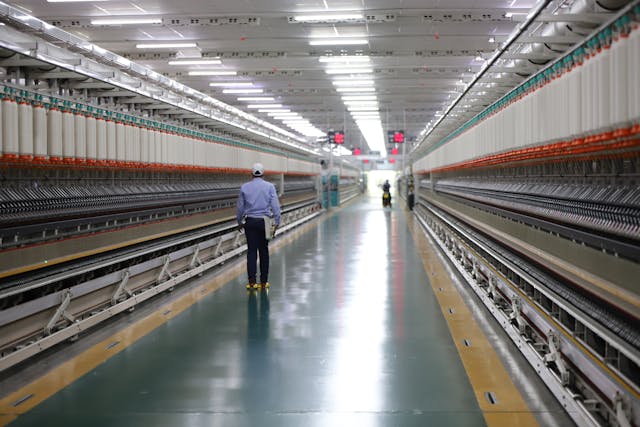
The sharp rise in leasing activity reflects the growing need for production facilities as companies expand their manufacturing operations across the country. Manufacturing has now become the second-largest occupier segment in India’s industrial real estate market, after third-party logistics, highlighting the increasing role of factories and production facilities in driving demand for industrial space.
Manufacturing leasing stood at 19.2 million square feet in 2025, while activity during the first half of 2026 reached 10.2 million square feet, up 19 per cent from the corresponding period a year earlier. The increase indicates that manufacturers are continuing to invest in additional capacity despite a challenging global business environment.
The growth is also changing the way companies approach industrial expansion. In major cities, manufacturers are increasingly choosing ready-to-use Grade-A facilities that allow them to begin operations faster and avoid the high upfront cost of developing their own facilities. In several emerging markets, companies are instead showing greater interest in acquiring land, giving them more flexibility to build facilities according to their specific production requirements.
The growing preference for modern industrial infrastructure is particularly visible in the demand for Grade-A properties. Such facilities accounted for around 90 per cent of manufacturing leasing in 2025, reflecting manufacturers’ increasing focus on better infrastructure, safety standards, hygiene requirements and operational efficiency.
The trend is extending beyond the country’s biggest cities. Emerging markets such as Lucknow, Jaipur, Chandigarh, Bhubaneswar, Guwahati, Surat, Nagpur, Nashik, Indore, Coimbatore and Visakhapatnam are seeing manufacturers explore land and industrial opportunities. This wider geographical expansion points to a gradual shift in manufacturing activity beyond traditional industrial centres.
The rise in manufacturing leasing is also closely linked to India’s broader industrial and supply-chain expansion. Stronger domestic demand, investment in manufacturing capacity and the growth of sectors such as automobiles, engineering, electronics and other industries are creating greater requirements for factories and supporting industrial infrastructure. Across the broader logistics and industrial market, engineering and manufacturing companies accounted for 28 per cent of leasing demand in the first half of 2026.
The trend could have wider implications for India’s economy. More manufacturing facilities can create demand for industrial land, construction, logistics, transportation and related services while supporting the development of local business ecosystems around manufacturing hubs. It can also strengthen supply chains as companies expand production closer to major markets and transport networks.
Manufacturing leasing is projected to reach around 46 million square feet by 2030, according to the assessment. The continued rise in demand suggests that industrial real estate is becoming an increasingly important part of India’s manufacturing story as companies expand capacity and strengthen their presence in domestic and global supply chains.
The strong leasing growth ultimately reflects a broader change in India’s industrial landscape. As manufacturers move beyond traditional locations and invest in modern facilities, industrial real estate is emerging as an important support for the country’s ambitions to expand manufacturing, improve supply chains and strengthen its position as a global production hub.