


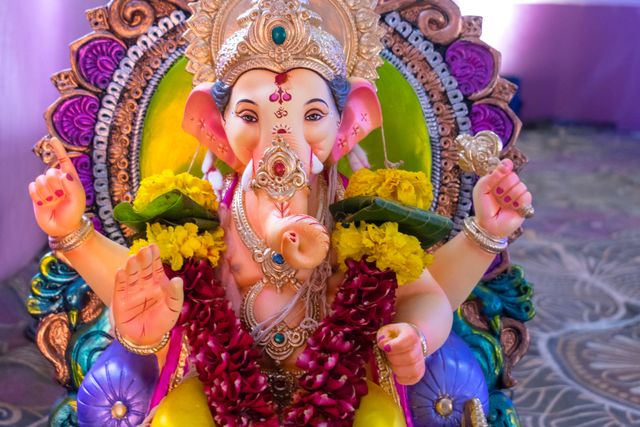
Pic Credit: Pexel
New Delhi, Sep 8: With Ganesh Chaturthi just around the corner, cities across India are beginning to take on a festive look. Streets, markets, homes and community pandals are being decorated with colourful lights, flowers and traditional ornaments as preparations for welcoming Lord Ganesha gather pace.
Ganesh Chaturthi will be celebrated on September 14 this year, and the approaching festival is already creating a visible buzz in local markets.
For businesses, the festival is bringing a fresh wave of demand across several categories. Shops selling decorative items, lighting, flowers, torans, rangoli materials and puja essentials are seeing increased interest as families and community groups prepare their homes and pandals.
The festive rush is also benefiting sweet shops and food businesses. Laddoos, modaks and other traditional sweets remain an important part of Ganesh Puja, with families buying them both for offerings and for sharing with relatives, friends and neighbours. The rise in festive activity provides an important opportunity for small sweet shops, local food makers and home-based sellers to increase their sales.
Ganesh idols remain at the heart of the celebrations. Artisans and idol makers are busy preparing idols in different sizes and designs to meet demand from households, housing societies and large community celebrations. Markets are offering everything from traditional clay idols to more decorative designs.
At the same time, an important change is becoming visible in the way people are choosing their idols. Eco-friendly Ganesh idols are gaining attention as consumers look for ways to celebrate the festival while reducing their impact on the environment. Natural clay and other biodegradable materials are increasingly being preferred over Plaster of Paris and idols finished with chemical-based paints.
The idea behind eco-friendly idols is simple: devotion does not have to come at the cost of nature. Idols made from suitable natural and biodegradable materials can break down more easily during immersion, reducing the amount of long-lasting waste entering rivers, lakes and other water bodies. Natural, non-toxic colours can further reduce the environmental impact.
This shift is also creating opportunities for artisans and small businesses producing sustainable festival products. From clay idols and natural colours to reusable decorations and traditional handmade items, the demand for greener alternatives is opening another segment within the festive economy.
The Ganesh festival therefore represents more than a religious celebration. It brings together consumers, artisans, sweet makers, decorators, flower sellers, retailers and small businesses, creating economic activity across multiple parts of the local market.
As the final preparations begin, the combination of colourful streets, decorated homes, traditional sweets and beautifully crafted idols is setting the stage for another vibrant Ganesh Chaturthi. For consumers and businesses alike, the festival is becoming an occasion to celebrate tradition while also giving greater importance to sustainability and responsible choices.