


Vadodara, Sep 8: India’s freight transportation network has received a major boost with the completion of the Dedicated Freight Corridor (DFC), which is expected to make the movement of goods faster and improve connectivity between industrial centres, markets and ports.
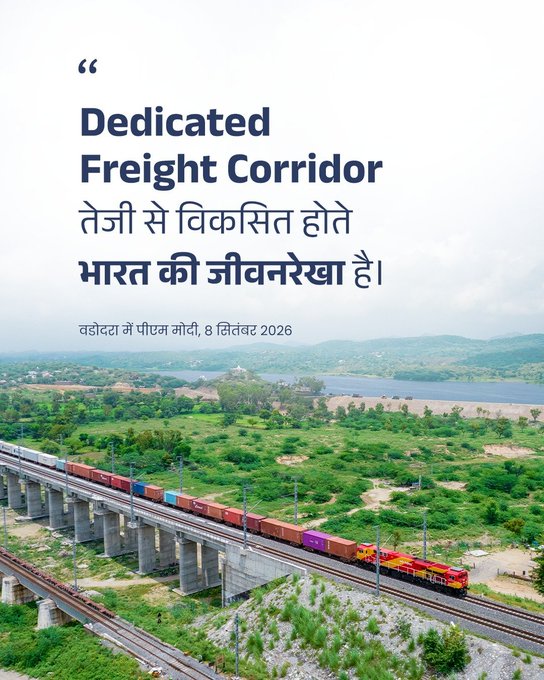
The Dedicated Freight Corridor is the lifeline of a rapidly developing India. pic.twitter.com/LsJ8XDP4UD
— PMO India (@PMOIndia) September 8, 2026
Prime Minister Narendra Modi, speaking in Vadodara on Tuesday, highlighted how the dedicated freight network is changing the way goods move across the country. He said faster transportation can benefit farmers, manufacturers and businesses by reducing delays and improving access to markets.
The final three sections of the Western Dedicated Freight Corridor cover 326 route kilometres and were developed at a cost of more than Rs 20,700 crore. Their commissioning has made the country’s DFC network fully operational across its planned length.
The new sections also provide direct connectivity to Jawaharlal Nehru Port Authority, helping speed up the movement of export-import cargo between ports and industrial centres. The improved rail link is expected to reduce logistics bottlenecks and ease pressure on Mumbai’s existing railway network.
For farmers, faster freight movement could make it easier to send agricultural produce, particularly perishable goods, to distant markets without unnecessary delays. This can help connect producers with larger markets while improving the overall efficiency of the supply chain.
Industries are also expected to benefit from more reliable movement of raw materials and finished products. Faster cargo transportation can help businesses manage inventories better, improve delivery schedules and strengthen their supply chains.
The DFC network is designed specifically for freight trains, allowing goods services to operate separately from passenger trains on dedicated routes. This can help reduce congestion on conventional railway lines and create more space for passenger services.
The growing use of double-stack container trains is another important feature of the network. PM Modi highlighted that a single such train can carry cargo equivalent to more than 250 trucks, demonstrating the capacity of rail to move large volumes of goods in a single journey.
The government expects the completed freight network to strengthen India’s logistics infrastructure, improve multimodal connectivity and support more efficient movement of goods across major economic regions.
The DFC is therefore emerging as an important part of India’s wider infrastructure push, helping build a logistics system that is faster, more dependable and better connected to the needs of farmers, businesses and consumers.