


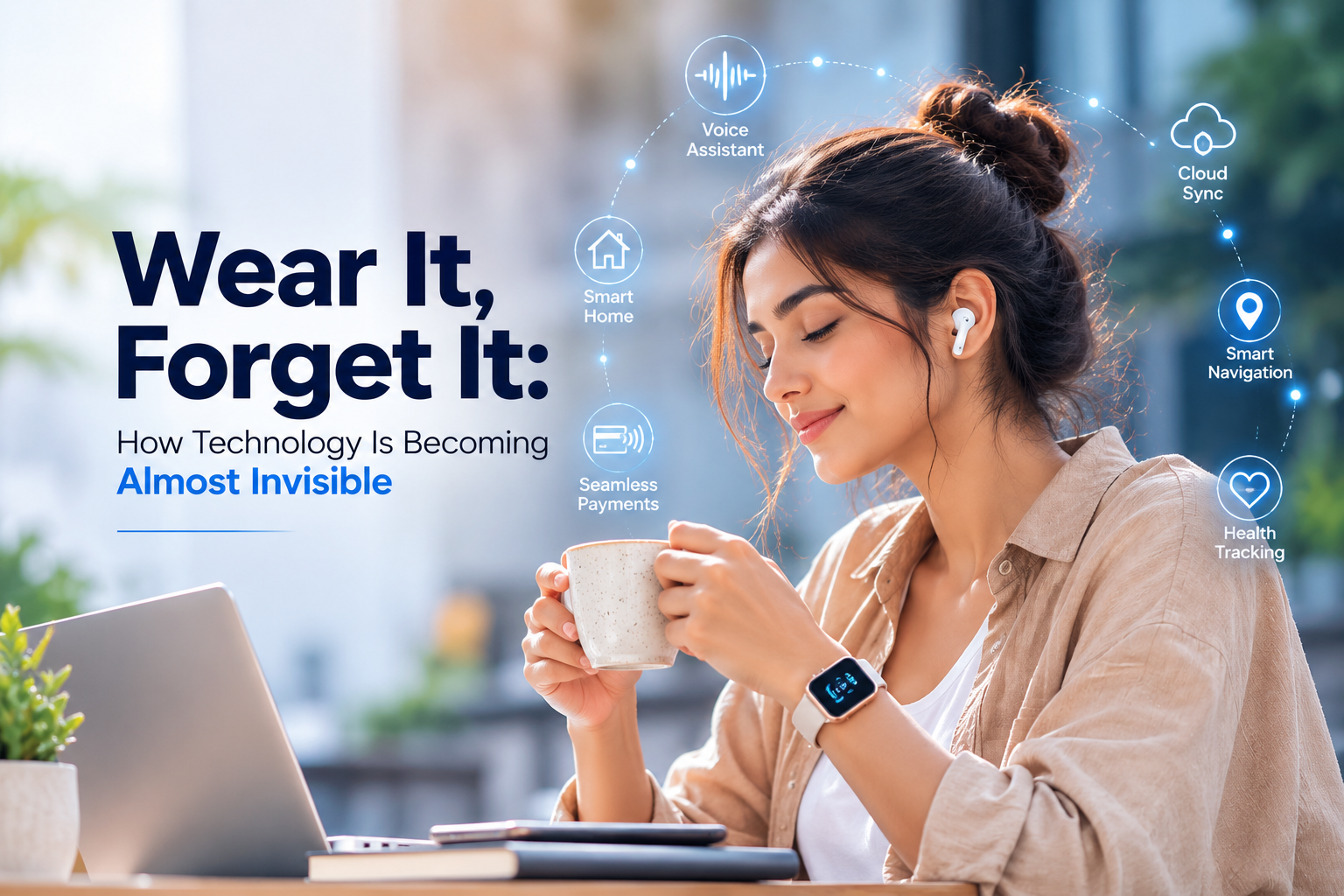
Sept 04: The most interesting technology of the future may be the technology people barely notice. Instead of demanding attention through another screen, the next generation of devices is being designed to blend into everyday life — as a ring, a pair of glasses, earbuds or even an accessory.
The numbers point towards a broader shift. According to IDC’s Worldwide Quarterly Wearable Device Tracker, the global wearable-device market continues to evolve as newer categories such as smart glasses and smart rings gain momentum alongside established products. IDC expects smart-ring shipments to reach 4.9 million units globally in 2026, while smart glasses are emerging as one of the faster-growing areas of wearable computing.
The significance goes beyond sales figures. Wearable technology is moving away from simply putting a smaller computer on the body and towards creating technology that works quietly in the background. The result is a new consumer-tech philosophy: wear it, use it and forget it is even there.
When Gadgets Stop Looking Like Gadgets
For much of the digital era, technology has been deliberately visible. Smartphones came with increasingly sophisticated screens, smartwatches put notifications on the wrist and wireless earbuds became unmistakable symbols of connected living.
But consumers are becoming familiar with these devices. The novelty of counting steps, checking messages on a watch or constantly reaching for a smartphone is beginning to wear off.
The next opportunity lies in reducing friction.
A device does not necessarily need to be impressive because it looks futuristic. It can be impressive because it fits so naturally into everyday life that using it feels effortless.
That is the thinking behind invisible wearable technology.
Smart Rings Are Turning Technology Into Jewellery
Smart rings are perhaps the clearest example of technology becoming less visible.
From a distance, there may be little to distinguish one from an ordinary ring. Yet inside the compact design can sit sensors capable of collecting information related to activity, sleep and other wellness indicators.
The absence of a screen is part of the attraction.
Rather than constantly asking users to check another display, smart rings can operate quietly and transfer information to a smartphone application for analysis.
This could be particularly appealing to consumers who want the benefits of wearable technology without another device competing for their attention.
AI Is Making Small Devices More Intelligent
Miniaturisation alone does not make a wearable revolutionary. Artificial intelligence could be the technology that gives these small devices a much bigger role.
Wearables can collect information, but AI can help interpret it. Instead of presenting users with endless numbers and graphs, future devices could identify patterns and translate them into useful, personalised insights.
The same principle applies to AI-enabled glasses and earbuds.
The device does not necessarily need to display everything. It can understand a request, process information and deliver an answer through voice, audio or contextual assistance.
That marks a shift from data collection to intelligent assistance.
Smart Glasses Could Change the Way We Interact With Information
Smart glasses are pushing invisible computing into more ambitious territory.
The smartphone requires people to interrupt what they are doing, take the device out of their pocket and look at a screen. Smart glasses could potentially deliver information while users remain focused on their surroundings.
For travellers, that could mean hands-free directions. For professionals, it could mean accessing information while working. For everyday consumers, it could mean interacting with AI without opening an app.
The challenge is that smart glasses have to satisfy two very different expectations.
They must be technologically capable while also looking like something people would actually want to wear.
That makes design almost as important as processing power.
Earbuds Are Quietly Becoming Smart Assistants
The evolution of wireless earbuds offers another glimpse into this future.
What began as a convenient way to listen to music has increasingly become a platform for calls, voice commands and connected services. As AI assistants become more capable, earbuds could become one of the simplest ways to interact with them.
The appeal is obvious: no keyboard, no screen and no need to hold a device.
A natural voice conversation could eventually replace many of the small digital interactions that currently require opening a phone.
This is the essence of ambient technology — computing that is present when needed without demanding constant attention.
India Is Moving Beyond the Smartwatch Boom
India has played an important role in the global wearable story, particularly through the rapid adoption of affordable smartwatches and fitness bands.
But the market is now showing signs of maturity.
IDC data reported in 2026 indicated that India’s overall wearable-device shipments declined in 2025, while smartwatch shipments recorded a sharper fall.
That slowdown may be less about consumers losing interest in technology and more about the market becoming selective.
When almost everyone has access to basic activity tracking and notifications, another inexpensive smartwatch may not feel particularly exciting.
Emerging categories have an opportunity to offer something different — better design, more specialised functionality, greater convenience or a genuinely new way of interacting with technology.
For Indian consumers, the next phase of wearable adoption could therefore be less about owning the cheapest connected device and more about finding a device that genuinely fits a particular lifestyle.
The New Wearable Has to Fit In
Unlike smartphones and laptops, wearables are personal in a very literal sense. They sit on the body and remain visible to other people.
That makes fashion and comfort critical.
A smart ring needs to look like jewellery. Smart glasses need to resemble eyewear. Earbuds need to feel comfortable for extended use.
The boundary between consumer electronics and fashion is consequently becoming thinner.
Technology companies may increasingly have to think like lifestyle brands, while fashion companies may find themselves moving deeper into technology.
The future wearable may be judged as much by how naturally it fits into an outfit as by what processor it contains.
Less Technology Could Mean Less Screen Time
There is an unexpected benefit to the invisible-tech movement: it could help reduce the number of screens competing for attention.
Digital life has become heavily screen-dependent. People check smartphones while travelling, working, shopping and socialising. Adding another display does not necessarily solve the problem.
Voice interfaces, audio notifications and passive sensors offer another model.
Technology can remain available without constantly asking to be looked at.
That distinction could become increasingly important as consumers become more conscious of digital distraction.
The future may not be about disconnecting from technology, but about creating healthier ways to interact with it.
Privacy Will Become the Price of Convenience
The more seamlessly technology integrates into everyday life, the more carefully consumers will need to consider what it is collecting.
Smart rings can gather personal wellness information. Earbuds can interact with voice assistants. Smart glasses may incorporate cameras and microphones.
These capabilities create legitimate questions about data collection, storage, consent and security.
Invisible technology therefore needs visible accountability.
Consumers will want to know what information is being captured, where it goes and who can access it. Brands that communicate these issues clearly could earn an advantage as wearable technology becomes more personal.
From Devices to Digital Companions
The biggest shift may be the transition from wearable devices to wearable companions.
A smartwatch is primarily a device that users interact with. An emerging wearable could increasingly become something that understands context and assists without being explicitly instructed at every step.
A ring can sense. Glasses can see. Earbuds can listen. AI can interpret.
Together, these technologies point towards a world in which computing is distributed across the things people already wear.
The smartphone may remain at the centre of this ecosystem, but it may no longer be the only gateway to the digital world.
The Future May Look Ordinary
Technology has spent decades trying to look futuristic.
The next generation may succeed by doing exactly the opposite.
A ring may look like a ring. Glasses may look like glasses. Earbuds may look like earbuds. Yet beneath these familiar forms could be increasingly sophisticated sensors, connectivity and artificial intelligence.
That is what makes invisible wearable technology so compelling. Its success will not necessarily be measured by how much technology consumers can see.
It may be measured by how little they need to think about it.
The ultimate wearable could be the one that becomes part of a person’s routine without becoming another distraction — technology that quietly works in the background, steps forward when needed and disappears when it isn’t.
Wear it. Use it. Forget it. That may be what the next era of personal technology looks like.