


What If Eating Better Started With an Ordinary Meal?
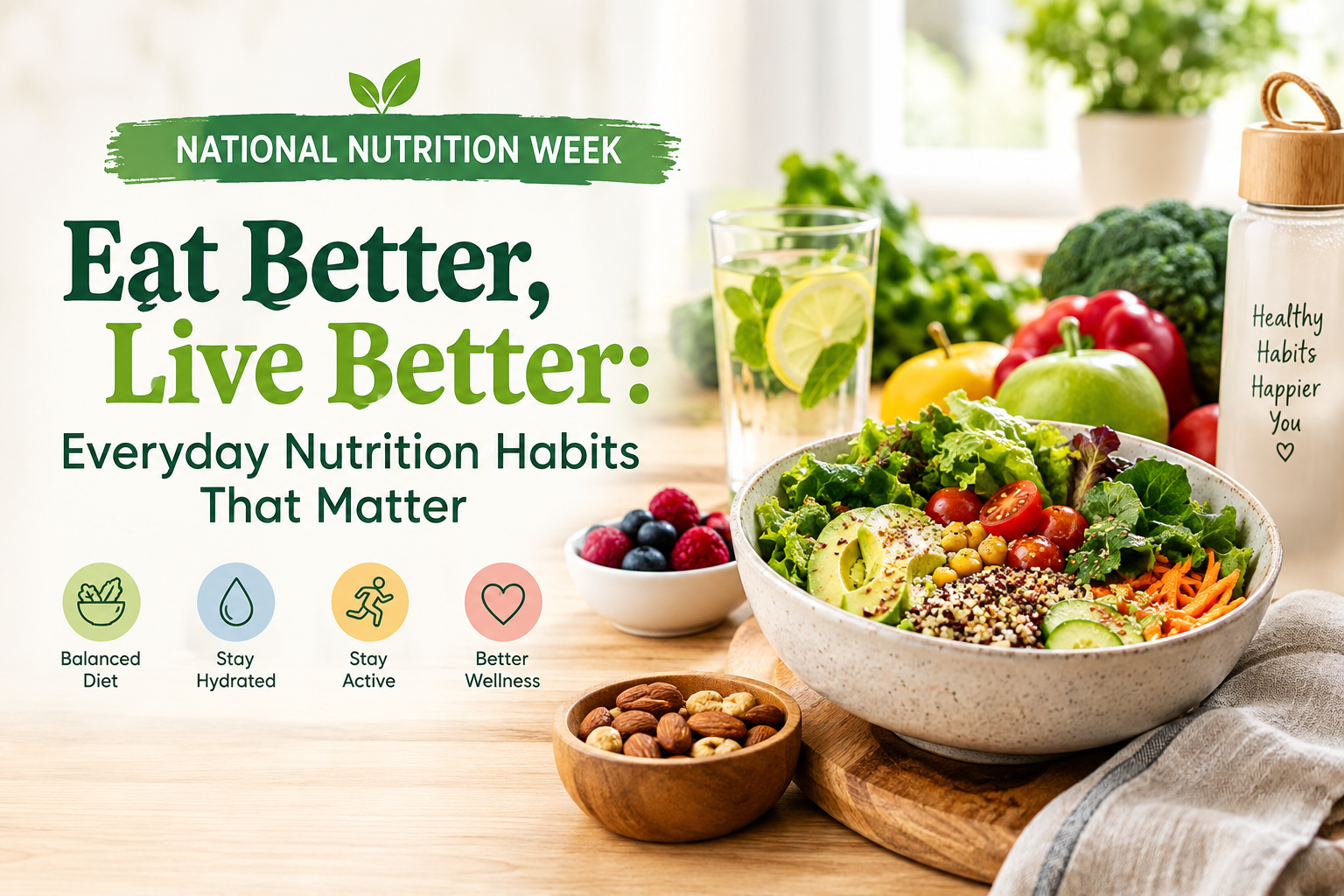
Sept 03: It is easy to believe that healthy eating requires a complete lifestyle makeover.
A new diet. A strict meal plan. Expensive ingredients. A long list of foods to avoid.
But look closely at an ordinary Indian kitchen and the picture can be much simpler.
There is dal waiting to be cooked, vegetables in the fridge, rice or atta in the cupboard, fruit on the table and perhaps some curd, eggs, fish, beans or nuts. Good nutrition does not always require discovering something new. Sometimes, it means making better use of the food we already eat.
That is what makes National Nutrition Week a useful reminder. Nutrition is not a short-term challenge or something to think about only when trying to lose weight. It is part of everyday life—from the breakfast we rush through to the lunch we eat between meetings and the dinner that finally brings the family together.
The World Health Organization’s latest healthy-diet guidance identifies adequacy, balance, moderation and diversity as the core principles of healthy eating. It also recommends diets built largely around minimally processed and unprocessed foods.
The message is surprisingly uncomplicated: eat a wider variety of nourishing foods, and make highly processed, sugary and salty foods less central to everyday eating.
The Indian Plate Already Has a Strong Foundation
Healthy eating does not have to look like a social-media wellness bowl.
Indian food is remarkably diverse, and many familiar meals already combine several important food groups.
Think of dal with rice and vegetables. Roti with sabzi and curd. Idli with sambar. A vegetable-rich khichdi. Millet-based preparations. Eggs, fish or beans alongside a home-cooked meal.
The challenge is often not the absence of nutritious food. It is the changing way we eat—more convenience foods, larger portions, irregular meals and less variety on busy days.
The ICMR-National Institute of Nutrition’s Dietary Guidelines for Indians 2024 makes this point clearly: no single food contains all the nutrients the body needs, so dietary diversity and a sensible combination of foods from different food groups are important. The guidelines also recommend including fresh vegetables and green leafy vegetables regularly, choosing whole grains more often and combining cereal- or millet-based meals with pulses or beans.
In other words, better nutrition can begin with the food already on the family table.
Let Your Plate Become More Colourful
Vegetables and fruits are often the first casualties of a hectic schedule.
Breakfast is rushed. Lunch is ordered. Dinner arrives late.
Yet adding more fruits and vegetables is one of the simplest ways to improve the quality of a diet.
WHO recommends that people above the age of 10 consume at least 400 grams of fruits and vegetables a day, while adults should aim for at least 25 grams of naturally occurring dietary fibre daily.
That does not mean carrying a weighing scale into the kitchen.
Start with something easier.
Add vegetables to lunch and dinner. Keep seasonal fruit where it is easy to see. Try leafy greens one day and beans, carrots, gourds or other vegetables the next.
A colourful plate is not just visually appealing. It is also a simple reminder to eat a greater variety of foods.
Protein Does Not Need to Be a Fitness Trend
Protein has become a favourite word in the wellness industry.
But Indian kitchens have been using protein-rich foods long before it became a social-media trend.
Dal, chickpeas, rajma, beans, peas, soy foods, milk, curd, eggs, fish and poultry can all contribute protein, depending on individual dietary choices.
The important thing is not to obsess over a number.
It is to avoid building meals around just one food group.
A bowl of dal alongside rice and vegetables is one example. Curd with lunch is another. An egg at breakfast or beans added to a meal can also help add variety.
Nutrition becomes easier when protein is treated as part of the meal rather than a separate fitness goal.
Whole Food Does Not Have to Mean Boring Food
The modern food environment is designed for convenience.
Open a packet. Heat a meal. Order a snack. Grab a sweetened drink.
Sometimes, that convenience is useful. The problem begins when highly processed foods slowly become the everyday default.
WHO recommends that healthy diets be based primarily on a variety of minimally processed and unprocessed foods, including whole grains, vegetables, fruits, pulses and nuts.
That does not mean packaged food has to disappear.
It means fresh and minimally processed foods deserve more room in the everyday diet.
And they do not have to be boring. Indian cuisine offers hundreds of ways to use vegetables, pulses, grains, spices and seasonal ingredients without making healthy eating feel repetitive.
The Sugar Problem May Be Sitting in the Glass
When people think about sugar, dessert usually gets the blame.
But sometimes the bigger habit is sitting beside the meal.
Sugary drinks can be consumed quickly, often without creating the same sense of fullness as solid food. WHO recommends keeping free sugars below 10% of total daily energy intake, with a further reduction to 5% or less offering additional health benefits.
That makes beverages an easy place to rethink.
Water can become the default. Unsweetened options can replace some sugary drinks. Desserts can remain part of celebrations rather than becoming an everyday routine.
There is no need to make food joyless.
The aim is simply to make sweetness more occasional and intentional.
Salt Is a Small Ingredient With a Big Habit
Salt rarely feels like something we consume in large quantities.
It is added while cooking, sprinkled at the table and already present in many packaged foods.
But those small additions can accumulate.
WHO recommends that adults consume less than 5 grams of salt per day, equivalent to less than 2 grams of sodium.
Reducing salt does not mean giving up flavour.
Spices, herbs, lemon, ginger, garlic and other ingredients can add depth to food without relying entirely on salt.
For many households, the easiest change may simply be tasting food before reaching for the salt shaker.
Fat Is Not the Enemy
Nutrition advice has spent years turning individual nutrients into villains.
Fat was once one of them.
The reality is more complicated. Fat is an essential nutrient, but the type and amount matter.
WHO recommends favouring unsaturated fats over saturated and industrial trans fats and limiting foods high in unhealthy fats.
Nuts, seeds, fish and suitable plant oils can form part of a balanced diet. At the same time, frequent consumption of deep-fried and highly processed foods can make it easier to consume excess unhealthy fats and energy.
The lesson is not “avoid fat.”
It is “choose wisely and keep it balanced.”
Water Remains the Simplest Wellness Habit
Wellness trends have managed to make hydration sound complicated.
But water still does the job.
Keep a bottle on your desk. Carry one when travelling. Drink regularly throughout the day.
It is one of those habits that does not need an app, a subscription or a new product.
Sometimes the most useful health habits are also the least glamorous.
Read the Label, Not Just the Advertisement
The front of a food packet is designed to persuade you.
The nutrition label is designed to tell you what is inside.
For packaged foods, checking serving size, sugar, sodium, saturated fat and other nutritional information can help consumers make more informed decisions.
This does not require becoming a nutrition expert.
It simply means looking beyond words such as “natural,” “light,” “healthy” or “wholesome” and checking the actual nutritional information.
The habit takes seconds.
The awareness can last much longer.
Healthy Eating Has to Work on a Busy Tuesday
The perfect meal plan is not much use if it collapses the moment life gets busy.
There will be office lunches.
There will be travel.
There will be late nights.
There will be festivals, birthdays and dinners where someone insists you try one more dessert.
A realistic approach to nutrition leaves room for all of that.
The better strategy is to create habits that survive ordinary life.
Keep fruit at home.
Add vegetables to regular meals.
Have a protein-rich option available.
Choose water more often.
Cook when you can.
Make sensible choices when ordering food.
It does not have to be perfect.
It has to be sustainable.
Traditional Food Can Still Be Part of Modern Wellness
There is a growing tendency to associate healthy eating with unfamiliar ingredients and international food trends.
But some of the most useful nutrition habits can be found in traditional Indian meals.
Regional cuisines have long made use of pulses, vegetables, grains, fermented foods, spices, fruits and other locally available ingredients.
The opportunity is not to abandon these food traditions.
It is to bring balance back to them.
That could mean moderating portions, adding more vegetables, choosing whole grains more often or reducing the frequency of heavily fried and highly processed foods.
Healthy eating does not need to erase culture from the plate.
Sometimes, It Is Also About How We Eat
Food is increasingly consumed while doing something else.
Checking messages.
Watching a show.
Answering emails.
Scrolling through social media.
Eating between meetings.
When meals become another task to complete, it becomes harder to notice what we are eating.
Try putting the phone away for one meal.
Sit down.
Eat slowly.
Actually taste the food.
It may not sound like a nutrition revolution, but sometimes improving our relationship with food starts with giving it our attention.
Stop Chasing the Perfect Diet
One of the biggest problems with modern nutrition culture is the idea that there is one perfect way to eat.
There isn’t.
Dietary needs differ according to age, activity, health status, culture and individual circumstances. WHO also notes that healthy diets can take different forms depending on people’s characteristics, cultural context, locally available foods and dietary customs.
That matters in a country as diverse as India.
A healthy meal in Kerala does not have to look identical to one in Punjab, Rajasthan or Assam.
The ingredients can change.
The principle remains the same: variety, balance, moderation and adequate nutrition.
Think About What You Do Most Days
One indulgent meal is unlikely to define a person’s overall diet.
Neither is one healthy meal.
What matters more is the pattern.
If vegetables, fruits, whole grains, pulses and other nutritious foods regularly appear on the plate, and foods high in excess sugar, salt and unhealthy fats are kept in check, healthier eating becomes part of everyday life.
That is also why nutrition should not be treated as a short-term challenge.
The goal is not to be “good” for a week.
It is to build habits that still make sense six months or five years from now.
This National Nutrition Week, Make One Change
National Nutrition Week does not need to end with a strict diet plan stuck to the refrigerator.
Perhaps it can begin with something much smaller.
Add a fruit to your day.
Put another vegetable on the plate.
Include dal, beans, curd, eggs or another protein-rich food.
Drink more water.
Cut back on sugary drinks.
Use salt more consciously.
Choose whole foods more often.
Eat one meal without your phone.
Small changes rarely feel dramatic when they begin.
But repeated often enough, they stop feeling like changes at all.
They become habits.
And eventually, those habits become part of how we live.
Eat better. Live better. Not perfectly, but consistently. Because the healthiest plate is not the one that looks perfect—it is the one you can return to, meal after meal, day after day.