


Sometimes, a Book Is More Than a Book
A good book does more than tell a story. Sometimes, it makes you question something you had accepted without thinking. Sometimes, it gives a name to a feeling you could never explain. And sometimes, it quietly reminds you that there is more than one way to live, work and find your place in the world.
For young India, that matters more than ever.
Growing up today comes with its own kind of noise. There are career choices everywhere, constant social media comparisons, pressure to succeed early and an endless stream of opinions about what a successful life should look like.
Against all that noise, writers offer something different: perspective.
India has produced generations of women writers who have challenged conventions, explored identity, written about ordinary lives and opened conversations around subjects that were often left unspoken. Their journeys also show that there is no single formula for creativity or success.
Here are five Indian women writers whose stories can offer young readers more than literary inspiration.
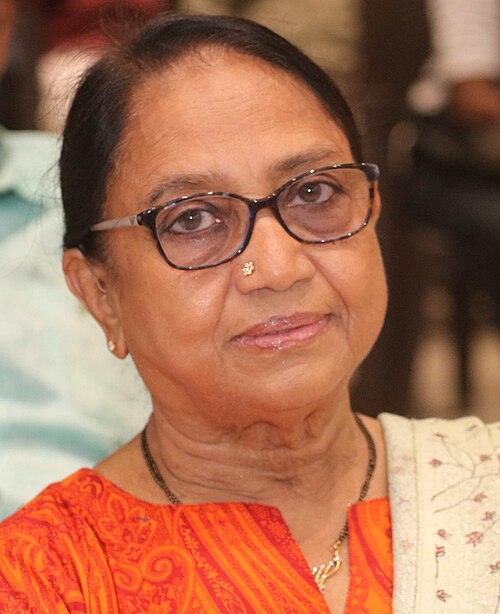
Banu Mushtaq: Keep Writing About What Matters to You
For decades, Banu Mushtaq wrote in Kannada, telling stories rooted in the lives of women and girls in southern India.
Her writing explored subjects that were deeply connected to everyday life—family, tradition, gender, caste, power and the expectations placed on women.
Then, in 2025, her work reached an international audience in an extraordinary way.
Heart Lamp, translated from Kannada by Deepa Bhasthi, won the International Booker Prize in 2025. It became the first short-story collection to win the prize and the first work translated from Kannada to receive the award.
Mushtaq’s journey is a reminder that a writer does not necessarily have to chase global attention to create meaningful work. Sometimes, the most powerful stories begin by paying close attention to the people and places closest to us.
For young writers, the lesson is simple: write about what you understand, what you notice and what you care about. A story rooted in one community can eventually speak to readers far beyond it.
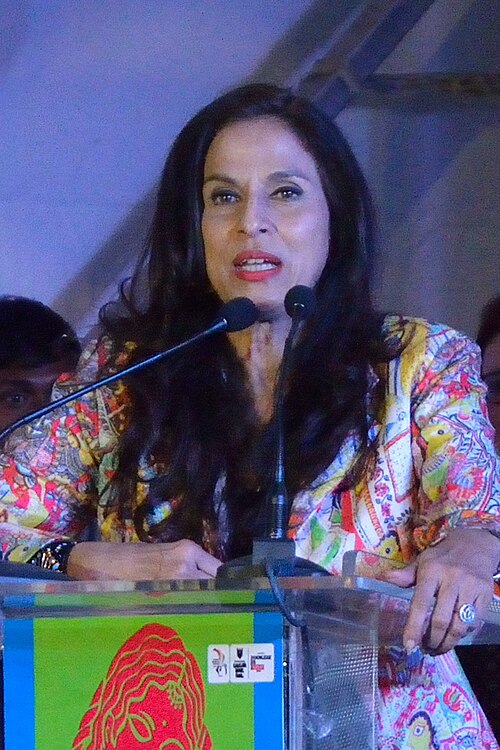
Shobhaa Dé: Don’t Be Afraid to Have Your Own Voice
Shobhaa Dé has spent decades building a distinctive voice in Indian writing and popular culture.
A novelist, columnist and social commentator, Dé became known for writing about urban India, relationships, ambition, changing social attitudes and the lives of India’s evolving middle class. Her books include Socialite Evenings, Starry Nights, Spouse and Superstar India. Her work has also been translated into several languages.
What makes her journey particularly relevant to young people is her willingness to develop a recognisable voice.
Today, social media can make everyone sound strangely similar. Trends move quickly, phrases are repeated endlessly and there is constant pressure to fit into whatever happens to be popular.
Dé’s career offers a different lesson: individuality can be an advantage.
Young writers do not need to sound like everyone else. They need to discover what they see differently—and have the confidence to say it.
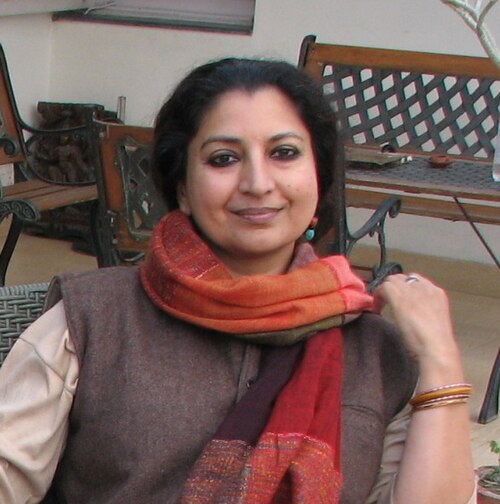
Geetanjali Shree: Your Language Is Not a Limitation
There was a time when international recognition for Indian literature was often associated with writing in English.
Geetanjali Shree’s success helped challenge that assumption.
Her Hindi novel Tomb of Sand, translated into English by Daisy Rockwell, won the International Booker Prize in 2022. It was the first novel originally written in an Indian language to win the prize and the first Hindi novel to receive the honour.
The achievement carried a message far beyond the award itself.
Language does not have to be a barrier to ambition.
For young Indians writing in Hindi, Malayalam, Tamil, Bengali, Kannada, Marathi or any of the country’s many other languages, Shree’s journey offers encouragement to write in the language that feels most natural.
A story does not become smaller because it begins in one language. With the right translation, it can travel.
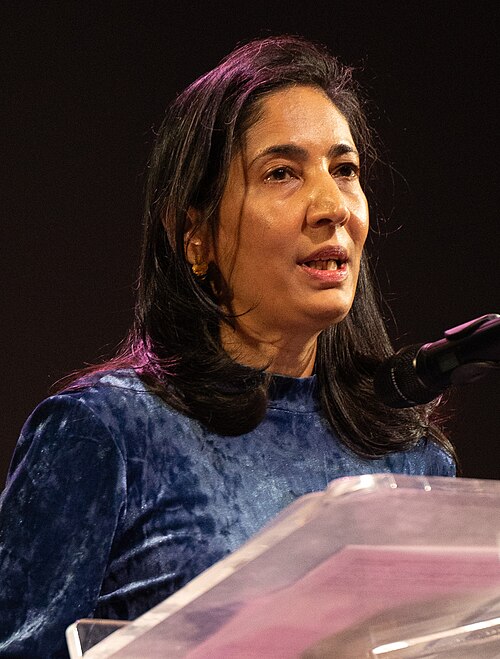
Kiran Desai: Not Everything Has to Happen Quickly
Modern youth culture often celebrates speed.
Get the job early. Build the company quickly. Go viral. Publish more. Achieve something before everyone else does.
Kiran Desai’s writing journey tells a quieter story.
Her novel The Inheritance of Loss won the Man Booker Prize in 2006. The Booker Prize notes that Desai spent seven years writing the novel.
Seven years.
In a world that constantly asks people to move faster, that number is worth remembering.
Some work needs time.
Ideas need time to mature. Writing needs rewriting. Skills develop through repetition. And sometimes the most meaningful achievements arrive after years of work that nobody else gets to see.
For young people, Desai’s journey is a reminder that being behind someone else’s timeline does not mean you are failing.
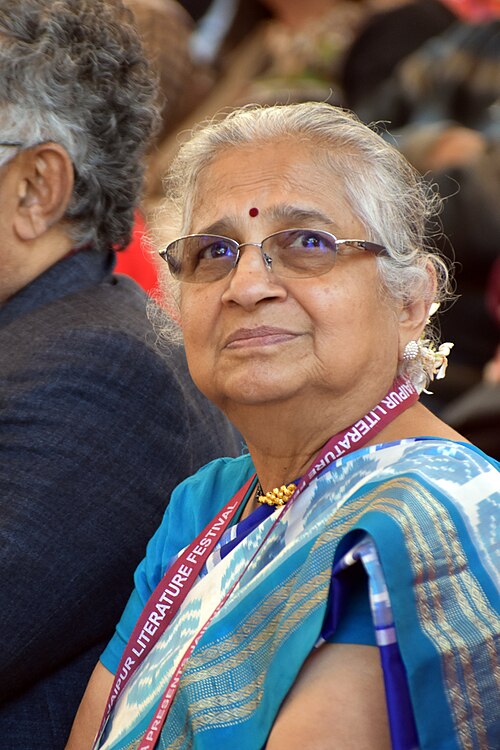
Sudha Murty: You Don’t Have to Be Just One Thing
Engineer. Author. Educator. Philanthropist.
Sudha Murty’s career has never fitted neatly into one category.
She has written extensively for children and adults, while also building a public life around education, social initiatives and philanthropy.
That makes her story particularly relevant to a generation growing up with more career possibilities than ever before.
Young people are often asked to decide early: What do you want to become?
But perhaps the better question is: What are you curious about?
A person can be interested in technology and literature. Business and art. Education and social work. Writing and entrepreneurship.
A career does not always have to be a straight line.
Sometimes, the different parts of a person’s life eventually connect in ways they could not have predicted at the beginning.
What These Writers Can Teach Young India
These five writers come from different generations, languages and backgrounds. Their writing styles are different too.
Yet their journeys share an important idea: there is no single way to find your voice.
Banu Mushtaq shows the power of staying close to stories that matter.
Shobhaa Dé demonstrates the importance of individuality.
Geetanjali Shree shows that language can carry a story across borders.
Kiran Desai reminds us that meaningful work can take time.
Sudha Murty shows that a person does not have to be defined by a single profession.
Together, their stories offer something that young people often need more than advice—a sense of possibility.
Why Their Stories Matter in the Digital Age
The definition of a writer is changing.
A young person today might write a novel, publish poetry online, create a newsletter, host a podcast, write scripts, build a digital publication or tell stories through social media.
The platforms are different, but the fundamental challenge remains the same: finding something worth saying.
India’s literary ecosystem also extends far beyond English. The Sahitya Akademi promotes literature across 24 Indian languages, while initiatives such as the Yuva Puraskar recognise and encourage young writers.
That diversity matters because India’s next generation of storytellers will not necessarily emerge from traditional publishing alone.
They may be students writing between classes. Content creators experimenting with storytelling. Journalists documenting their communities. Or someone quietly filling a notebook that nobody else has seen.
You Don’t Have to Sound Like Everyone Else
There is enormous pressure on young people to build a personal brand.
Be visible. Be interesting. Be successful. Be different.
Ironically, the pressure to be different can sometimes make everyone look the same.
The writers who leave a lasting impression usually do something simpler. They observe carefully. They develop their own way of seeing the world. And they keep refining that perspective.
That may be the most valuable lesson young readers can take from these five writers.
You do not have to become someone else to become successful.
You have to become more comfortable with your own voice.
Read More. Compare Less.
Reading is often treated as an academic activity—something to do for exams, assignments or knowledge.
But books can also be places to slow down.
They allow young readers to enter lives completely different from their own. They introduce unfamiliar cultures, arguments, emotions and experiences. They make us question assumptions and sometimes understand other people a little better.
In a world built around quick scrolling, reading asks for something different: attention.
And attention is becoming a rare skill.
The more young people read, the more possibilities they encounter—not just for stories, but for themselves.
The Next Writer May Not Know They Are a Writer Yet
Perhaps the most exciting thing about India’s literary future is that its next important voice may already be here.
It could be a teenager writing poems in the back of a notebook.
A college student documenting stories from their hometown.
A young journalist asking uncomfortable questions.
Someone writing in a regional language without imagining that readers outside their community will ever see the work.
Every writer begins somewhere.
The five women above did not follow identical paths. They wrote in different languages, explored different worlds and built different careers.
But they all found a reason to keep writing.
For young India, perhaps that is the real inspiration.
Read. Observe. Question. Write. And keep going.
Pic credit: Wikipedia