


Three-day environmental technology trade fair to showcase 6,000+ solutions and facilitate 500+ buyer-seller meetings
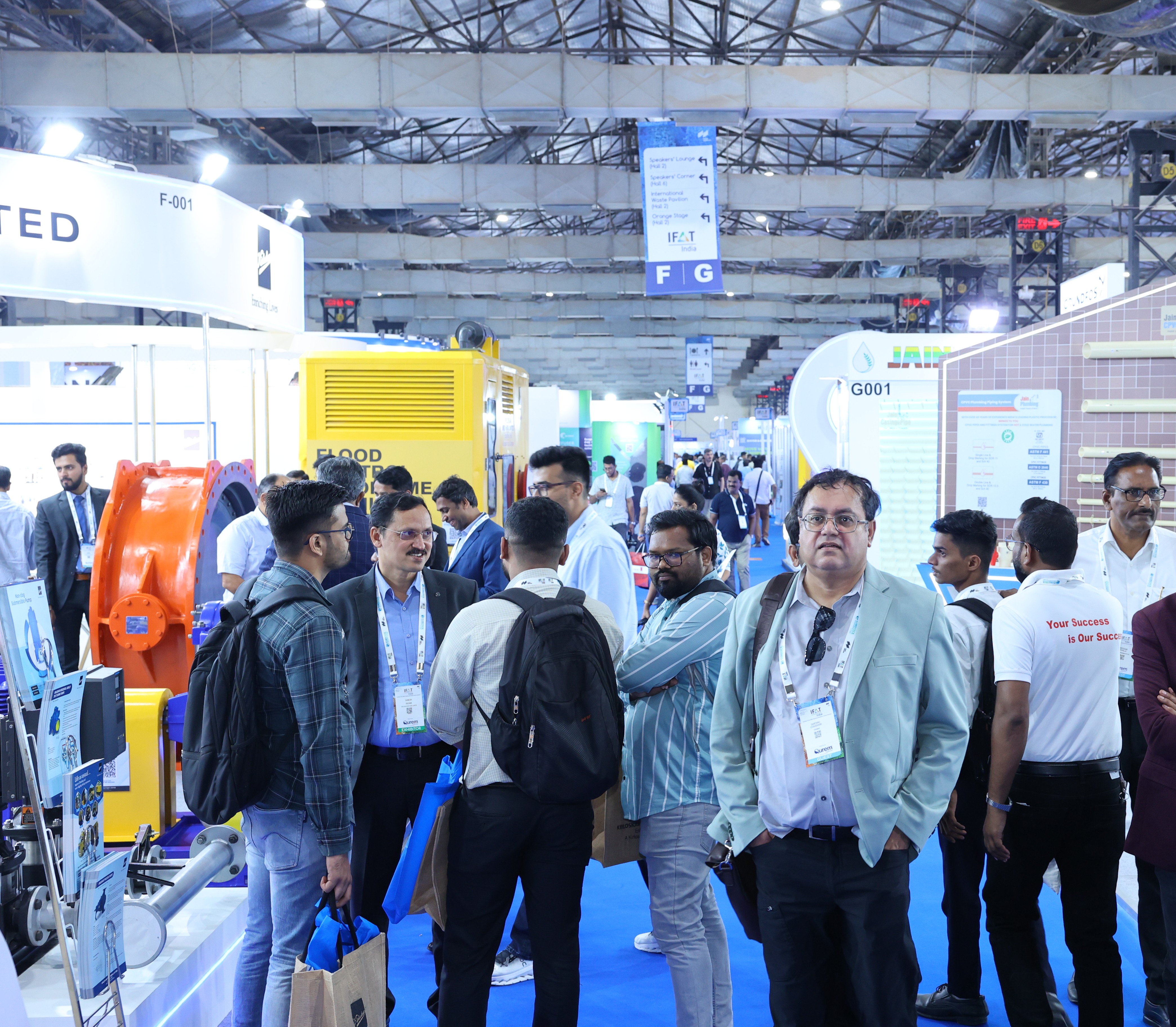
Bengaluru | Sept 02: As India steps up investment in water security, wastewater treatment, solid waste management and resource recovery, environmental technology companies, policymakers, municipal authorities and industry leaders from India and overseas will convene in Mumbai for IFAT India 2026, taking place from September 9–11, 2026, at the Bombay Exhibition Centre.
Organised by Messe Muenchen India, IFAT India is India’s largest trade fair for water, sewage, solid waste and recycling technologies. The 2026 edition is expected to bring together about 500 exhibitors from more than 30 countries and over 25,000 visitors, including representatives from municipal corporations, government agencies, EPC companies, utilities, industries, consultants, project developers and procurement teams.
International participation will be led by six country pavilions representing China, Germany, Italy, South Korea, Norway and the Netherlands, giving Indian buyers and project stakeholders’ access to technologies and expertise from established environmental technology markets.
The exhibition will also feature specialised platforms addressing emerging requirements across the sector, including the SWAN Digital Water Pavilion, International Water Association (IWA) Pavilion, Urban Local Bodies Pavilion, Smarter SME Pavilion and Start-up Pavilion.
Stronger focus on projects, procurement and technology evaluation
Business engagement will remain central to IFAT India 2026, with more than 500 pre-arranged buyer-seller meetings planned during the three-day event. The programme will connect exhibitors with municipal corporations, urban local bodies, EPC contractors, industrial buyers, consultants and procurement teams for focused discussions on active projects, technology requirements and sourcing opportunities.
Across the exhibition floor, visitors will be able to evaluate more than 6,000 products, technologies and solutions spanning water and wastewater treatment, sewage and sludge management, filtration and separation, solid waste processing, recycling, waste-to-energy, digital water management and resource recovery.
By bringing multiple technology providers and solution approaches together at one location, the exhibition will allow project owners and buyers to compare technical capabilities, understand implementation requirements and examine factors including operating costs, reliability and lifecycle performance before procurement decisions are made.
Conference to connect policy priorities with implementation
Running alongside the exhibition, the IFAT India Conference will feature 50+ knowledge sessions and more than 200 experts, including IAS officers, Municipal Commissioners, government representatives, industry CEOs, utility leaders, financiers and technology specialists.
KPMG, the Knowledge Partner for the conference, is curating the programme around key priorities shaping India’s environmental infrastructure agenda, including urban water security, AI and digital water management, water infrastructure, climate action, circular economy, resource recovery and recycling, e-waste and critical minerals, plastic circularity, and sustainable infrastructure financing.
A major focus will be urban water security, beginning with the opening plenary, “One Water, One City, One Future: Reimagining Urban Water for Viksit Bharat 2047.” The discussion will address integrated urban water management, AMRUT 2.0 priorities, utility reform, water reuse, climate resilience and flood preparedness, alongside the growing use of technologies such as AI, digital twins, smart metering, non-revenue water management and predictive maintenance.
The Blue Stage will take these discussions further into water investment, reuse and utility transformation. Sessions will address blended finance, treated wastewater reuse, financing and market adoption, global utility practices, digital transformation, community participation through Jan Bhagidari, and the transition from water compliance to more systematic water stewardship.
The Orange Stage will focus on urban sanitation, waste management and circularity, covering the future of sanitation, India’s Swachhata movement, waste management and biogas, collection and recycling systems, RDF and waste-to-fuel applications, the climate economy, and Indian Railways’ approach to Swachhata, circularity and its net-zero journey.
The Green Stage will examine the development of India’s recycling and circular infrastructure, including the transition from informal value chains to more organised recycling ecosystems, state- and city-led circular economy initiatives, technology and traceability in e-waste recovery, plastic circularity and advanced recycling, financing for circular infrastructure, and developments across the fashion and textile value chain.
Following its debut at IFAT India, the Chief Engineers’ Forum will return in 2026 for its second edition, led by the All India Institute of Local Self-Government (AIILSG). The forum will bring together Chief Engineers, municipal leaders and industry experts to address practical challenges in delivering sustainable water supply, wastewater, sanitation and solid waste infrastructure, including project execution, technology selection, adoption and long-term operational performance.
The Young Professionals Group (YPG) of the International Solid Waste Association (ISWA) will also host a special session featuring a proposed University Challenge that is being developed in association with Prof. Anupam Singh. The initiative aims to encourage greater participation from students and young professionals and bring research and new ideas into the wider industry dialogue around environmental and infrastructure solutions.
India’s environmental infrastructure priorities move towards performance and resource recovery
IFAT India 2026 comes at a time of sustained public investment and regulatory momentum in India’s urban water, wastewater and waste management sectors, supported by programmes such as Swachh Bharat Mission-Urban 2.0 and AMRUT 2.0. As cities and industries focus increasingly on processing efficiency, water reuse, resource recovery, reliability and long-term performance, the event will bring technology providers, policymakers, municipalities, industry users, consultants and project stakeholders together to connect infrastructure priorities with practical technologies, procurement opportunities and implementation expertise.