


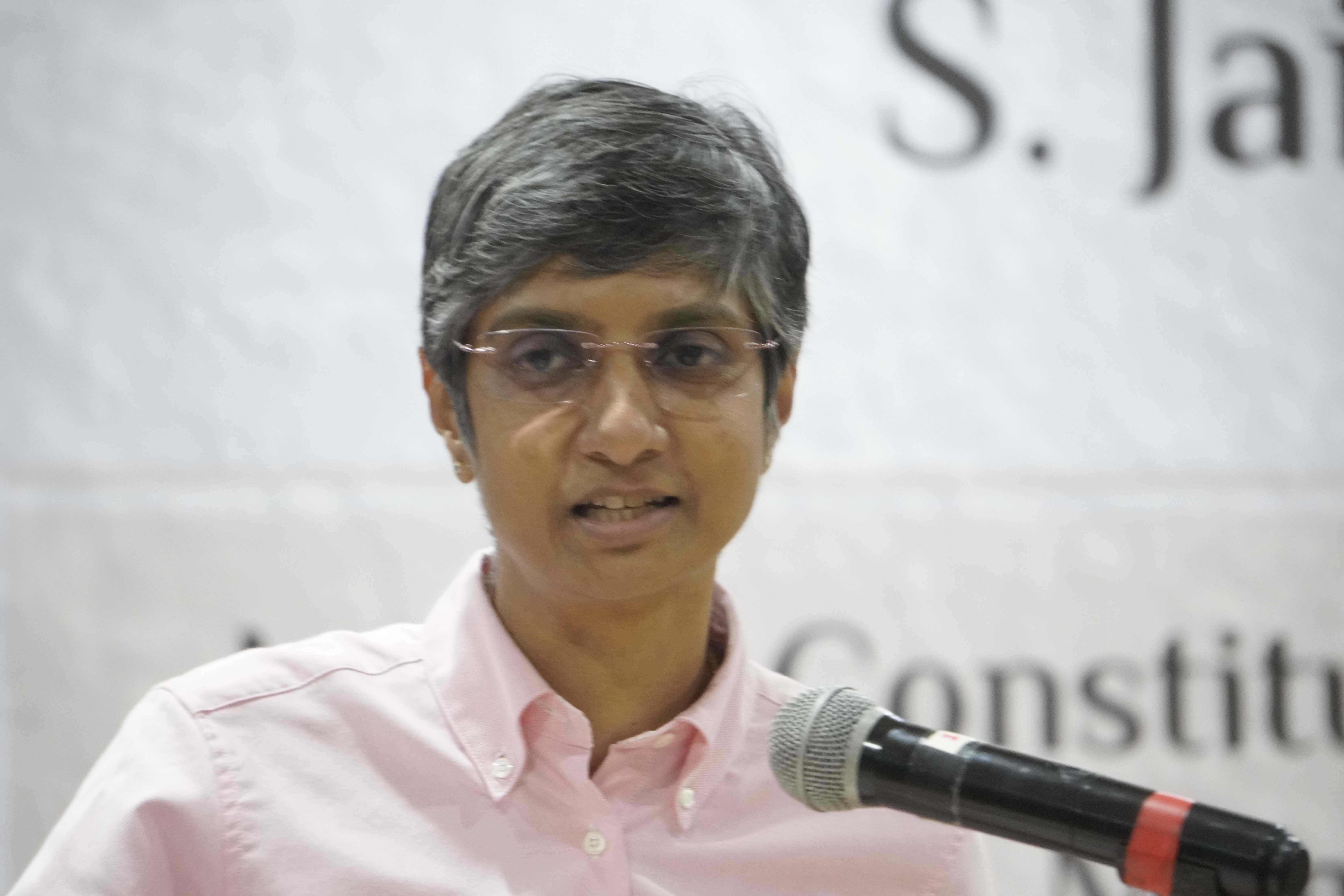
Hyderabad, August 30, 2026: The Indian Constitution is indeed endangered when the tradition of parliamentary deliberation is not allowed or followed, and when institutions such as the judiciary are politicised, said Dr. Menaka Guruswamy, Senior Advocate of the Supreme Court of India and Rajya Sabha MP from West Bengal.
Dr. Menaka was speaking on “Indian Constitution and its Protection” at a public lecture organised by the S. Jaipal Reddy Memorial Foundation in association with the Manthan Foundation at the Institution of Engineers (India), Visvesvaraya Bhavan, Khairatabad, Hyderabad, on Saturday.
An alumna of the Hyderabad Public School (HPS), Dr. Menaka explained the emerging challenges to Constitutional values, fundamental rights and democratic institutions.
The programme was attended by more than 500 intellectuals, lawyers, legal luminaries, students and members of the public.
Dr Menaka three light on the controversial Delimitation Bill, the already passed Women’s Reservation Bill and the GenZ protests in Jantar Mantar that rocked the national capital and brought down the Union Government to accede to their demands.
Responding to questions from the audience, Dr. Menaka candidly highlighted the functioning of Parliament, the role of the Opposition, youth aspirations, examinations and unemployment.
When Parliament fails, Gen Z will take to the streets, she said. When the space for parliamentary deliberation shrinks, students will take to the streets, as Gen Z did at Jantar Mantar demonstrated “, she said.
“When the spirit of the Constitution is diluted, when Parliament fails to deliver what the Republic is promised, and when Opposition parties do not deliver what is expected of them, Gen Z will take to the streets. This is not the end; it is only the beginning. They have awakened the youth of this nation to question those in power,” she said.
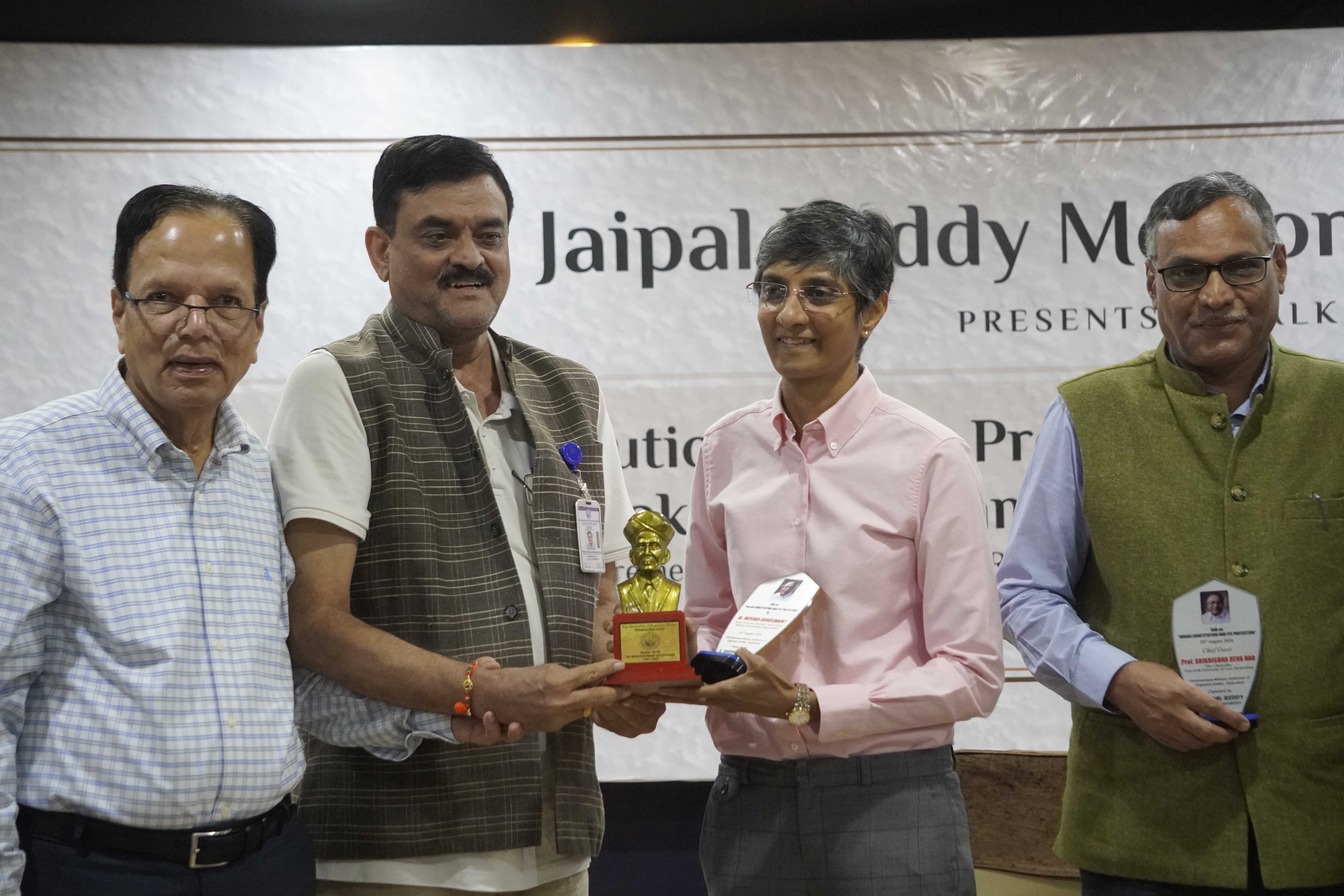
Dr. Menaka, who recently entered the Rajya Sabha said that the parliamentary environment was very different from the courtroom, where every side is expected to be heard.
“We have no right to speak in Parliament. We battle every day to get our dissent on record. I am just four months into Parliament and I go there with a courtroom-style system where everybody is heard. But that is not the case in Parliament now,” she said.
She also questioned the prolonged absence of the Union Home Minister from Parliament when important questions demanded answers. “Then what are the alternatives left? It is a sad space and a sad state of affairs,” she lamented.
Paying tribute to former Union Minister and distinguished parliamentarian S. Jaipal Reddy, Dr. MEnaka described him as “an unusual Parliamentarian, a Parliamentarian with a difference.”
“Jaipal Reddy was a politician of integrity. He belonged to a different political class,” she said.
She also responded to a question on the impact of the Special Intensive Revision (SIR) exercise and its political fallout in West Bengal, observing that “SIR certainly made a difference in the defeat of the TMC.”
Dr. MEnaka devoted considerable attention to the aspirations of young Indians and the challenges confronting students as they move from classrooms into the labour market.
“The Indian Constitution promises basic requirements to citizens, but many of those promises have been broken,” she said, stressing that the journey from education to employment cannot be left entirely to individual students.
She highlighted concerns over unemployment among young people, the closure of government schools and increasing dependence on private education. She argued that degrees should not become financial liabilities for families and called for stronger vocational and employment-oriented education systems.
Citing international models, she referred to the vocational education systems of Germany, South Korea, Japan and China, stressing the need for India to create the necessary environment.
She also spoke about the Delimitation Amendment Bill and the Women’s Reservation Bill, besides answering several questions from the audience on contemporary Constitutional and political issues.
Prof. Srikrishna Deva Rao, Vice-Chancellor, NALSAR University of Law, Hyderabad, who was the Chief Guest, said that the Rule of Law is the foundation of democracy and that Fundamental Rights are the heart and soul of democracy.
He emphasised the importance of preserving Constitutional institutions and ensuring that democratic principles remain central to public life.
Prof Rao cited the examples of Kaloji, K G Kannabiran and several legal luminaries from Telangana who fought for Human Rights and civil society.
Prof. Purushotham Reddy, noted environmentalist set the context for the programme and gave a brief introduction to the S. Jaipal Reddy Memorial Foundation, a non-profit organisation established in memory of the distinguished parliamentarian, Union Minister and former legislator in united Andhra Pradesh, S. Jaipal Reddy.
The Foundation seeks to carry forward his legacy of commitment to democratic principles, parliamentary debate and freedom of expression. It organises public lectures, presents an annual award and facilitates discussions on issues of national importance.
Dr. Menaka Guruswamy is a Senior Advocate at the Supreme Court of India and has been associated with several significant Constitutional and civil-rights cases. She played a prominent role in the legal challenge to Section 377 of the Indian Penal Code, which culminated in the Supreme Court’s landmark 2018 judgment decriminalising consensual same-sex relations. She and fellow advocate Arundhati Katju were subsequently named among TIME magazine’s 100 Most Influential People of 2019.