


From Using AI to Having an AI of Your Own
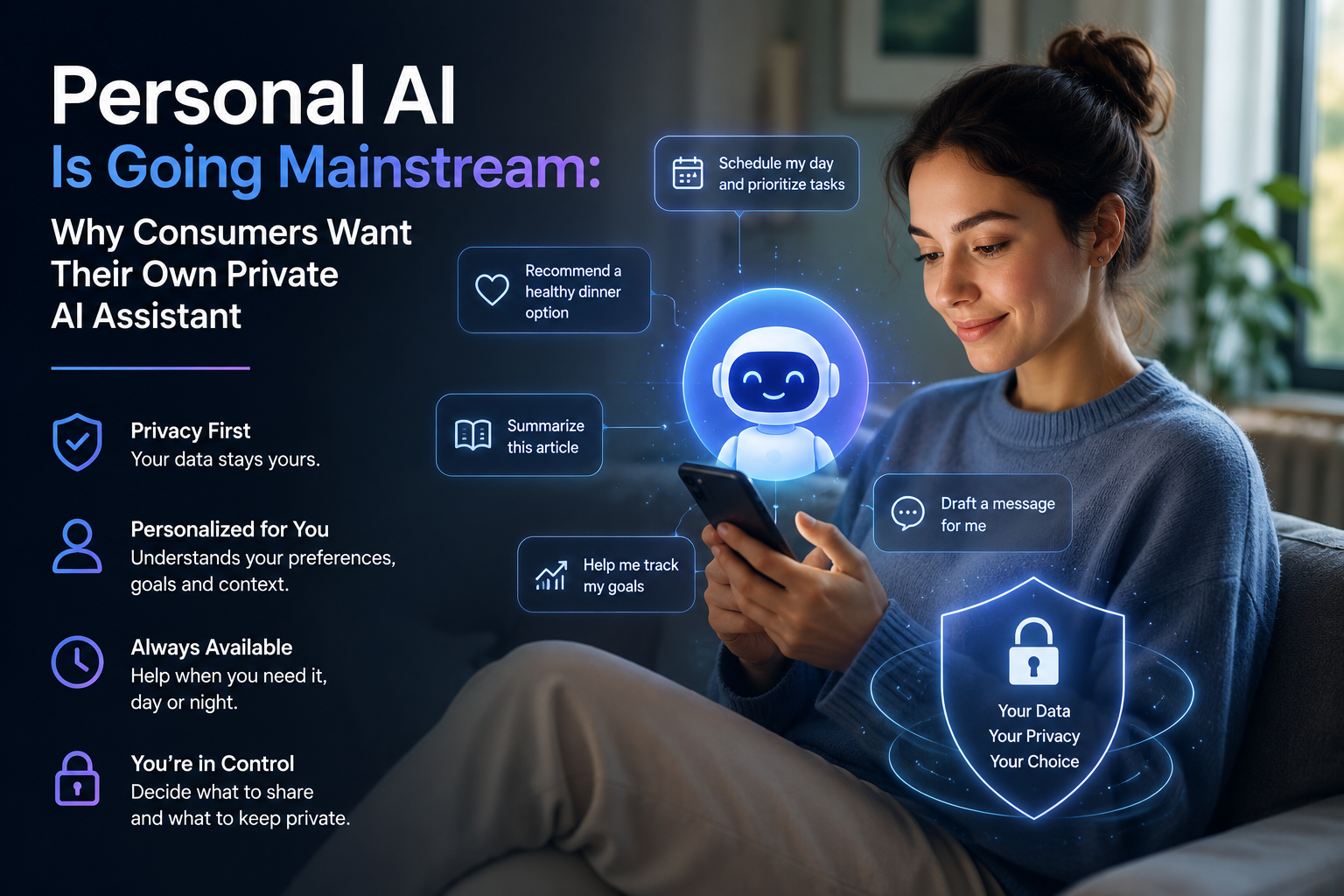
Artificial intelligence is moving from something people occasionally use to something they increasingly want to keep close. The first wave of consumer AI was about asking questions, generating content, creating images and getting quick answers. The next wave could be much more personal. Consumers are beginning to imagine an AI assistant that knows their preferences, remembers important context and helps them navigate everyday life. The idea is no longer simply to use AI when needed, but to have a personal AI that becomes a familiar digital companion.
The Rise of the Personal AI Assistant
A general-purpose chatbot starts almost every interaction from the same place. A Personal AI assistant could work differently. It could remember that a user prefers budget-friendly hotels, writes concise emails, shops from certain brands or schedules meetings in the morning. Over time, those details could make interactions faster and more relevant. The real value would not necessarily come from having access to the most powerful AI model, but from having an assistant that understands the individual behind the request.
Why Memory Matters
AI memory could become one of the most important features of personal assistants. Instead of repeatedly explaining preferences and providing background information, users could allow their assistant to retain selected details. That could make everything from travel planning and shopping to work organisation more seamless. However, memory also introduces a new layer of responsibility. Consumers will want to know exactly what their AI remembers, why it remembers it and whether they can easily edit or delete that information.
The Privacy Paradox
The demand for personalised AI comes at a time when people are becoming increasingly conscious of their digital footprints. Cisco’s 2024 Consumer Privacy Survey, which surveyed more than 2,600 consumers across 12 countries, found that 63% believe AI can be useful in improving their lives, while 78% believe organisations have a responsibility to use AI ethically. The findings capture the central tension surrounding Personal AI: consumers want the convenience of intelligent technology without feeling that they have surrendered control of their personal information.
When Convenience Meets Confidentiality
That tension becomes particularly important as people begin using AI for more personal tasks. Cisco’s research found that 30% of GenAI users were entering personal or confidential information into AI tools, while 84% expressed concern that information entered into GenAI could become public. For Personal AI, this makes privacy more than a technical feature. Secure data handling, transparent permissions and clear controls could become fundamental to whether consumers are willing to trust an AI assistant with their digital lives.
A More Personal Digital Experience
Personalisation could be the biggest advantage of having a dedicated AI assistant. Today’s digital services already recommend music, films, products and destinations based on previous behaviour. Personal AI could take that idea further by bringing preferences together across different parts of life. Rather than receiving isolated recommendations from individual platforms, users could have one assistant that understands their broader priorities and helps them make decisions accordingly.
The AI Layer Above Your Apps
Consumers currently manage a growing collection of applications for communication, shopping, travel, entertainment, finance and productivity. Personal AI could eventually sit above this fragmented digital ecosystem. An AI agent might check a calendar, research options, compare prices, prepare an itinerary and organise information without requiring the user to switch constantly between different services. In that sense, Personal AI could become less of an application and more of a digital layer connecting the applications people already use.
From Digital Tools to Digital Identity
This also raises an intriguing question about ownership. Most AI assistants today are closely connected to the companies that develop and operate them. A more mature Personal AI ecosystem could give individuals greater control over their AI identity, including their memories, preferences and permissions. Instead of starting again whenever they move between services, users could potentially carry their personal AI experience with them across devices and platforms.
Trust Could Become the Real Differentiator
The technology may be impressive, but trust could determine whether people actually adopt it. Cisco’s survey found that 75% of consumers would not purchase from organisations they do not trust with their data. That finding has implications for companies building AI-powered services. Consumers may increasingly judge Personal AI not only by how intelligent it is, but by how clearly it explains its data practices and how much control it gives the user.
The Human Side of Personal AI
There is also something deeply human about the appeal of an AI that remembers. Consumers are already accustomed to digital experiences becoming more personalised, from curated playlists to shopping recommendations. But Personal AI could make that relationship feel more continuous. An assistant that understands a user’s habits, priorities and preferences could begin to feel less like a piece of software and more like a reliable digital companion. The challenge will be ensuring that this familiarity does not cross the line into unwanted surveillance.
A New Gatekeeper for Brands
Personal AI could eventually change the relationship between consumers and businesses. Today, brands invest heavily in search visibility, advertising, social media and content to capture attention. But if consumers increasingly ask AI agents to research products and services on their behalf, the assistant could become an important gatekeeper. Instead of competing solely for human attention, brands may have to make their products understandable, trustworthy and relevant to AI systems making recommendations for consumers.
The Future Belongs to Trusted Personal AI
Personal AI is ultimately about more than making chatbots smarter. It represents a shift towards technology that is more contextual, personalised and potentially proactive. Consumers may want an assistant that can remember enough to be useful, act intelligently across different services and still respect clear boundaries around privacy. The most successful Personal AI may therefore not be the one that knows everything, but the one that gives users meaningful control over what it knows. As artificial intelligence moves deeper into everyday life, the winning formula could be simple: personalisation without intrusion, convenience without compromise and intelligence built on trust.