


Second-hand shopping is changing its image. What was once largely associated with thrift stores, bargain hunting and informal markets is becoming a more organised part of modern retail.
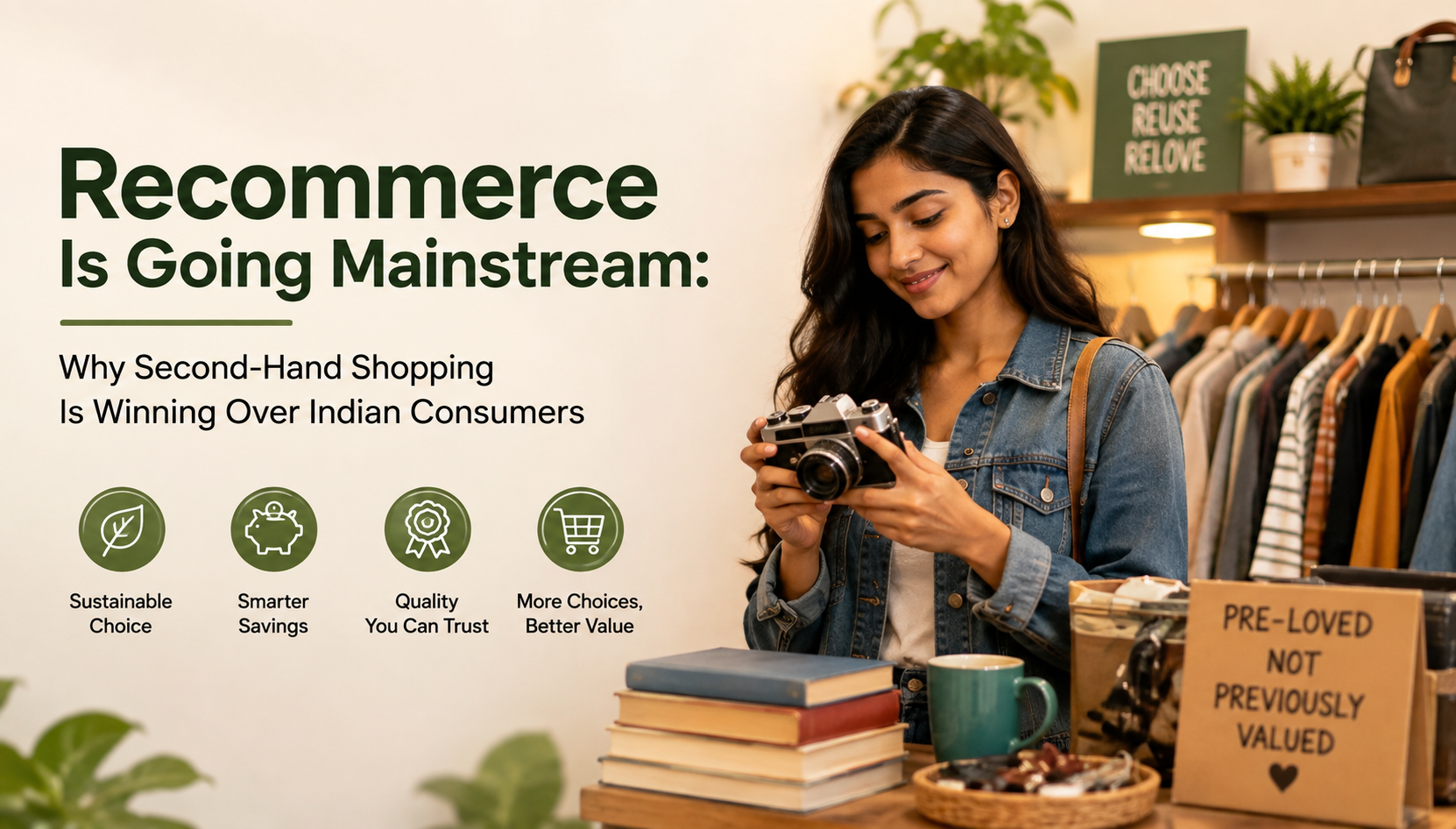
Aug 28: There is a quiet revolution happening in the way people shop. It is not being driven by another flashy retail launch or a new shopping app. Instead, it is happening in wardrobes, phone upgrades, social-media feeds and online marketplaces, where consumers are increasingly asking a simple question: why buy new when something just as good already exists?
A decade ago, a second-hand shirt might have been associated with thrift stores and bargain hunting. A used smartphone was often a compromise made to save money. Today, the language has changed. Products are being described as pre-loved, refurbished, vintage, pre-owned and certified. The change is more than cosmetic. It reflects a growing comfort with the idea that a product can have more than one owner—and more than one commercial life.
This is the world of recommerce, the business of buying and selling products that have already been owned, used, refurbished, repaired or returned. From fashion and luxury goods to smartphones, furniture and collectibles, recommerce is quietly rewriting the traditional retail story.
The Rise of the Second Sale
The scale of the opportunity is difficult to ignore. India’s recommerce market is projected to reach $5.91 billion in 2026, according to PayNXT360, after growing at a compound annual rate of 14.6% between 2021 and 2025. By 2030, the market is projected to reach around $8.61 billion.
The global picture is equally striking. ThredUp’s 2026 Resale Report projects that the global second-hand apparel market could reach $393 billion by 2030.
These figures tell a story that goes well beyond thrift shopping. Resale is becoming a serious retail category, attracting consumers, technology companies, marketplaces and increasingly, the brands that originally manufactured the products.
The second sale is becoming almost as important as the first.
When Price Became a Reason to Shop Differently
The appeal begins with money.
For a consumer staring at the price of a premium smartphone, designer handbag or high-quality piece of furniture, a pre-owned alternative can make an otherwise expensive purchase possible. In a period when consumers are paying closer attention to household budgets, the ability to access more for less has obvious appeal.
But affordability alone does not explain the rise of recommerce.
There is a growing difference between buying something cheaply and buying something that represents good value. A professionally refurbished smartphone with a warranty, for example, is a very different proposition from buying a used phone from an unknown seller. The same is true of an authenticated luxury handbag or a professionally graded vintage garment.
The resale industry is gradually turning the idea of “used” into a proposition based on value rather than compromise.
The Smartphone’s Second Life
Few products illustrate this transformation better than the smartphone.
Every year, millions of consumers replace devices that still have plenty of useful life left in them. Instead of disappearing into drawers or becoming electronic waste, an increasing number are entering a secondary market where they can be tested, repaired, refurbished and sold again.
In India, refurbished and used smartphones accounted for more than 19% of overall smartphone sales in 2024, according to Counterpoint Research data reported by Business Standard. India’s refurbished smartphone sales also grew 4.9% during the first half of 2025, according to Counterpoint.
The numbers reveal an important change in behaviour. Consumers are increasingly willing to separate the idea of “new technology” from “newly manufactured technology.”
A phone does not have to come straight out of a factory to feel like a smart purchase.
India’s Recommerce Market Has a Trust Problem
There is, however, another side to the story.
India’s refurbished smartphone market remains heavily fragmented. Counterpoint estimated that 77% of refurbished smartphone sales were handled by fragmented, unorganised sellers in 2024.
That makes trust one of the biggest opportunities in the sector.
Consumers want to know whether a device is genuine, whether the battery has been replaced, whether it has hidden faults and what happens if it stops working. The same concerns exist in fashion and luxury resale, where authenticity, condition and hygiene can influence the decision to buy.
This is where organised recommerce businesses have an important role to play. Authentication, product grading, warranties, testing, secure payments and transparent return policies can transform a transaction that once felt risky into one that feels familiar.
The next stage of recommerce will therefore be built not only on affordability, but on confidence.
The Generation That Made Thrifting Aspirational
Something else has changed: the cultural meaning of second-hand shopping.
For many younger consumers, buying pre-owned is not necessarily about owning less. It is about finding something that feels different.
Vintage clothing, archive pieces, rare sneakers and pre-owned luxury goods have become part of a culture where uniqueness itself has value. A mass-produced item may be easy to find. A vintage piece with a history is not.
Gen Z and Millennials are at the centre of this shift. ThredUp’s 2026 report estimates that these generations will account for 71% of second-hand market growth through 2030.
For younger shoppers, the resale market is not an afterthought. It is becoming part of the mainstream fashion and lifestyle conversation.
Your Next Thrift Store Could Be Your Social Feed
The rise of social media has made this transformation even faster.
Second-hand shopping used to require effort. Consumers had to visit a thrift store, search through listings or know where to look.
Now, discovery can happen anywhere.
A creator posts a vintage outfit. Someone notices a pair of rare sneakers in a video. A fashion enthusiast shares an archive find. A social-media recommendation sends a shopper towards a resale marketplace.
ThredUp found that 39% of younger-generation shoppers had purchased second-hand apparel through social-commerce platforms during the previous 12 months.
The significance goes beyond fashion. Social media has turned resale into a form of discovery. Consumers are not always searching for used products. They are discovering products and then deciding that buying pre-owned makes sense.
That is a very different retail journey.
The Environmental Argument
Then there is the sustainability question.
The modern retail economy has traditionally depended on a cycle of production, consumption and replacement. But the environmental cost of that cycle is becoming increasingly difficult to ignore.
The United Nations Environment Programme estimates that around 92 million tonnes of textile waste are generated globally each year. It also estimates that textiles contribute around 2% to 8% of global greenhouse gas emissions and consume approximately 215 trillion litres of water annually.
Against that backdrop, extending the life of existing products begins to look less like a niche consumer choice and more like a practical part of the circular economy.
A garment worn by two people instead of one has a longer useful life. A refurbished smartphone used for another three years extracts more value from the resources already invested in manufacturing it.
Recommerce is not a magic solution to the environmental impact of retail. Transportation, packaging, cleaning and refurbishment still carry costs. But the fundamental idea is powerful: make products last longer.
The Product Is No Longer Finished When You Stop Using It
Perhaps the most interesting shift is happening in the way people think about ownership.
Imagine buying a premium smartphone today. Traditionally, its value was measured by how well it served you until you replaced it.
In a recommerce economy, there is another calculation.
What will it be worth when you are finished with it?
The same thinking applies to handbags, watches, sneakers, furniture and other products with established secondary markets.
ThredUp’s 2025 research found that 41% of younger consumers were less likely to purchase apparel if it did not have good resale value.
That changes the meaning of value. The purchase price is no longer the entire story. The potential resale price becomes part of the equation.
For consumers, that can lower the effective cost of ownership. For brands, it could influence how products are designed, manufactured and marketed.
Durability may become a selling point not just because it keeps a customer happy, but because it keeps the product valuable for its next owner.
Brands Are Learning to Love the Second Sale
For years, resale could have looked like competition for traditional retailers. Now, many brands are beginning to see it differently.
Trade-in programmes, buyback schemes, repair services and brand-operated resale platforms allow companies to participate in the second life of their own products.
The relationship can become circular. A customer buys a product, uses it, trades it in and receives store credit. The brand gets another opportunity to engage with that customer, while the original product can be refurbished and sold again.
ThredUp’s 2025 research found that 47% of consumers were more likely to make a first purchase from a brand if it offered shopping credit for trading in used apparel.
The message for retailers is clear. Resale does not necessarily mean losing the first sale. It can create a second relationship.
India Already Understands Resale
India’s relationship with second-hand goods is hardly new.
Used cars have long been bought and sold. Families pass clothing and furniture between generations. Electronics move through informal markets. Local businesses have traded pre-owned goods for decades.
What is changing is the infrastructure around those transactions.
Digital payments, online marketplaces, logistics networks, refurbishment centres and authentication technologies are making it possible to take a traditionally informal behaviour and build a more organised marketplace around it.
This could be particularly significant for India’s younger, digitally connected consumers, who are increasingly comfortable researching products online before making a purchase.
The challenge will be turning familiarity with resale into trust in organised resale.
The Next Big Opportunity May Be Fashion
Electronics have given India’s recommerce market a strong foundation, but fashion could be the next major growth story.
The attraction is obvious. Fashion moves quickly, trends return, vintage styles come back into circulation and consumers are increasingly interested in unique pieces.
Research from the World Resources Institute on second-hand clothing in India has found that younger consumers are an important audience, with affordability and environmental considerations among the motivations for purchasing pre-owned clothing.
Yet the same research highlights barriers such as concerns about hygiene and clothing condition.
That creates an opening for platforms and brands that can solve the details—cleaning, quality grading, authentication, sizing, presentation and returns.
In fashion resale, trust may ultimately be as important as style.
A Market Built on Multiple Lives
The beauty of recommerce is that it changes a product’s story.
A jacket is no longer simply a jacket that has been sold once. It can become a vintage piece, pass into another wardrobe and eventually find another owner.
A smartphone can be repaired, refurbished and put back into circulation.
A watch can move between generations.
A chair can be restored rather than discarded.
The product keeps moving. Its value keeps moving with it.
That is the essence of the second-life economy.
The End of “New Is Always Better”
The rise of recommerce does not mean consumers will stop buying new products. Newness will always have its place in retail.
What is changing is the assumption that new automatically means better.
A product that is professionally refurbished, authenticated and backed by a warranty can be more attractive than a brand-new product that costs substantially more. A vintage jacket can be more interesting than something fresh off a mass-market production line. A pre-owned luxury watch can offer a sense of history that a new one simply cannot.
The distinction between new and used is beginning to matter less than the distinction between valuable and wasteful.
The Future Has Already Been Owned
Recommerce is ultimately about more than second-hand shopping. It represents a change in the way consumers, brands and retailers think about the life of a product.
India’s recommerce market is projected to reach $5.91 billion in 2026 and approximately $8.61 billion by 2030, while the global second-hand apparel market is expected to approach $393 billion by 2030. Those numbers point towards a retail economy in which resale is no longer a side business.
It is becoming part of the main story.
The next generation of shoppers may not divide the world into new products and used products as sharply as previous generations did. They may simply look for the best product, the best price, the best story or the best value.
And perhaps that is the most interesting thing about recommerce.
The future of retail may not belong entirely to products that are brand new.
It may belong to products that still have another life left in them.