


At a time when the global economy is navigating uncertainty, supply-chain disruptions, and shifting geopolitical realities, India is charting a clear and confident growth path. What stands out today is not just the pace of India’s economic expansion, but the certainty with which the country is moving forward—guided by a long-term vision, stable governance, and a reform-driven approach.
India’s growth journey over the past decade reflects a powerful governing philosophy often described as Reform, Perform, Transform. This approach has moved beyond intent and policy announcements to deliver measurable outcomes—reshaping India’s economic structure and global standing.
From Reform to Transformation
Reforms over the last decade have focused on simplifying regulations, improving ease of doing business, strengthening infrastructure, and formalising the economy. Performance has followed through faster execution, digital governance, and policy continuity. The transformation is now visible in outcomes: rising manufacturing capacity, expanding exports, growing digital leadership, and renewed investor confidence.
India is today the world’s fastest-growing large economy, supported by macroeconomic stability, controlled inflation, and a strong domestic market. Global institutions increasingly recognise India as a key engine of global growth, especially as traditional manufacturing hubs face rising costs and strategic realignments.
India’s Rise as a Global Manufacturing Hub
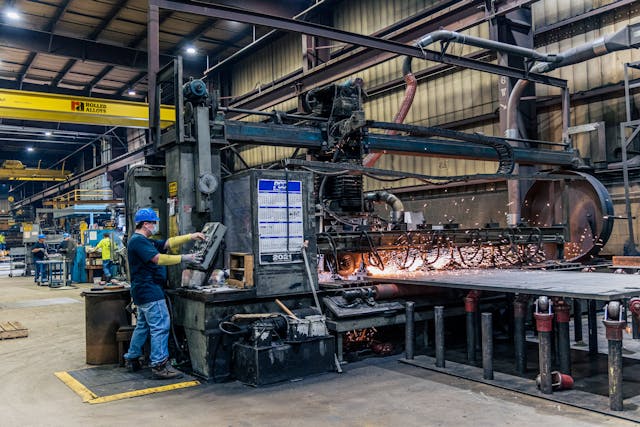
India’s manufacturing ambitions are no longer aspirational—they are unfolding on the ground. The country is steadily positioning itself as a preferred destination for global manufacturing, backed by scale, cost competitiveness, and an expanding skilled workforce.
Once heavily dependent on imports, India has become the world’s second-largest mobile phone manufacturer, hosts the third-largest start-up ecosystem, and is rapidly expanding its footprint in electronics, defence manufacturing, automobiles, renewable energy, and semiconductors. The emergence of large industrial corridors, special investment regions, and production-linked incentive (PLI) schemes has accelerated this momentum.
Regions such as Saurashtra and Kutch in Gujarat exemplify this transformation. These areas, once challenged by natural hardships, are now anchor regions of India’s manufacturing and export growth. With dense MSME networks, high-precision engineering clusters, port-led development, and cost-efficient production ecosystems, they offer investors a complete value chain—from basic manufacturing to advanced technologies.
Infrastructure That Enables Growth
One of India’s biggest competitive advantages today is infrastructure readiness. World-class ports, expanding highways, modern airports, metro networks, and logistics corridors are reducing turnaround time and improving global connectivity. Port-led industrialisation has strengthened exports, while large-scale renewable energy projects are ensuring long-term energy security.
India is also making decisive strides in green manufacturing. Mega renewable energy parks, green hydrogen initiatives, and battery energy storage systems are positioning the country as a serious player in the global clean energy transition—where sustainability meets commercial viability.
The Power of Talent and Skills
Beyond physical infrastructure, India’s demographic strength is emerging as a decisive advantage. An industry-ready workforce is now central to India’s growth strategy. Skill universities, sector-focused training institutions, and global academic partnerships are preparing talent aligned with future industries—manufacturing, logistics, defence, renewable energy, and advanced technologies.
With international universities setting up campuses and industry-linked skilling models gaining traction, investors find reassurance not just in policy stability, but also in talent availability.
Why This Is India’s Moment
India’s value proposition to global investors today rests on five pillars:
political stability, policy continuity, scalable manufacturing capacity, cost competitiveness, and a large domestic market. Combined with rising consumption and a growing middle class, these factors create a rare blend of opportunity.
As supply chains diversify and companies adopt a “China+1” or “multi-hub” strategy, India stands out as a natural choice—not only for manufacturing, but for long-term growth partnerships.
Looking Ahead: Towards a Developed India
India’s ambition is clear: to emerge as a developed nation by 2047. Manufacturing-led growth, export expansion, digital leadership, and inclusive development are central to this vision. The journey is no longer theoretical—it is visible in factories, ports, start-ups, skill centres, and global investor interest.
For global businesses and investors, the message is simple and timely:
India is ready. The ecosystem is prepared. The opportunity is now.