


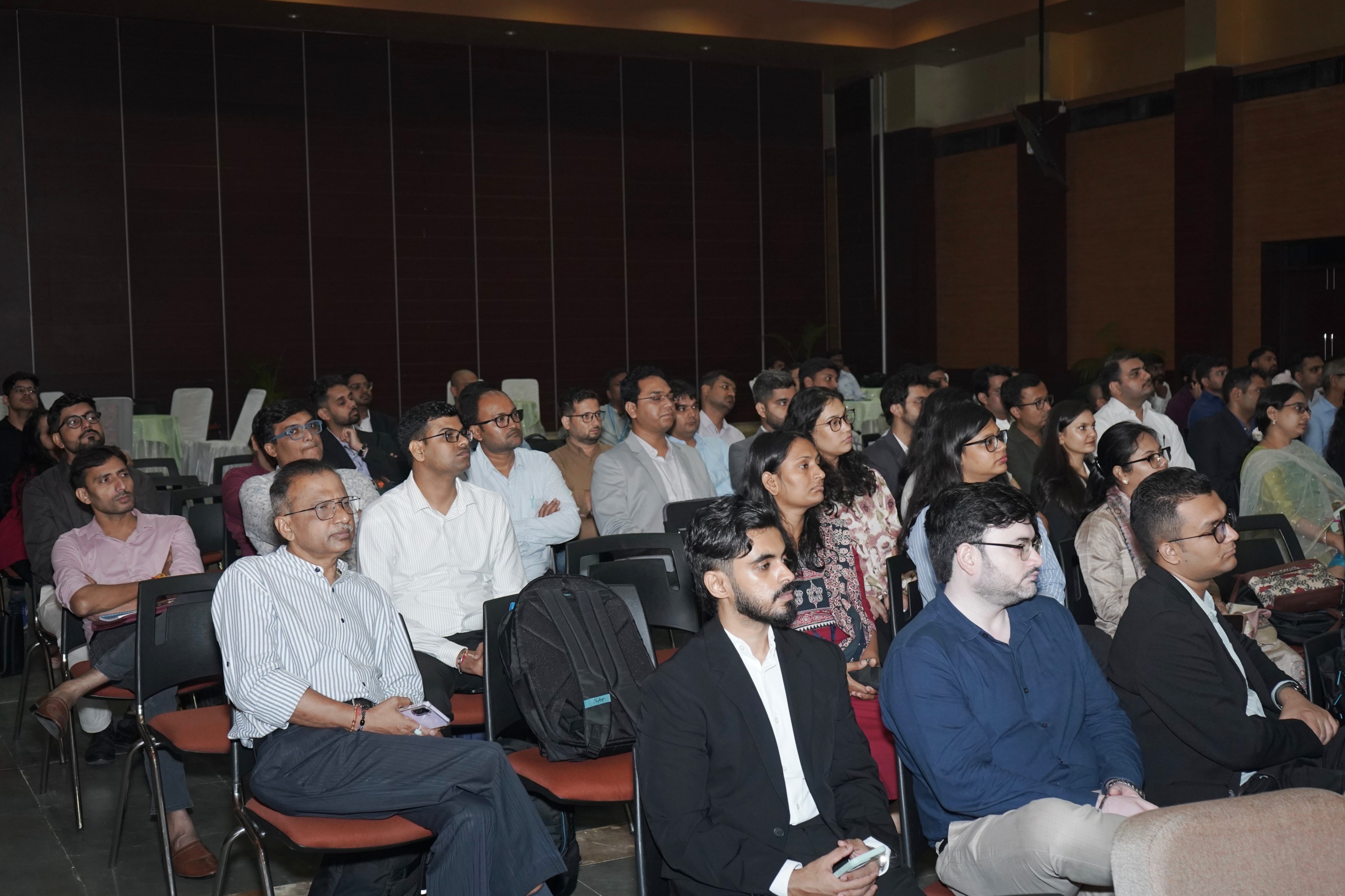
Lucknow, Aug 28: Indian Institute of Management Lucknow (IIM Lucknow) inaugurated the second batch of its Blended MBA Programme (2026–28) and the Executive Fellow Programme in Management (EFPM) at the campus today (27th August 2026). The programmes reflect IIM Lucknow’s continued efforts to expand access to high-quality management education through flexible formats that respond to the evolving needs of working professionals and aspiring management researchers.
The inaugural programme was attended by Prof. M.P. Gupta, Director, IIM Lucknow, Chief Guest Mr. Sandeep Asthana, Country Head – India, Sun Life Financial and alumnus of IIM Lucknow, Batch of 1993; and Guest Speakers Mr. Subodh Vardhan, Independent Consultant – Business Strategy and Market Access, and Mr. Ashutosh A. Sinha, Business Head, Putzmeister India. Dignitaries from IIM Lucknow, including Prof. Sanjay Kumar Singh, Dean (Programmes); Prof. Omkarprasad S. Vaidya, Chairperson, bMBA Programme; and Prof. Sanjeev Kapoor, Dean (Faculty), welcomed the new cohort and set the context for their academic journey.
Addressing the new batch, Prof. MP Gupta, Director, IIM Lucknow, mentioned that the landscape of management education is changing, with programmes designed specifically for working professionals gaining increasing relevance. Conventional full-time programmes can be challenging for professionals to pursue alongside their careers, making flexible formats such as blended and executive education increasingly important. These programmes provide professionals with the opportunity to continue working while upgrading their knowledge, developing new capabilities, and staying relevant in a rapidly changing professional environment.
The growing demand for flexible management education reflects a broader shift towards learning formats that enable professionals to balance academic pursuits with their careers. Programmes such as the Blended MBA provide an opportunity to integrate classroom learning with workplace experience, while the EFPM offers experienced professionals and management practitioners a pathway to engage in advanced research and contribute to management knowledge.
While reflecting on his own journey, Chief Guest Mr. Sandeep Asthana, Country Head – India, Sun Life Financial, and IIM Lucknow alumnus, PGP Batch of 1993, encouraged the new cohort to make the most of their time at IIM Lucknow and make their families proud. Highlighting the distinctive advantage of the Blended MBA, he said, “In the Blended MBA, you are going to be in the classroom as well as at work. You will learn the theory and practise it at the same time. Your case studies will be live, happening all around you. This is a unique opportunity to apply what you learn in the classroom to real-world situations and truly understand how management works in practice.”
The inaugural programme also featured sessions by Guest Speakers and IIM Lucknow alumni Mr. Ashutosh A. Sinha, Business Head, Putzmeister India, on “Management of IQ (Intelligence Quotient) × EQ (Emotional Quotient) × NQ (Network Quotient) = Career Potential”, and Mr. Subodh Vardhan, Independent Consultant – Business Strategy and Market Access, on “Making the Most of Your MBA for Career Success.” The sessions provided participants with insights into leadership, career development and the skills required to navigate an evolving professional landscape.
The programme also included a session on “Learning through Case Studies,” focusing on the practical application of management concepts and experiential learning.
Prof. Omkarprasad S. Vaidya, Chairperson, Blended MBA, IIM Lucknow, emphasised that the Blended MBA is designed to bring together academic learning, professional experience and practical application. Through this programme, participants can engage with contemporary management concepts while drawing on their own workplace experiences to enrich their learning.
Together, the bMBA and EFPM represent IIM Lucknow’s commitment to creating multiple pathways for lifelong management learning—enabling professionals to enhance their managerial capabilities while also supporting advanced research and knowledge creation in management.