


Lumami, Aug 24: Nagaland University’s multi-institute international study explored a comprehensive framework that suggests a strategic Artificial Intelligence system to promote ethical decision making, transparency, environmental sustainability, and organizational resilience in AI- digital platforms.
The study suggests that AI is not merely a regulatory tool but a mechanism that supports and enhances stakeholder trust by building an integrated AI with environmental sustainability and long-term organizational performance.
As AI continues to shape and transform the decision making in many areas including environmental management sustainability, ethical governance and concerns relating to transparency, accountability, fairness, and gaining public trust have become crucial.
The study presents an integrated framework that connects AI governance, organizational resilience, ethical decision-making, and environmental sustainability in a single model.
The study used a mixed-methods approach involving 185 managers, sustainability officers, governance experts, and AI specialists from organizations using AI-enabled environmental and digital platform systems.
The findings were published in NESciences, an interdisciplinary research domain that integrates natural sciences and engineering to develop innovative solutions for real-world scientific and technological challenges.
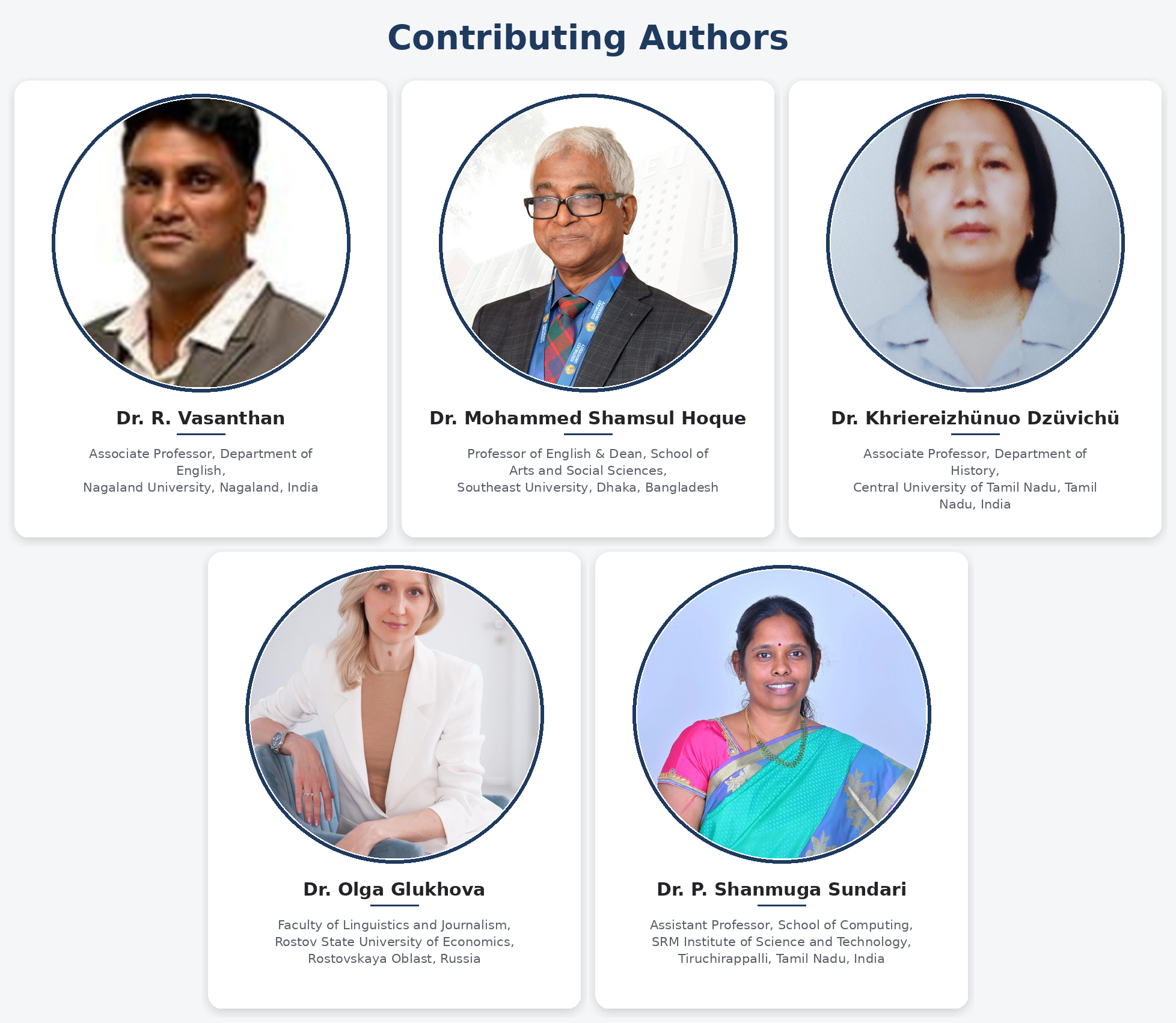
The paper was co-authored by an international team comprising Dr. Mohammed Shamsul Hoque, Professor of English and Dean, School of Arts and Social Sciences, Southeast University, Dhaka, Bangladesh, Dr. R. Vasanthan, Associate Professor, Department of English, Nagaland University, Nagaland,Dr. Khriereizhünuo Dzüvichü, Associate Professor, Department of History, Central University of Tamil Nadu,Dr. Olga Glukhova, Faculty of Linguistics and Journalism, Rostov State University of Economics, Russia,.Dr. P. Shanmuga Sundari, Assistant Professor, School of Computing, SRM Institute of Science and Technology, Tiruchirappalli, Tamil Nadu, India.
Highlighting the importance of collaborative research on transformative technologies like AI, Prof. Jagadish Kumar Patnaik, Vice-Chancellor, Nagaland University, said,
“As AI increasingly influences decision-making processes across sectors, it is imperative that technological advancement is guided by ethical principles, institutional accountability, and long-term sustainability goals. This research underscores the importance of developing governance mechanisms that promote social responsibility and environmental stewardship while enhancing organizational effectiveness. Such interdisciplinary and international collaborations reflect Nagaland University’s commitment to research excellence and its engagement with contemporary global challenges.”
Elaborating on this research Dr. R. Vasanthan said,
“Artificial Intelligence has great potential in terms of transforming the organization, it is not simply about regulating technology but it is a strategic approach that helps organizations to use AI responsibly with transparency, accountability while protecting the public interest and ensuring ethical decision making. This study aims to benefit policymakers, industrial leaders and also researchers by providing a practical framework for designing responsible AI strategies that promote sustainable development, strengthen stakeholder trust, and support ethical decision-making in AI-driven organizations.”
This research helps scientists:
⮚Promote for responsible AI adoption
⮚Strengthen organizational resilience through AI governance.
⮚Improve transparency, accountability, and stakeholder trust.
⮚Support sustainable environmental management through AI