


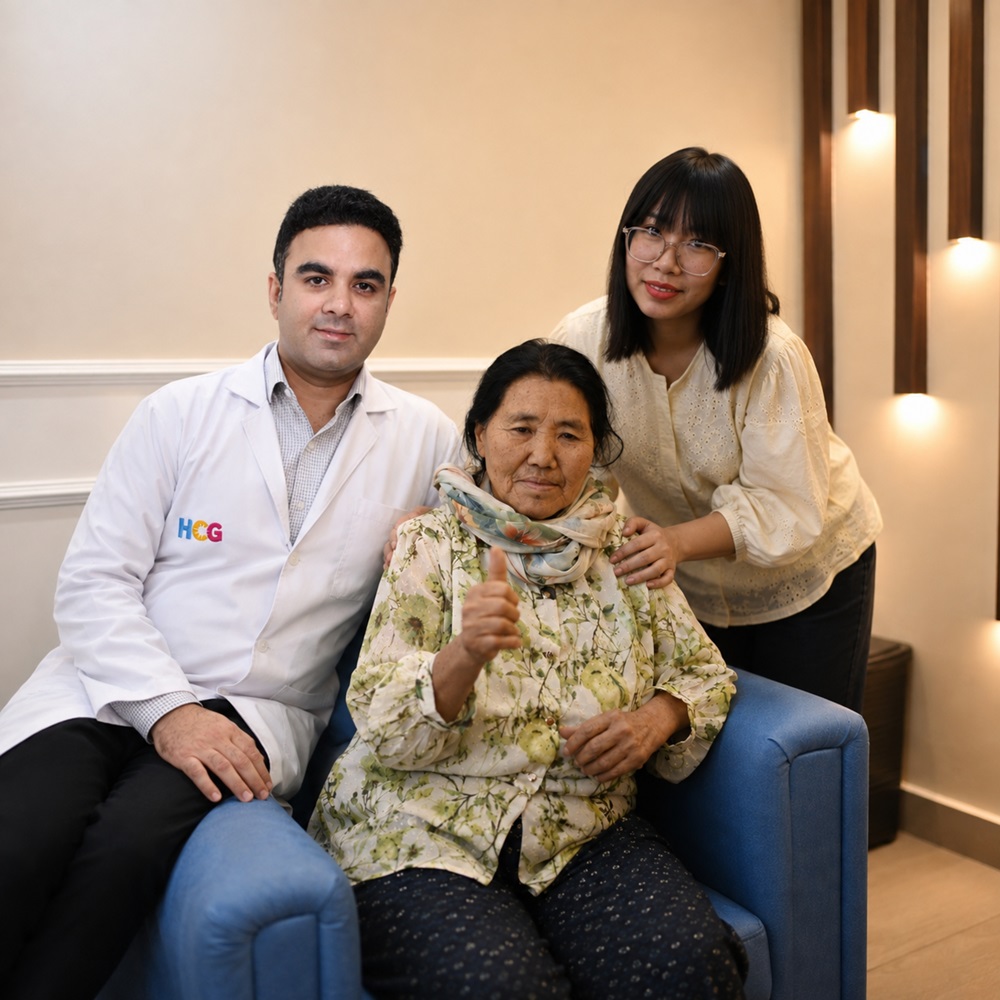
Sixty-five-year-old Ratna Maya Pibang Rai found an answer—and a path towards recovery—across the border in Kolkata after more than a decade of recurrent diarrhoea and no clear diagnosis. Her robotic-assisted low anterior resection at HCG Cancer Centre, Kolkata was the first known robotic oncosurgery performed in the city on a patient from Bhutan.
A resident of Dagana, Ratna Maya had visited several hospitals and undergone multiple investigations since 2010-11. Earlier this year, a colonoscopy in Thimphu revealed rectal cancer. Referred through Jigme Dorji Wangchuck National Referral Hospital, Bhutan’s apex tertiary-care institution, she travelled to HCG Kolkata.
Colorectal cancer, which includes rectal cancer, was India’s fourth most commonly diagnosed cancer in 2024, with an estimated 83,577 new cases, according to the Global Cancer Observatory.
Evaluation at HCG confirmed adenocarcinoma of the mid and upper rectum. Following preoperative radiotherapy and reassessment, surgical oncologist and robotic surgeon Dr Karan Sehgal and his team planned to remove the tumour while preserving her natural passage and avoiding a permanent stoma.
“Preserving the rectum and the possibility of natural bowel function was especially important. Robotic surgery enabled precision within the confined pelvic space while avoiding a large abdominal incision,” said Dr Sehgal.
Ratna Maya also had diabetes, hypertension and atrial fibrillation. Thorough cardiac assessment and meticulous anaesthesia planning by Dr Moumita Bhaowal, Senior Consultant, HCG Cancer Centre, Kolkata, were essential before surgery.
On July 27, the robotic-assisted resection was performed through ports measuring about 8 mm, with only a small incision required to remove the specimen. Ratna Maya was soon walking and recovering well. Discharged in a stable condition on August 1, she returned for an outpatient review before travelling home with her family on August 7.
For Dr Rupali Basu, RBH, HCG Cancer Hospitals, the outcome reflected the larger purpose of coordinated cross-border cancer care. “In this case, specialised expertise, careful anaesthesia planning and robotic precision came together not only to remove the cancer, but also to preserve natural function and help the patient return home with renewed confidence and quality of life,” she said.