


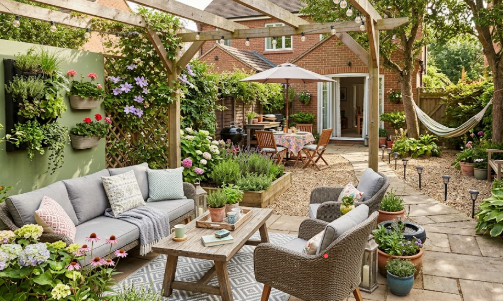
The garden is no longer just the space where plants grow. For many homeowners, it is becoming an extra room without walls—a place to enjoy morning coffee, host friends, have family meals, read quietly or simply take a break from the pace of everyday life.
The best part is that creating an inviting outdoor living space does not necessarily require a major renovation or a large budget. With the right combination of seating, greenery, lighting and thoughtful design, even a small garden can become a comfortable extension of the home.
Here are 10 ideas to help you make the most of your outdoor space.
1. Give the garden a reason to be used
An empty garden often remains empty because there is nowhere comfortable to sit. Start by creating a simple seating area with an outdoor sofa, chairs or a bench.
Position it where you can enjoy the best view of the garden. Add weather-resistant cushions and a small table, and an unused corner can quickly become a favourite place to unwind.
2. Bring everyday meals outdoors
Outdoor dining can make even an ordinary meal feel like a small occasion. A compact table and two or four chairs may be all that is needed for a breakfast corner or evening tea spot.
If you have more room, create a larger dining area for family meals and gatherings. A pergola or umbrella can provide shade and make the space more comfortable during sunny weather.
3. Choose greenery that works with your routine
A beautiful garden should be enjoyable to maintain. Before filling the space with plants, consider the amount of sunlight, water and attention they will need.
Choose varieties that suit your local climate and combine them with pots, raised beds or other simple planting solutions. Herbs can add another useful element, giving you fresh ingredients while bringing colour and fragrance to the garden.
4. Look up when floor space is limited
Small garden? Think vertically.
Hanging pots, wall planters, climbing plants and trellises can add plenty of greenery without taking away valuable floor space. A green wall or planted fence can also make a compact garden feel more private and visually interesting.
5. Create a private little retreat
A garden can be beautiful but still feel exposed. Plants, screens, trellises and fencing can help create a more comfortable sense of privacy.
Instead of closing off the entire garden, concentrate privacy features around the areas where you spend the most time. A screen behind a chair or a row of plants beside a dining area can make the space feel much more personal.
6. Think in terms of outdoor rooms
A well-designed garden does not have to function as one large open space. Create separate zones for different activities.
A paved area can become a dining room, a planted corner can serve as a reading space, and a small open section can remain available for children or pets.
Simple changes in flooring, planting and furniture can help define these areas naturally.
7. Let lighting transform the garden at night
Good lighting can give an outdoor space an entirely different personality after sunset.
Use warm string lights around seating areas, pathway lights for visibility and subtle spotlights to draw attention to trees or plants. Solar-powered options can be particularly convenient for smaller spaces.
The goal is to create a gentle glow rather than flood the garden with harsh light.
8. Make entertaining easier
If you enjoy having friends and family over, design the garden around conversation.
Keep seating close enough for people to talk comfortably and consider adding a small serving table or barbecue area. For larger gardens, a dedicated outdoor cooking zone can make entertaining more convenient.
The idea is to keep the host connected with guests rather than constantly moving between the kitchen and garden.
9. Create one corner that is entirely yours
Not every part of the garden needs to be designed for entertaining.
A comfortable chair under a tree, a hammock or a small bench surrounded by plants can become a personal escape. It could be a place for reading, listening to music, enjoying a cup of tea or simply doing nothing.
In a busy home, having a quiet outdoor corner can be surprisingly valuable.
10. Mix practicality with personality
The most successful gardens combine useful features with personal touches.
Choose outdoor furniture that can handle the weather, surfaces that are easy to clean and plants that suit the amount of care you can provide. Then add personality through cushions, pots, lanterns, artwork, planters or colours you genuinely enjoy.
There is no need to copy someone else’s garden. Your outdoor space should reflect the way you and your family actually live.
The garden does not need to be perfect
A common mistake is believing that an outdoor living space needs to look finished before it can be enjoyed. In reality, gardens evolve.
Start with one comfortable corner. Add plants gradually. Introduce lighting when you begin using the space in the evening. Later, you can consider larger additions such as a pergola, outdoor dining area or privacy screen.
What matters most is creating a space that feels comfortable rather than complicated.
More than a garden
A thoughtfully planned garden can become an important part of everyday home life. It can host celebrations, provide a quiet place to recharge and offer children a space to explore nature.
Ultimately, the perfect outdoor living space is not about expensive furniture or elaborate landscaping. It is about creating somewhere you genuinely want to spend time.
With a little creativity, an overlooked patch of garden can become the home’s most relaxing room—one with fresh air, natural light and no ceiling.