


Bhubaneswar, Aug. 18 (UDN): Amid heavy rainfall across several parts of Odisha, Railway Minister Ashwini Vaishnaw has directed railway officials to step up surveillance of vulnerable railway stretches and take preventive measures to ensure the safe and uninterrupted movement of trains.
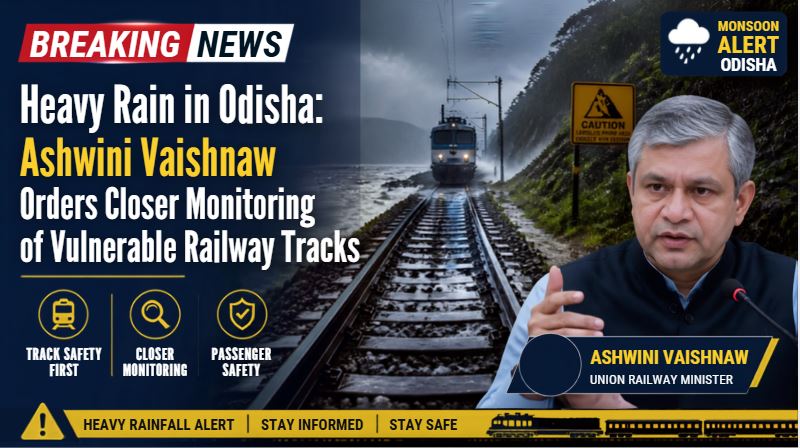
Representational Image
The minister reviewed the rainfall situation and its potential impact on railway infrastructure and instructed officials to remain alert to waterlogging, rising water levels and damage to railway embankments.
Special Focus on Vulnerable Sections
According to reports, Vaishnaw directed the South Eastern Railway (SER) General Manager to maintain close surveillance of sections that are particularly susceptible to water accumulation and other rain-related disruptions.
Special attention has been directed towards the Rupsa–Baripada–Bangriposi and Rourkela–Bondamunda sections, with additional manpower and resources to be deployed where required.
Railway teams have been asked to continuously assess track conditions, water levels, drainage systems and embankments, particularly at identified vulnerable locations.
Emergency Teams and Resources on Standby
Officials have been instructed to remain prepared for rapid intervention if rainfall intensifies or railway infrastructure comes under stress.
The measures are aimed at detecting potential problems at an early stage and taking corrective action before they affect train operations.
The heightened monitoring comes as several parts of Odisha experience persistent rainfall, increasing the risk of waterlogging and flooding in low-lying areas.
Passenger Safety Top Priority
Vaishnaw emphasised that passenger safety must remain the foremost priority during the ongoing weather conditions.
Railway authorities have been directed to keep emergency resources and response teams ready so that any rain-related contingency can be addressed promptly.
The Railway Ministry’s instructions are aimed at maintaining operational preparedness while ensuring that train services across the affected regions continue as safely and smoothly as possible despite challenging weather conditions.