


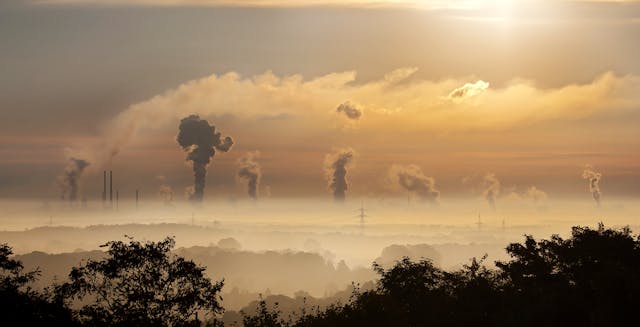
India stands at a crossroads. Its cities are choking on pollution, yet policymakers often act as if smog is just a seasonal inconvenience. The Air Quality Index (AQI) in Delhi and other northern cities regularly breaches 300, a level that science and common sense recognize as dangerous. Despite this, India’s growth agenda has traditionally prioritized GDP expansion over environmental health, creating a paradox where economic ambitions and public well-being appear to clash. But this trade-off is largely illusory. The real challenge is rethinking how India grows.
The True Cost of Dirty Air
Air pollution isn’t just a public health issue; it’s an economic one. Estimates suggest that poor air quality drains over 1.36% of India’s GDP each year, factoring in lost productivity, medical expenses, and long-term developmental impacts on children. Research shows that children exposed to toxic air in early years suffer stunted physical and cognitive growth, which translates into lower productivity and earnings later in life. Every day that India tolerates high AQI is a day it silently mortgages its future workforce.
Yet, India’s policymakers continue to hesitate. The prevailing belief is that strict pollution controls could slow growth, deter investment, or hurt industries. Global experience, however, demonstrates the opposite: cities that embraced clean air policies—without sacrificing economic output—have thrived.
Rethinking Sectoral Strategies
The path to cleaner air lies not in isolated interventions but in a comprehensive, economy-centered approach.
Energy
India has made strides in promoting solar, wind, and clean cooking fuels like LPG. But incentives need to go further. Subsidies, green bonds, and tax breaks can accelerate the deployment of renewable energy and pollution-reducing technology. Investments in clean energy should be treated as vital economic infrastructure—on par with roads, railways, and power grids.
Transport
Road traffic remains a dominant source of urban pollution. While China has transformed its auto sector with affordable electric vehicles (EVs), India’s EV adoption is slow due to high upfront costs, limited charging networks, and underdeveloped economies of scale. Policy solutions exist: revenue-neutral reforms, where taxes on petrol and diesel vehicles fund EV incentives, can reshape the sector without hurting GDP. Simultaneously, cities must invest in public transport, cycling infrastructure, and pedestrian-friendly streets to reduce reliance on private vehicles.
Agriculture
Farmers in Punjab and Haryana often face blame for stubble burning during winters, but this is an episodic problem. A sustainable approach involves promoting organic and biodiverse farming, value-added agro-processing, and bio-decomposer technologies, shifting away from quick fixes toward systemic agricultural solutions.
Industry and Urban Planning
Industries like brick kilns, thermal power plants, and construction sites remain major polluters. Encouraging clean innovations, enforcing green building codes, and integrating urban green infrastructure—parks, urban forests, and vertical gardens—can reduce emissions while modernizing cityscapes.
Why India Needs New Urban Models
India’s megacities, such as Delhi, Mumbai, and Kolkata, have grown to tens of millions of residents. High density amplifies pollution, congestion, and resource strain, creating a vicious cycle where growth itself becomes a source of environmental stress.
One solution is to redistribute urban growth. Developing smaller cities and new urban centers away from pollution hotspots can reduce environmental stress, improve quality of life, and sustain economic activity. These cities provide a blank slate for sustainable planning, integrating clean energy, efficient public transport, and eco-friendly infrastructure from the outset—avoiding the costly retrofitting that older cities now face.
Learning from Global Successes
Cities like Paris, Beijing, and New York demonstrate that aggressive interventions work. Paris, for instance, cut PM2.5 by 55% and nitrogen dioxide by 50% between 2005 and 2024 by restricting car traffic, adding bike lanes, and eliminating parking spaces. Beijing implemented vehicle rationing and upgraded power plants to remove harmful emissions.
India, by contrast, has normalized high AQI levels, even considering relaxing air quality standards below WHO recommendations. Such policies risk undermining both public health and long-term economic growth.
A New Economic Mindset
Air pollution in India is fundamentally a problem of political economy, not science. Legacy growth models prioritize GDP without considering ecological limits or human well-being. Modern economic thinking, rooted in circularity, regeneration, and distributive principles, offers a path where growth and clean air reinforce each other.
Implementing these ideas requires coordinated action:
-
Aggressive EV adoption and public transport expansion.
-
Clean-tech modernization in agriculture and industry.
-
Urban planning that prioritizes walkability, green spaces, and sustainable construction.
-
Governance mechanisms that link funding to measurable air quality improvements.
-
Community empowerment through public data and low-cost monitoring.
The Bottom Line
India does not have to choose between economic growth and clean air. The real choice lies between outdated growth patterns and smarter, sustainable development. Smog is not a seasonal inconvenience or someone else’s fault; it is a reflection of society’s collective decisions, consumption patterns, and urban design.
Treating clean air as critical infrastructure—on the same level as roads, electricity, or internet connectivity—can safeguard public health, protect future human capital, and even boost GDP. India has the knowledge, technology, and examples from around the world. What remains is the political will to act decisively.
Clean air is not just an environmental goal—it is the foundation for a healthy, prosperous, and resilient India.