


Aug 5: A family holiday can be much more than a break from school and work. When children get the chance to see a planetarium, walk through an ancient fort, watch wildlife in its natural habitat or explore a science exhibition, learning becomes part of the journey.
This is one reason educational travel for children is becoming an increasingly interesting option for families. Instead of separating holidays from education, parents can choose destinations where children can learn through observation, conversation and hands-on experiences.
India has no shortage of such places. From Bengaluru’s science museums and Jaipur’s astronomical heritage to Assam’s wildlife landscapes and Sriharikota’s connection with India’s space programme, there are plenty of educational places to visit with kids in India.
Why Educational Travel Is Becoming More Relevant
Children today are exposed to information from an early age, but seeing something in person can create a very different kind of understanding.
A child who reads about planets at school may become far more curious after visiting a planetarium. A lesson about wildlife conservation can feel more meaningful after seeing a rhinoceros in its natural habitat. A history chapter can become easier to remember after walking through a centuries-old fort.
The growing popularity of experiential activities is also influencing family travel. India’s travel market is increasingly moving towards experiences that combine leisure with culture, nature, food and learning, giving families more opportunities to build educational elements into holidays.
For parents, the objective does not have to be academic achievement. Sometimes the most valuable outcome is simply encouraging children to ask questions.
Bengaluru: Where Science Becomes an Experience
Bengaluru is a natural choice for families with children who are fascinated by science and technology.
The Visvesvaraya Industrial and Technological Museum features interactive exhibits that introduce visitors to subjects including mechanics, electricity, engineering and science. Instead of simply reading about scientific principles, children can see demonstrations and explore exhibits at their own pace.
The city also has a planetarium and a strong technology ecosystem, making it particularly appealing for older children who are curious about engineering, computers, space and innovation.
For families living in Karnataka or neighbouring states, Bengaluru can work particularly well as a family educational weekend getaway.
Jaipur: History and Astronomy Come Alive
Jaipur offers an unusual combination of history, architecture and astronomy.
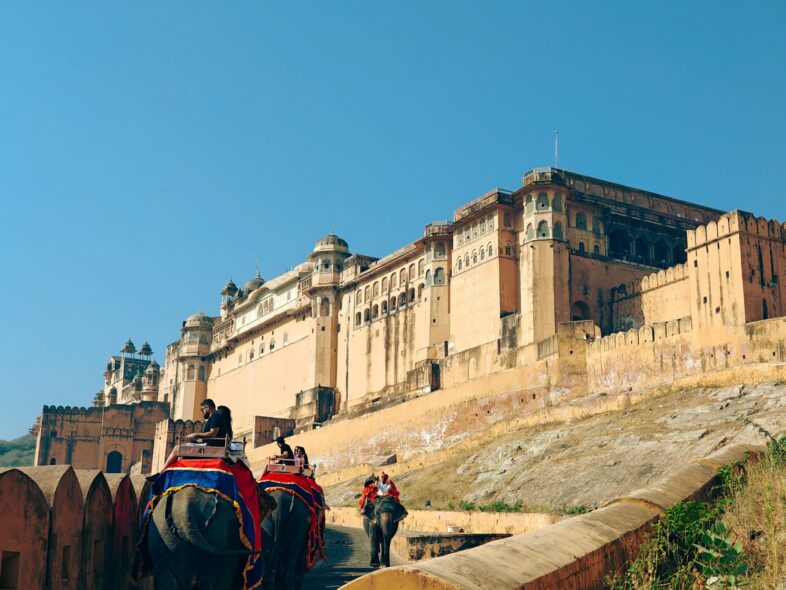
Children can explore Amber Fort and learn how royal families lived, how forts were designed and why defensive architecture mattered. At Jantar Mantar, enormous astronomical instruments offer a fascinating look at how people studied celestial movements before modern scientific equipment.
Parents can make the experience interactive by asking children to identify architectural features, compare old and modern methods of observing the sky or create a simple travel sketchbook.
Ahmedabad: A Family Trip Built Around Science
Ahmedabad is another strong choice for families looking for a science-focused break.
Gujarat Science City combines interactive learning with attractions related to science, technology and the natural world. It can be particularly engaging for school-age children who enjoy experiments, demonstrations and hands-on exhibits.
Families can also explore Ahmedabad’s architectural and cultural heritage, creating a trip that combines modern science with India’s history and design traditions.
Mysuru: A Mix of History and Wildlife
Mysuru is a good option for families who want variety without an exhausting itinerary.
A visit to Mysuru Palace introduces children to royal history, architecture and traditional design. The city’s zoo provides another kind of learning experience, allowing children to observe different animal species and discuss wildlife and conservation.
The destination can work particularly well for younger children because history and nature can be combined without requiring long museum visits.
Delhi: An Open-Air Classroom
For families interested in history, Delhi offers an enormous range of possibilities.
The National Museum introduces visitors to India’s art, archaeology and cultural history, while the National Rail Museum can be especially appealing to younger children fascinated by trains and machines.
Delhi’s monuments add another dimension to the experience. Instead of simply photographing historic buildings, parents can use them to explain different periods of Indian history and how the capital evolved over time.
Kolkata: Art, Culture and Science
Kolkata is a strong destination for families who want to introduce children to art, history and science in the same trip.
The Indian Museum offers collections related to archaeology, natural history, art and anthropology. Science City Kolkata provides a more interactive environment where children can explore scientific concepts.
The city also gives families an opportunity to introduce children to literature, Bengali culture and colonial-era history.
Mumbai: Science, Space and the Sea
Mumbai can turn a city break into a varied learning experience.
At the Nehru Science Centre, children can explore interactive exhibits covering different scientific principles. The Nehru Planetarium can help introduce younger visitors to astronomy and space science.
Mumbai’s coastal location also provides a natural opportunity to talk about marine ecosystems, beaches, pollution and environmental protection.
Dehradun and Mussoorie: A Lesson in Nature
Educational travel does not always require a museum or science centre.
The Dehradun-Mussoorie region offers a chance for children to learn simply by spending time outdoors. Forests, streams, hills and changing landscapes can lead to conversations about biodiversity, geology, weather and water conservation.
This type of trip can be particularly valuable for children who spend much of their time indoors. Parents can encourage them to observe birds, plants, insects and different types of terrain.
Assam: A Wildlife Classroom
A wildlife trip can make conservation much more tangible for children.
Kaziranga National Park offers an opportunity to observe the one-horned rhinoceros, elephants, birds and other wildlife while learning about habitats and conservation.
Parents should choose responsible tourism operators and follow park rules. Children should also be taught that wildlife observation is about respecting animals and their environment rather than simply getting close to them or taking photographs.
Sriharikota: For Young Space Enthusiasts
For children fascinated by rockets and planets, Sriharikota offers a connection with India’s space programme.
The Satish Dhawan Space Centre is India’s principal spaceport and has played an important role in the country’s launch programme.
Access to operational facilities can be restricted, so families should check official information before planning a visit. Even when a full facility visit is not possible, the destination can become the starting point for conversations about satellites, rockets, astronomy and India’s achievements in space exploration.
Pune: Discover Art and Everyday Life
Pune offers a quieter form of educational travel.
The Raja Dinkar Kelkar Museum has an extensive collection of objects associated with Indian art, crafts and everyday life. For children, these exhibits can provide an interesting glimpse into how people lived and created things before modern technology became part of everyday life.
It is an especially useful destination for children interested in art, design, traditional crafts and history.
How to Choose the Right Educational Destination for Your Child
The best educational destination is not necessarily the most famous one. It is the one that matches a child’s age and interests.
For younger children:
Choose interactive science centres, zoos, aquariums, planetariums and outdoor experiences. Shorter activities with plenty of opportunities to move around generally work better.
For children interested in science:
Bengaluru, Ahmedabad and Mumbai offer strong options involving science, technology, astronomy and interactive learning.
For history lovers:
Jaipur, Delhi and Mysuru provide opportunities to explore forts, palaces, museums and historic sites.
For children who love animals:
Assam and other wildlife destinations can introduce them to biodiversity and conservation.
For teenagers:
Space, technology, science and heritage destinations can be particularly engaging when combined with discussions about careers, innovation and India’s development.
Parents should also consider travel time, weather, accessibility and the child’s attention span before planning a packed itinerary.
How Parents Can Make Educational Travel More Enjoyable
The simplest approach is to avoid turning the holiday into another classroom.
Before leaving, parents can tell children a little about the destination and let them decide what they would most like to see. During the trip, encourage questions rather than giving constant explanations.
A small travel journal can also make the experience more memorable. Children can draw something they saw, write down a new fact or collect photographs that tell the story of the trip.
After returning home, parents can ask children what surprised them most. Often, their answers reveal what they actually learned during the journey.
Educational Travel Can Create Lasting Memories
The value of a family trip is not always measured by how many attractions are covered.
A child who becomes fascinated by stars after visiting a planetarium, starts asking questions about wildlife after a safari or develops an interest in history after exploring a fort may have gained something far more lasting than a photograph.
India offers some of the best educational places to visit with kids, from museums and science centres to wildlife parks, historic cities and space-related destinations.
For parents planning a family weekend getaway in India, adding an educational element can make the trip more meaningful without taking away the fun.
After all, the best family holidays are often the ones where children return home with muddy shoes, plenty of photographs and a head full of new questions.