


New Delhi, Aug 3: India has made significant strides in improving food security and reducing hunger over the past decades. In spite of this, according to the latest NFHS-6, 29.3percentage of children under five are stunted, 31.8percentage are underweight, and 19percentage are wasted while the prevalence of diet-related lifestyle diseases are growing, says Nilanjan Ghosh, Vice President of Development Studies and Head of ORF’s Kolkata Centre, highlighting the need for more nutritionally diverse diets. At the same time, climate change, resource constraints, and changing dietary patterns are placing additional pressure on India’s food system.
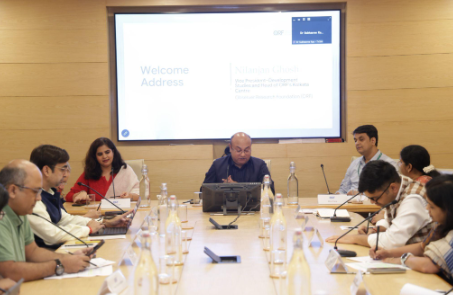
Ensuring access to affordable, nutritious, culturally appropriate, and sustainable protein sources remains the need of the hour. The Observer Research Foundation and the Good Food Institute India convened a closed-door roundtable to examine how alternative proteins, particularly plant-based and biomass-fermented proteins, can strengthen India’s nutrition security agenda. The discussion brought together experts from government, academia, civil society, and industry, including representatives from the FSSAI, Department of Biotechnology, World Bank, and World Food Programme.
Participants highlighted India’s agricultural abundance, scientific capability, food-processing infrastructure, and culinary diversity that must be tapped to address protein inadequacy and poor dietary quality. Indigenous crops such as pulses and millets, defatted oilseed meals, broken grains, and other agricultural sidestreams could provide affordable raw materials while creating additional value for farmers. However, many of these sources remain poorly characterised, inconsistently processed, or diverted to animal feed. Technical experts emphasised the need to identify and valorise regional crops and sidestreams, improve crop-level traits, develop crop-specific processing equipment, and improve batch-to-batch consistency. When linked to strong demand, the alternative protein value chain can create livelihood opportunities for FPOs, women’s self-help groups, rural processors, and MSMEs.
The central theme of the discussion was making alternative proteins affordable and accessible to communities, for which public nutrition programmes under PM-POSHAN and ICDS represent an important application pathway. In many cases, school meals and take-home rations meet the calorie and quantity norms, but the quality of the protein and heavy dependence on cereals do not meet nutritional requirements, as set by the 2023 amendment to the National Food Security Act.
Plant-based proteins can be formulated into affordable, shelf-stable, nutritionally dense, and regionally compatible formats that could improve protein quality in these meals, which often operate at a cost of under Rs 10 per student/day. However, programmatic experts on-ground noted that community engagement and acceptability studies will be critical to ensuring adoption in both rural and urban areas.
Prior to their inclusion, these products must meet stringent food-safety standards and operational requirements. Participants cited the need for scientific evidence on safety, allergenicity, quality, digestibility, bioavailability, and clinical outcomes. Greater coordination among researchers, regulators, industry, and public-health institutions will be essential to generate this evidence, establish appropriate standards, and enable responsible innovation.
As industry and civil society stakeholders work together to move from pilots and early validation towards large-scale integration of plant-based proteins into public nutrition programmes, they identified the technology and public-private investment that can support implementation outcomes. For instance, AI tools and open-access databases can help identify promising ingredient combinations, optimise flavour, and understand regional culinary preferences. However, innovation must be followed by investment into shared facilities for processing, testing, quality assurance, and scale-up—the “missing middle” between laboratory innovation and commercial adoption. Policies such as BioE3 are enabling both upstream research and downstream scale-up, particularly for underutilised crops, plant-based ingredients, and fermentation technologies. Predictable procurement processes, and clearer demand signals from policymakers can further reduce uncertainty and encourage greater private-sector investment.
The way forward should be a coordinated, evidence-led pathway, leveraging local crops and innovation to expand the range of affordable protein-rich foods reaching Anganwadis, school meals, and household kitchens.
Sneha Singh, Managing Director, GFI India concluded,
“The path to consuming more and better quality protein can be imagined through the collective intelligence and collaboration among government, research institutions, industry, development organisations, financiers, and civil society. This will be essential to convert alternative proteins into practical and locally resonant solutions for India’s nutritional security.”