


July 21: The biggest disruption artificial intelligence is bringing to business isn’t happening in data centres or software labs. It’s unfolding in meeting rooms.
Across industries, AI is quietly changing how managers forecast demand, evaluate investments, allocate budgets, optimise supply chains, personalise customer experiences and even decide whom to hire. Decisions that once depended largely on instinct and historical experience are increasingly being shaped by predictive models, real-time analytics and intelligent systems. The implication is profound: the future advantage won’t simply belong to organisations that deploy AI. It will belong to organisations led by managers who know how to work alongside it.
The shift is already well underway. Microsoft’s latest Work Trend Index found that 93% of Indian business leaders intend to deploy AI agents to extend workforce capabilities within the next 12 to 18 months, signalling that AI is rapidly moving from experimentation to enterprise-wide adoption.
Yet technology is only one side of the equation.
As organisations accelerate AI adoption, they face a more pressing challenge: preparing leaders who can translate intelligent technologies into better business decisions.
Why AI fluency is becoming a business skill
The emergence of generative AI has made sophisticated technology more accessible than ever before. However, the real challenge for organisations is not the availability of AI tools, but the ability of leaders to apply them responsibly and strategically.
Professionals across industries are discovering that AI is changing how organisations analyse customers, forecast demand, streamline operations, manage risk, personalise experiences, and allocate resources. Those who understand these shifts are often better positioned to contribute to strategic conversations, identify new growth opportunities, and navigate business uncertainty with greater confidence.
This growing expectation has created demand for executive education that bridges traditional management principles with modern technological realities. Rather than producing AI specialists, programmes are increasingly helping business professionals become more informed decision-makers in AI-enabled organisations.
Management education enters its AI chapter
The changing nature of business is beginning to reshape executive education.
Rather than teaching AI as a standalone technical discipline, leading management institutions are integrating it into discussions around strategy, organisational behaviour, marketing, finance, operations and decision-making.
The objective isn’t to create programmers. It’s to create managers who understand how AI influences every business function.
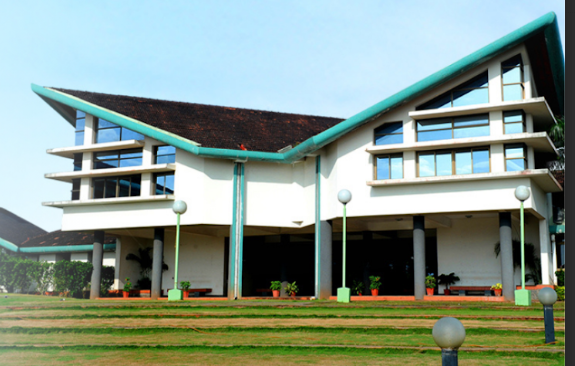
Reflecting this shift, the Indian Institute of Management Kozhikode (IIM Kozhikode) has launched Batch 11 of its General Management Programme in the Age of AI, an executive programme designed around the idea that future-ready leaders require both strong management fundamentals and AI fluency.
Unlike conventional general management programmes, the curriculum integrates AI and digital transformation into a broader learning journey spanning business strategy, cross-functional management, analytics and organisational leadership. Instead of viewing AI as a technology topic, participants explore its business implications across multiple functions, helping them build the judgement required to lead in increasingly AI-enabled organisations.
Learning that mirrors today’s business realities
The format of executive learning is evolving alongside its curriculum.
Working professionals are increasingly seeking programmes that replicate the complexity of modern business rather than relying solely on classroom instruction.
IIM Kozhikode’s programme adopts this applied approach through 10 months of live online weekend sessions, supported by case-based discussions, business simulations, a capstone project and a three-day campus immersion at the IIM Kozhikode campus. Participants continue working while engaging with contemporary business challenges, applying concepts to practical management situations.
The programme is open to graduates and diploma holders with at least one year of work experience. Successful participants receive a certificate from IIM Kozhikode.
The managers who thrive will think differently, and not just digitally.
Every business revolution has altered the capabilities organisations value most.
The industrial age rewarded operational excellence.
The internet era rewarded speed and innovation.
The AI era is likely to reward something more nuanced: Managers who combine analytical thinking with human judgement, understand technology without becoming constrained by it, and can connect insights across functions rather than operate in organisational silos.
In that sense, AI is not making management less relevant. It is instead, changing the context in which decisions are made, making the ability to interpret insights and act on them more important than ever.
As businesses continue to redesign themselves around intelligent technologies, professionals who pair management fundamentals with AI literacy, cross-functional thinking and practical decision-making are likely to be better positioned to lead through uncertainty and shape the next phase of enterprise growth.
The evolution of programmes such as IIM Kozhikode’s General Management Programme in the Age of AI reflects a broader reality: in the years ahead, AI may become commonplace, but the ability to lead effectively in an AI-powered business environment will remain a defining competitive advantage.