


The year 2025 unfolded as one of contrasts for India—faith and fear, resilience and rupture, progress and vulnerability existing side by side. While economic indicators painted a picture of stability, a series of dramatic events dominated public consciousness, reminding the nation that growth does not insulate a country from crisis. From mass gatherings that tested safety systems to acts of terror, military retaliation, transport disruptions and environmental distress, 2025 left behind a complex legacy.
These were not merely headlines; they were moments that paused daily life, sparked nationwide debate and forced difficult conversations about governance, preparedness and accountability.
Faith at the Crossroads: The Maha Kumbh Stampede
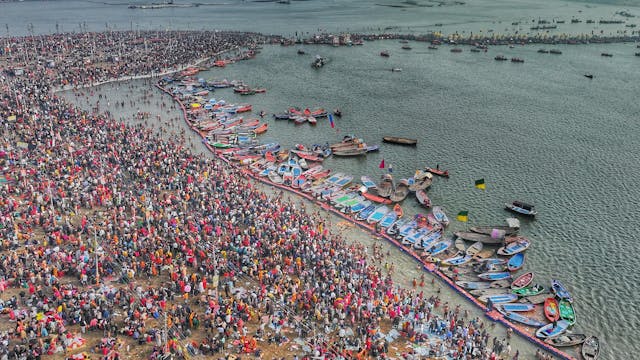
The Maha Kumbh, a symbol of spiritual unity and cultural continuity, became the site of profound tragedy when a stampede claimed several lives. What began as a sacred congregation quickly descended into chaos, revealing the fragility of crowd management at large-scale events.
The incident reignited a recurring national question: how does a country that hosts some of the world’s largest gatherings ensure safety without diminishing tradition? In the aftermath, calls grew louder for better planning, real-time monitoring and emergency response systems that prioritise human life over spectacle.
Transit Under Pressure: A Wake-Up Call at New Delhi Railway Station
Soon after, a crowd crush at New Delhi Railway Station exposed another fault line—India’s overstretched public transport infrastructure. As passengers surged through platforms and entry points, inadequate crowd control measures turned routine travel into a deadly risk.
The tragedy underscored the everyday dangers faced by millions who rely on public transit. It also highlighted the urgent need for modernised station design, technology-driven crowd regulation and clearer accountability frameworks.
Pahalgam Attack: A Nation in Mourning
One of the darkest chapters of 2025 was the terror attack in Pahalgam that claimed 26 lives. The assault shook the nation, cutting through political divides and reigniting painful memories of violence in Jammu and Kashmir.
Public grief quickly turned into a collective demand for justice and security. Candlelight vigils, debates and appeals for action reflected a shared sense of loss—and an equally strong insistence that such acts must not become routine.
Operation Sindoor: A Historic Military Response
India’s response came swiftly but deliberately through Operation Sindoor, a targeted military operation against terror infrastructure across the border. What set this operation apart was not only its strategic precision, but its leadership.
Operation Sindoor was projected as firm yet restrained, sending a clear message of deterrence while avoiding wider escalation. It also reshaped public discourse, placing women’s leadership at the centre of national security conversations.
Tragedy in the Skies: The Air India Crash
The nation was once again united in shock after a fatal Air India crash in Ahmedabad. The tragedy halted routine life as visuals of wreckage and rescue efforts filled screens, reminding citizens of the human cost behind aviation statistics.
As investigations unfolded, questions emerged around safety protocols, maintenance standards and emergency preparedness. For many families, the loss was deeply personal; for the nation, it was a sobering reminder that progress in connectivity must be matched with uncompromising safety oversight.
Airline Disruptions: When Connectivity Faltered
Beyond the crash, 2025 also witnessed repeated airline disruptions, particularly affecting domestic carriers. Flight delays, cancellations and operational breakdowns—most notably involving IndiGo—caused widespread inconvenience for passengers across the country.
These disruptions exposed systemic stress within India’s rapidly expanding aviation sector. Rising passenger volumes, infrastructure bottlenecks, staffing challenges and weather-related disruptions combined to test airline resilience. While India’s aviation market continues to grow, the events of 2025 highlighted the need for stronger regulatory coordination, better airport capacity management and clearer communication with passengers.
Security Concerns Resurface: The Red Fort Blast
A bomb blast near the Red Fort—an icon of India’s national identity—sent shockwaves through the capital. While swift action prevented greater damage, the incident served as a reminder that symbolic spaces remain potential targets.
The blast intensified discussions around urban security, surveillance and intelligence coordination, particularly in public and heritage zones that attract large crowds.
A City Gasping for Breath: Delhi-NCR’s Pollution Crisis
As winter set in, Delhi-NCR once again struggled under a blanket of toxic smog. Schools closed, health advisories multiplied and outdoor life came to a standstill as air quality remained hazardous for weeks.
In 2025, air pollution was no longer viewed as a temporary seasonal issue but as a persistent public health emergency. The crisis blurred the line between environmental neglect and human cost, forcing renewed scrutiny of policy responses and long-term solutions.
A Year That Demanded Reflection
The events of 2025 revealed a nation constantly balancing scale with safety, ambition with accountability. From spiritual gatherings to strategic military action, from crowded platforms to polluted skies, the year tested systems and sensibilities alike.
What remains is a choice—whether these moments become catalysts for reform or fade into a familiar cycle of reaction and forgetfulness. As India steps into a new year, the memory of 2025 stands as a reminder that resilience is not just measured in recovery, but in the willingness to learn, adapt and protect its people.