


Mumbai, July 3: HOSMAC, one of India’s hospital consulting firms, has announced the launch of the Urban Health Data Platform , a research-driven digital platform designed to help healthcare stakeholders better understand India’s healthcare infrastructure through interactive mapping and analytics. Developed through years of research, data validation, and growing computational expertise, the beta version of the platform enables users to map hospitals based on ownership and geographical location, providing valuable insights to support healthcare planning, policy formulation, research, and investment decisions.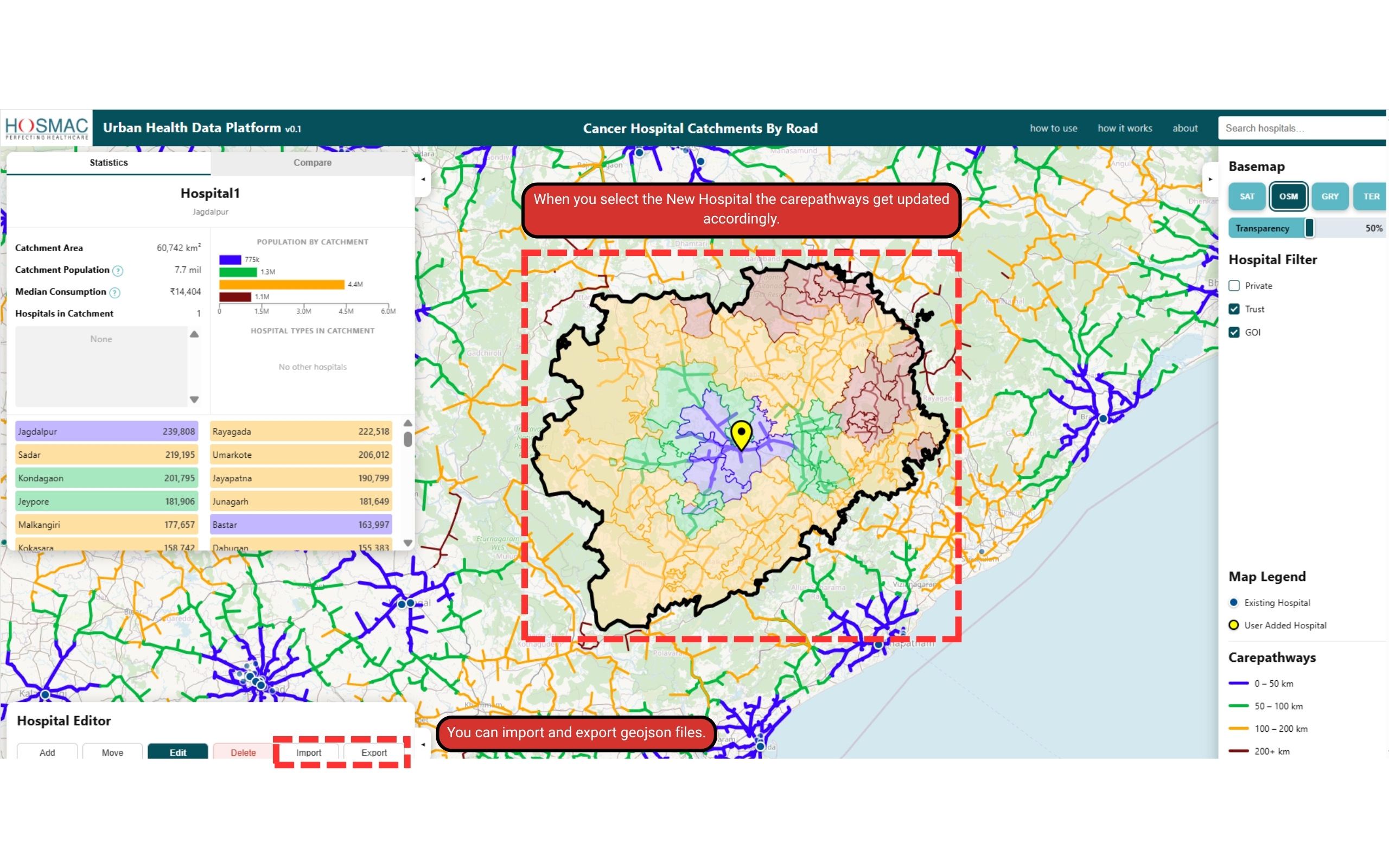
Healthcare planning in India has long been constrained by fragmented and dispersed data. Recognising this challenge, HOSMAC developed the Urban Health Data Platform to bring together validated healthcare datasets into a single interactive platform that not only stores information but also visualises and analyses it. The platform combines a comprehensive healthcare database with an intuitive interface, allowing users to filter, compare, and interpret healthcare infrastructure across regions.
The beta version of the platform focuses on cancer care infrastructure across India, mapping nearly 700 government, trust-owned, and private cancer hospitals. Beyond simply locating healthcare facilities, the platform analyses patient catchment areas based on travel distance and road connectivity, helping identify well-served as well as underserved regions. Users can also access demographic and socio-economic insights, including population, hospital ownership patterns, and regional healthcare coverage, enabling evidence-based planning.
One of the platform’s key strengths lies in its ability to simulate infrastructure planning. Users can virtually add a proposed hospital to a location and instantly assess its potential impact on healthcare accessibility and patient catchments. For instance, analysis of the Nanded region in Maharashtra indicates that a government cancer hospital in the district could significantly improve access for underserved populations currently travelling over 200 kilometres for treatment while reducing the burden on neighbouring facilities.
The platform also offers comparative insights across major metropolitan regions. Preliminary analysis shows that Kolkata has one of the largest cancer care catchments by population, indicating that many patients travel long distances to access treatment, whereas Chennai demonstrates a more compact catchment supported by a relatively well-distributed cancer care network. Similarly, cities such as Mumbai and Delhi benefit from surrounding satellite cities that collectively improve regional healthcare accessibility.
Commenting on the launch, Dr Vivek Desai, Founder and Managing Director, HOSMAC, said
“The Urban Health Data Platform reflects our commitment to democratising healthcare intelligence and empowering stakeholders with meaningful, research-backed insights. India requires data-driven healthcare planning now more than ever. By making validated healthcare information accessible through an interactive platform, we hope to support better investment decisions, stronger healthcare delivery systems, and more equitable access to care.”
HOSMAC plans to continuously expand the Urban Health Data Platform by adding new healthcare datasets, hospital typologies, and analytical capabilities. Future versions will incorporate variables such as hospital capacity, affordability, medical equipment, treatment costs, demographic trends, government empanelment, and care pathways, creating a comprehensive decision-support platform for India’s evolving healthcare ecosystem.
Designed for hospital owners, healthcare administrators, consultants, policymakers, researchers, investors, and public health professionals, the Urban Health Data Platform represents HOSMAC’s continued commitment to advancing healthcare through research, innovation, and knowledge-driven planning.