


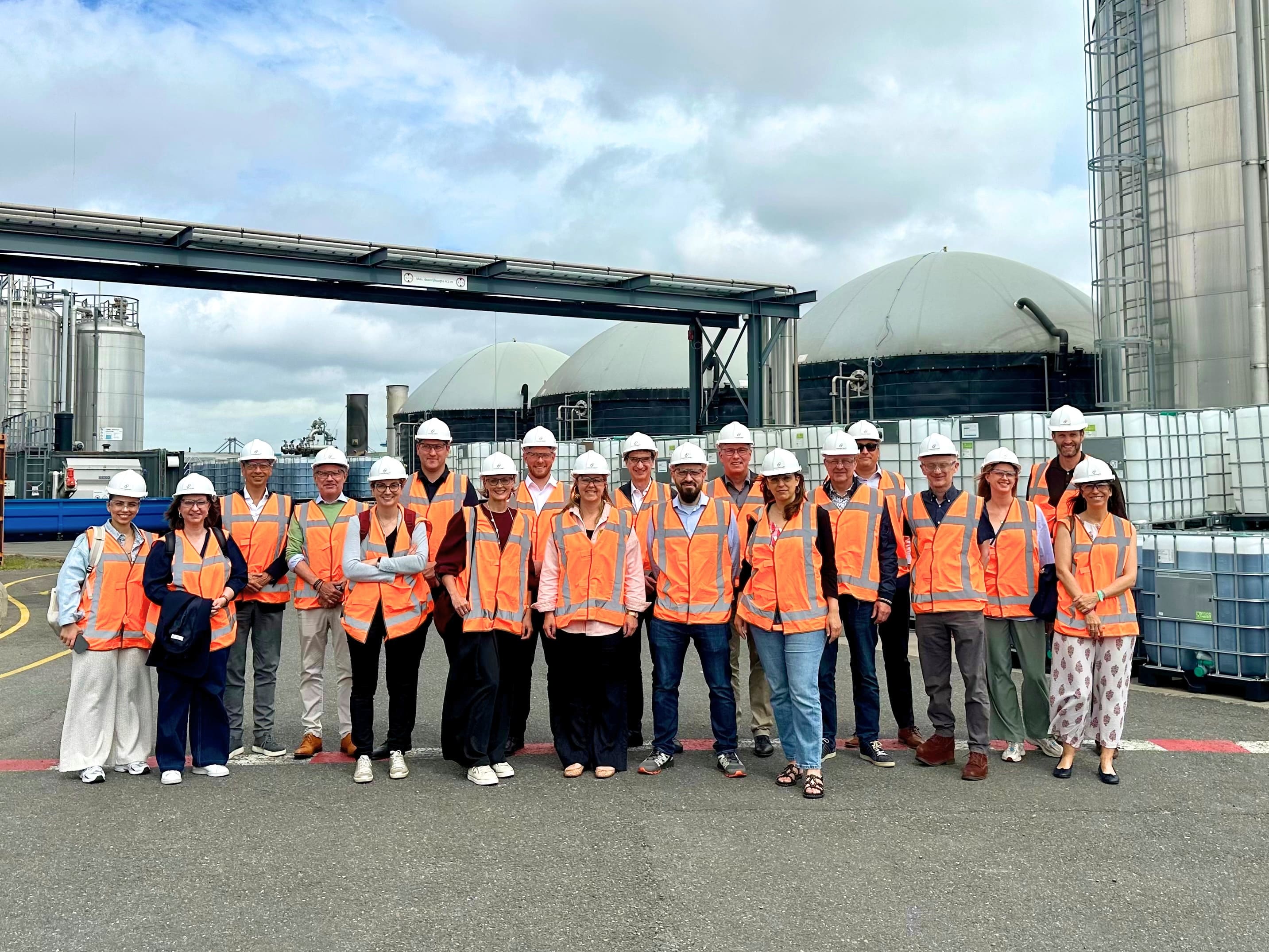
A new European flagship project is set to demonstrate at industrial scale, how an underutilized side-stream from the potato processing industry can become a valuable source of sustainable chemicals.
PACE (Potato Juice to Fatty Acids for New Bio-based Value-Chains in Europe) will demonstrate a first-of-its-kind flagship biorefinery by retrofitting part of Royal Avebe’s existing production facility. Using advanced fermentation and microbial chain elongation, the facility will convert potato juice side-streams into valuable biobased medium-chain fatty acids (MCFAs), for applications across the chemical industry.
The project represents an important step toward reducing Europe’s dependency on fossil and palm oil-based chemistry while strengthening local, circular value chains. By integrating circular solutions into existing industrial infrastructure, PACE demonstrates how industrial side-streams can be transformed into scalable and commercially relevant chemical building blocks.
Kick-off meeting
The kick-off meeting took place on 17 June 2026 in Amsterdam. The meeting marked the official start of the four-year project and brought together representatives from all consortium partners to align on objectives, implementation activities and next steps. It was a productive and inspiring day, laying the foundation for a successful collaboration over the coming years.
The meeting provided an opportunity for partners to discuss the project roadmap, establish collaboration mechanisms and coordinate activities across the technical, industrial, sustainability, market uptake and communication work packages. The strong engagement and enthusiasm across the consortium highlighted the shared ambition to make PACE a success.
Vision and objectives
As Niels van Stralen, project coordinator said, “PACE demonstrates how circular chemistry can become part of existing industrial systems at a meaningful scale. By upgrading infrastructure that already exists and using locally available side-streams, we show that sustainable chemistry does not have to start from scratch. PACE is an important example of how Europe can build more resilient and circular chemical value chains.”
Next steps
The PACE consortium will now focus on the first implementation activities required for the establishment of the biorefinery and the optimization of the MCFA production process. In parallel, partners will advance the validation of bio-based MCFAs in targeted industrial applications, while carrying out sustainability, circularity and market uptake assessments to support future replication across Europe.
Stakeholder engagement, knowledge exchange and communication activities will accompany these efforts, ensuring collaboration across the value chain and supporting the wider deployment of circular bio-based solutions.
Project consortium
● CHAINCRAFT BV (Coordinator) – Netherlands
● COOPERATIE KONINKLIJKE AVEBE UA – Netherlands
● INNOV AD – Belgium
● ECOVER CO-ORDINATION CENTER – Belgium
● ACONDICIONAMIENTO TARRASENSE ASSOCIACION (LEITAT) – Spain
● STICHTING PDC RESEARCH FOUNDATION – Netherlands
● Anorel NV – Belgium
● ena Development Consultants – Greece
● SPECIALTY OPERATIONS FRANCE (Syensqo France) – France
● SYMRISE AG – Germany