


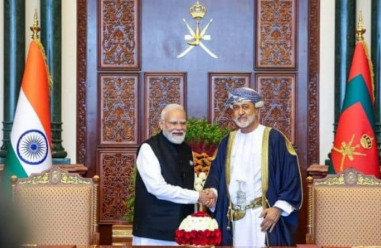
Introduction: Unraveling the India-Oman Relationship
The bond between India and Oman spans centuries, rooted in rich cultural, social, and economic exchanges. Trade links date back to the third millennium BCE, when Indian merchants began journeying to the Arabian Peninsula. Over time, these interactions evolved into a profound relationship built on mutual respect, collaboration, and shared prosperity.
Oman has historically served as a vital hub for Indian traders traveling to the Gulf and beyond. Indian merchant communities have contributed significantly to Oman’s cultural tapestry, introducing art, cuisine, and traditions that remain influential today. This long-standing interaction has not only strengthened trade but also fostered enduring friendships, laying the groundwork for modern partnerships.
Formal diplomatic relations were established in 1950, and since then, India and Oman have signed numerous bilateral agreements covering trade, investment, tourism, and cultural exchanges. Today, Oman is a key partner in India’s Gulf strategy, and the recently signed Comprehensive Economic Partnership Agreement (CEPA) builds on this legacy to unlock new avenues for economic growth.

Building Stronger Bilateral Ties
India-Oman relations have evolved steadily since formal ties were established in 1955. Over the decades, both nations have cultivated a strategic partnership encompassing defense, economic, and cultural cooperation. Military collaboration, including joint exercises and training, has bolstered regional stability, while high-level diplomatic visits have strengthened trust and strategic dialogue.
Economic collaboration has also deepened. Oman’s focus on diversifying its economy has created opportunities for Indian investment across infrastructure, energy, and IT sectors. The India-Oman CEPA represents a landmark development in this partnership, offering a systematic framework to boost trade and investment through reduced tariffs, simplified procedures, and enhanced economic integration.
CEPA: A New Era for Indian Businesses
The India-Oman CEPA provides Indian businesses with significant advantages:
-
Expanded market access: Indian firms can now reach the Omani market with fewer barriers, improving competitiveness and enabling growth.
-
Reduced tariffs in key sectors: Industries such as textiles, pharmaceuticals, and IT benefit from lower production costs and more attractive pricing for Omani customers.
-
Enhanced professional mobility: Skilled professionals can move more easily between India and Oman, enabling knowledge transfer, collaboration, and innovation.
By facilitating market access, lowering costs, and encouraging collaboration, the CEPA empowers Indian businesses to thrive in a competitive global environment.
Investment Opportunities Unlocked
The CEPA opens numerous avenues for Indian investment in Oman. With a focus on economic diversification, Oman offers opportunities across infrastructure, energy, and renewable sectors. Indian companies can leverage expertise in project management, technology, and clean energy to participate in major development initiatives, including roads, ports, airports, and solar and wind projects.
For small and medium enterprises (SMEs), the agreement provides a favorable environment to expand operations internationally, explore partnerships, and contribute to Oman’s growth trajectory. CEPA encourages long-term, mutually beneficial collaborations that support economic development in both nations.
Export Diversification: Strengthening Economic Resilience
India’s trade strategy increasingly emphasizes export diversification to reduce dependency on a limited set of markets. CEPA with Oman exemplifies this approach, offering access to a strategic Gulf market and a gateway to other GCC countries.
Recent growth in India’s exports, particularly in textiles, pharmaceuticals, gems and jewelry, engineering goods, and electronics, underscores the nation’s competitiveness. CEPA reinforces this momentum by establishing preferential tariff rates and simplifying trade regulations, enabling Indian exporters to reach new markets efficiently and sustainably.
Human Impact: Jobs, Skills, and Communities
CEPA’s benefits extend beyond trade figures, positively affecting individuals and communities:
-
Job creation: As market access widens, MSMEs and larger enterprises gain opportunities to grow, generating employment across sectors.
-
Skill development: Businesses expanding into Oman will require trained professionals, fostering learning in technology, management, and international trade practices.
-
Community upliftment: Economic growth contributes to improved infrastructure, living standards, and access to services, helping bridge urban-rural divides.
By emphasizing the human dimension, CEPA ensures that economic growth translates into real opportunities for people on the ground.
Long-Term Growth Prospects
CEPA is a strategic milestone for India-Oman economic relations. By lowering trade barriers, fostering investment, and encouraging collaboration, it paves the way for sustainable, long-term growth. Indian businesses can expand their footprint in sectors ranging from textiles to IT, while both nations benefit from job creation, innovation, and stronger economic resilience.
Aligned with India’s broader goal of becoming a $5 trillion economy, the agreement enhances India’s position as a reliable trading partner globally and strengthens economic ties with the Gulf region. Continuous dialogue and adaptive strategies will be key to ensuring that the benefits endure for decades.
Challenges Ahead: Navigating a Competitive Landscape
While CEPA presents significant opportunities, businesses must navigate challenges:
-
Competition: Established trading partners like UAE and Saudi Arabia have strong footholds in Oman. Indian firms must differentiate their offerings and adopt competitive strategies.
-
Regulatory complexities: Understanding local policies, trade regulations, and compliance requirements is essential for smooth operations.
-
Innovation pressure: Global market dynamics require constant adaptation, research, and technology adoption to remain competitive.
Indian businesses that address these challenges proactively can fully leverage the CEPA’s potential.
Conclusion: Embracing Opportunities for Future Growth
The India-Oman CEPA is more than a trade agreement—it is a gateway to enhanced economic collaboration, job creation, and sustainable growth. By reducing trade barriers, encouraging investment, and facilitating professional exchange, it empowers businesses and communities alike.
As India and Oman strengthen their partnership, the CEPA represents a platform for shared prosperity, deeper cultural ties, and long-term strategic alignment. For businesses, professionals, and citizens, this agreement opens doors to new opportunities, reinforcing the enduring relationship between the two nations and promising a brighter, more interconnected future.