


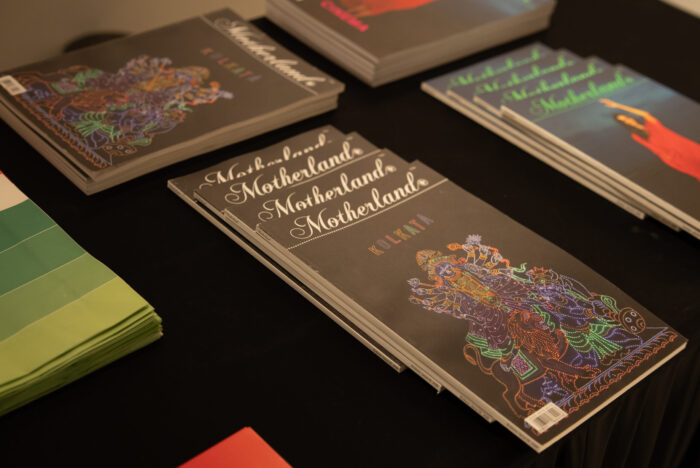
Kolkata, June 24: Twenty-five years after Calcutta officially became Kolkata, cultural journal Motherland returns to one of India’s most culturally, intellectually and politically influential cities to ask: what changed when the name changed or did anything change at all?
An independent print publication founded by V.Sunil in 2010, Motherland is known for their thematic, deep-dive issues, published in their signature long format style, with beautiful images and design.
Motherland launched their Kolkata special edition on 29th May at the Kolkata Centre for Creativity longtime supporters of the magazine. The event commenced with an opening speech by Ms. Ushmita Sahu (Director and Lead Curator, Emami Art) followed by an in-conversation with magazine contributors Meghdut RoyChaudhry (founder, Make Kolkata Relevant Again) and writer Karuna Ezara-Parikh. Meghdut and Karuna join 20+ contributors whose writings and photographs make up this edition.
Reflecting on the launch evening, Ms. Ushmita Sahu said
“V.Sunil and Emami Art go way back so it has been a pleasure to launch the magazine here at KCC, Emami Art. The magazine has amazing stories about Kolkata, and I encourage people to pick up a copy.”
Focusing on this quarter-century slice of history, Motherland’s editorial point of view moves beyond the nostalgia tropes associated with Kolkata. Instead, the issue explores how the city has negotiated the last 25 years, balancing memory and reinvention, charting its own path of identity and relevance against the backdrop of a changing nation.
“Cities are often understood through landmarks and statistics. Kolkata is better understood through its contradictions,” says the editorial note. “Twenty-five years after the transition from Calcutta to Kolkata, we wanted to explore not only how the city has changed, but how it continues to carry multiple versions of itself at once.”
Through essays, reportage, photography and visual storytelling, the issue explores the cultural and social forces that have shaped Kolkata since the turn of the millennium, with Gen Z now coming of age in this evolving landscape. Part cultural audit and part city portrait, it covers subjects ranging from the politics of Eden Gardens and Bengali comic-book culture to Kolkata’s distinctive typographic landscape.
Contributors include Karuna Ezara-Parikh on the city’s changing food culture and in conversation with Anoushka Shankar, Nivedita Poddar on emerging photographic perspectives, and a photo essay from the Sundarbans examining the environmental realities shaping Bengal’s future. The issue concludes with explorations of Kolkata’s fringe music scenes, from Kalkatiya rap to DIY soundsystems.
Together, these stories present Kolkata as a city that defies simple narratives—neither trapped in nostalgia nor defined by rapid transformation. Instead, it emerges as a place continually negotiating its identity through culture, creativity and everyday life, offering a compelling lens on how Indian cities evolve while remaining true to themselves.