


Odisha is known for its magnificent temples, rich history, and remarkable stone carvings. Among the many architectural wonders of the state, the Mukteswar Temple in Bhubaneswar holds a special place. Often regarded as the “Jew of Odisha’s Architecture”, this ancient temple is admired for its perfect blend of artistic beauty, detailed carvings, and spiritual significance. It is considered one of the finest examples of Kalinga architecture and reflects the extraordinary craftsmanship and cultural traditions of Odisha.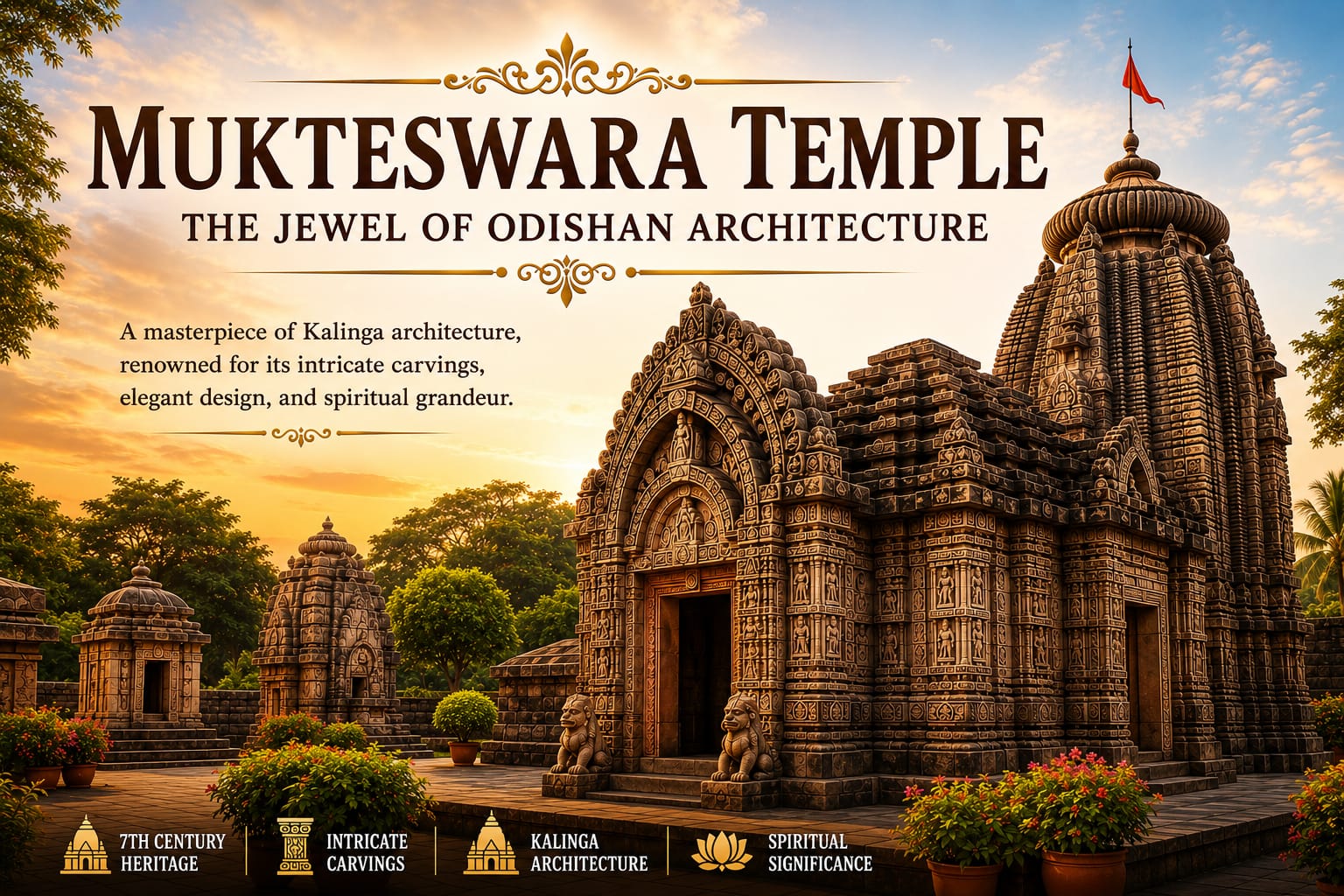
History of Mukteswara Temple
The Mukteshwar Temple, also spelled Mukteswara Temple, is a 10th-century Hindu temple dedicated to Lord Shiva. It is believed to have been built during the Somavamshi period, around the 10th century CE. The temple represents an important stage in the development of Odisha’s temple architecture, connecting earlier designs with the more elaborate styles seen in later temples.
The name “Mukteshwara” means “Lord of Freedom”, symbolizing spiritual liberation. The temple has long been associated with Shaivite traditions and is considered a sacred place for devotees and visitors interested in history and culture.
Architectural Beauty
The greatest attraction of Mukteshwar Temple is its unique architecture. Built in the Kalinga style, the temple is famous for its beautifully carved sculptures, detailed stonework, and balanced design. Unlike many larger temples, Mukteshwar is smaller in size but stands out because of its artistic perfection.
Important architectural features of the temple include:
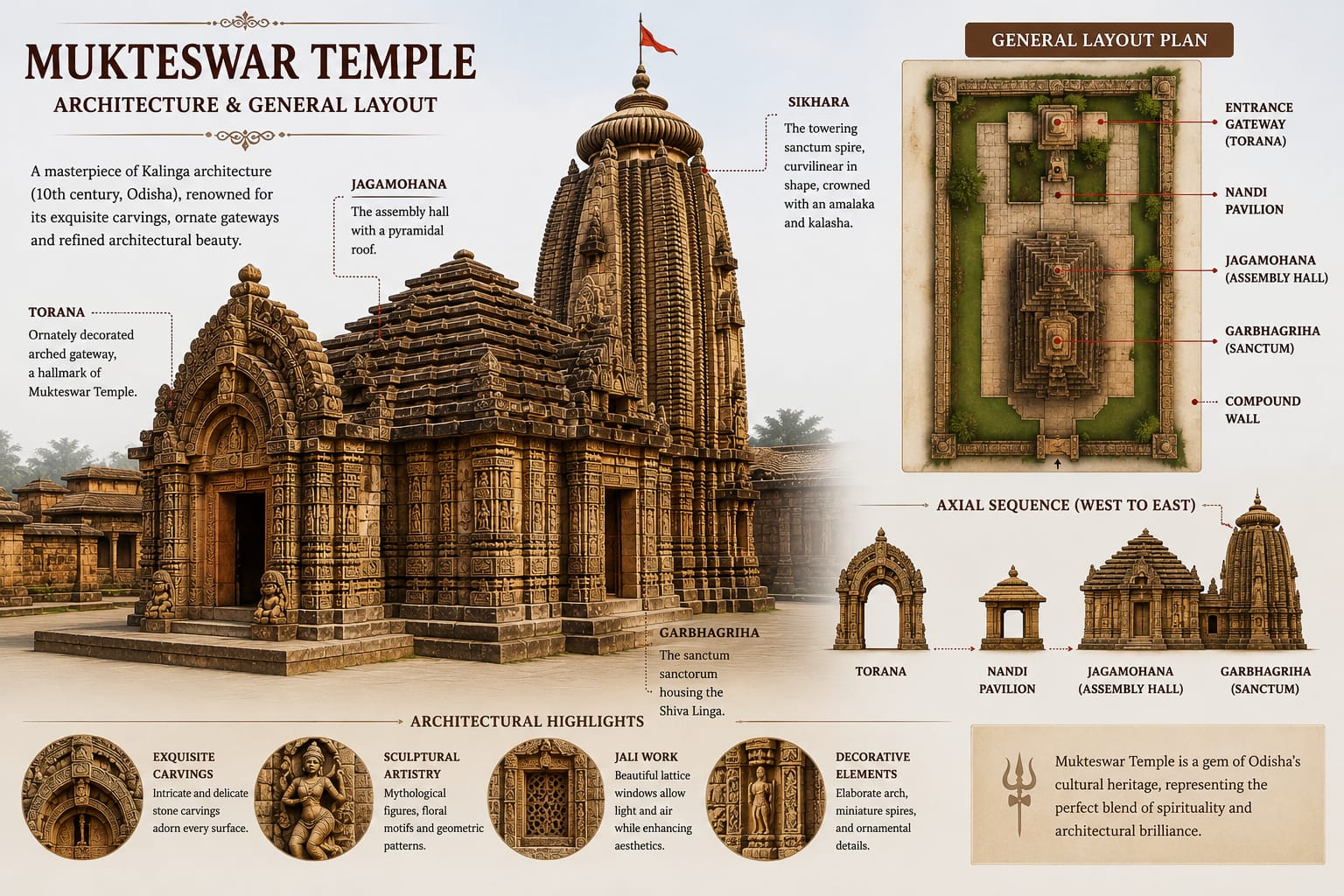
- Jagamohan (Assembly Hall):
The Jagamohan is a beautifully designed prayer hall with detailed carvings and an elegant structure. It reflects the creativity and precision of ancient craftsmen. - Tower or Shikhara (Sanctum Tower):
The Shikhara rises gracefully above the main shrine and represents the traditional style of Odisha temple architecture. Its design adds beauty and spiritual importance to the temple. - Torana (Decorative Gateway):
The Torana is one of the most remarkable features of Mukteshwar Temple. This beautifully carved arched gateway is a rare element in Odisha temple architecture. It contains intricate designs of flowers, figures, and mythological elements, showing the extraordinary skills of ancient artisans.
Sculptures and Carvings:
The temple walls are decorated with magnificent sculptures of deities, dancers, animals, floral patterns, and ascetics in meditation. These carvings reflect the artistic excellence, religious beliefs, and lifestyle of ancient India.
Cultural Importance
Mukteshwar Temple is not only a place of worship but also a symbol of Odisha’s rich cultural heritage.
- It represents the spiritual traditions and architectural achievements of ancient Odisha.
- The sculptures and carvings provide information about the lifestyle, beliefs, and artistic skills of ancient Indian society.
- The temple is connected with classical Odissi dance celebrations, including the Mukteshwar Dance Festival, which promotes Odisha’s performing arts heritage.
- It serves as an important heritage site that attracts historians, architects, artists, and tourists from different parts of the world.
A Must-Visit Heritage Site
Located in the temple city of Bhubaneswar, Mukteshwar Temple attracts historians, architects, photographers, and tourists from around the world. Its peaceful atmosphere and detailed craftsmanship make it one of Odisha’s most memorable heritage monuments.
Conclusion
The Mukteshwar Temple of Odisha is a perfect example of how stone can tell stories of devotion, creativity, and history. Though centuries old, its beauty remains alive through its carvings, architecture, and spiritual significance. A visit to this temple offers a glimpse into the glorious artistic heritage of Odisha and the timeless excellence of Indian temple architecture.