


Meerut, June 23: Demonstrating the transformative impact of advanced robotic technology and specialized technique in joint replacement surgery, doctors at Max Super Speciality Hospital, Saket, New Delhi successfully performed a Day Care Robotic Arm-Assisted Bilateral Knee Replacement Surgery on a 61-year-old patient suffering from severe osteoarthritis in both knees. The procedure enabled the patient to return home on the same day, highlighting the effectiveness of modern surgical techniques and enhanced recovery protocols.
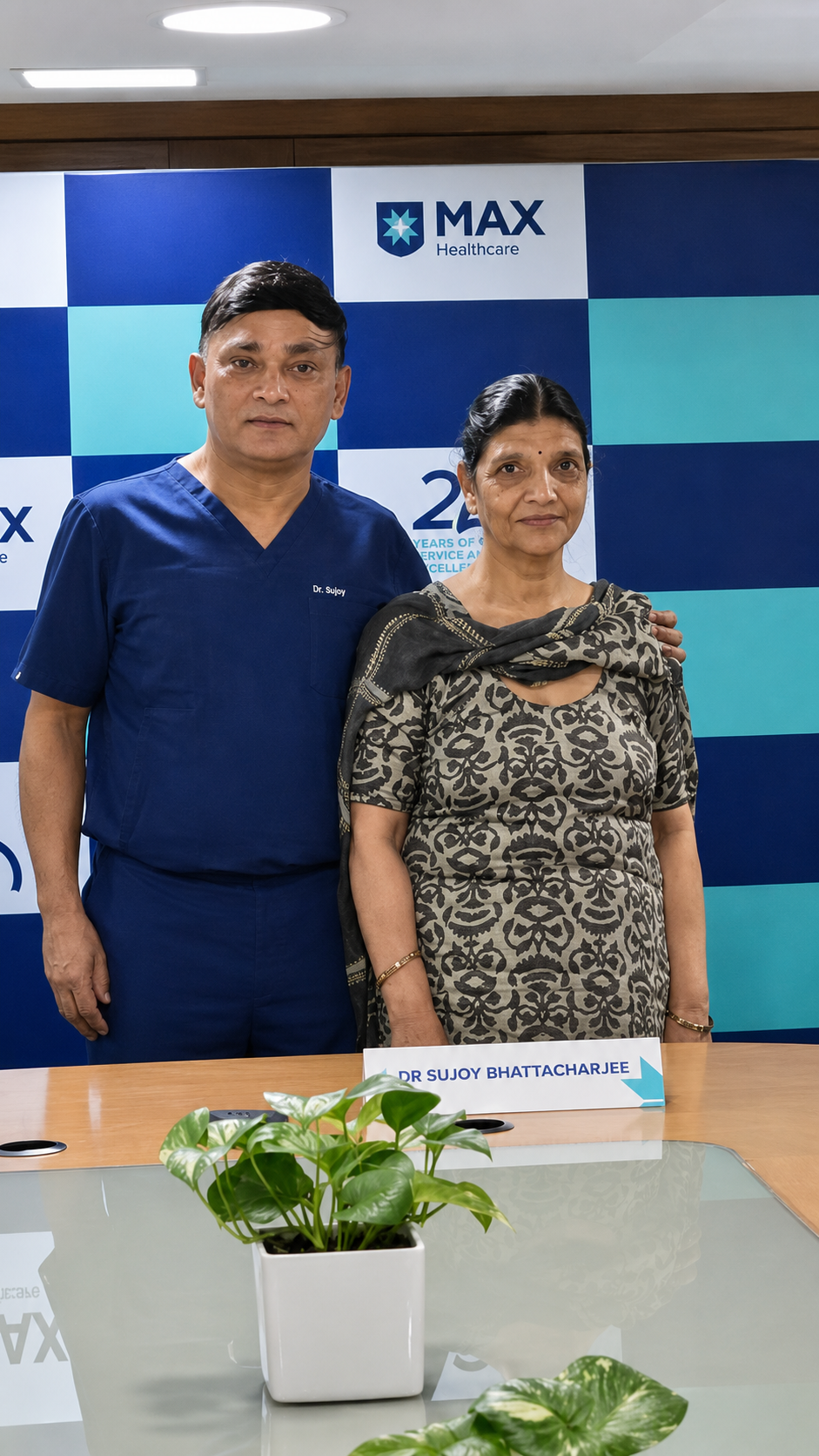
Mrs. Punam Sangal, had been living with severe bilateral knee osteoarthritis for several years. Persistent pain in both knees had significantly affected her mobility and quality of life, making routine activities such as walking, climbing stairs, and carrying out household tasks increasingly difficult. Despite conservative treatment measures, her symptoms continued to worsen, prompting her to seek specialised orthopaedic care. Following a comprehensive clinical evaluation, she was advised to undergo bilateral total knee replacement surgery in Day Care.
Commenting on the case, Dr. Sujoy Bhattacharjee, Chairman & Chief – Max Institute of Robotic Joint Replacement, Max Super Speciality Hospital, Saket, New Delhi said, “Knee osteoarthritis is one of the most common causes of disability with aging. In Mrs. Sangal’s case, both knees were severely affected, significantly restricting her mobility and independence. Robotic-assisted knee replacement allowed us to plan the surgery with exceptional precision and accuracy.”
The day care advantage of robotic surgery is that it enables faster recovery and earlier mobilisation. As robotic surgery is minimally invasive technique, patients experience less blood loss, reduced pain, and a quicker recovery. All patients are allowed to begin rehabilitation exercises as soon as the effect of local anaesthesia wears off. This is followed by assisted mobilisation and later walking without support. A few patients have even been able to climb stairs.
All surgeries are staple-less or suture-less and dressed with a simple, water-resistant strap that can be easily removed by the patient after 12 days, without needing to visit any medical or hospital centre for assistance. Every patient we operate on follows a strict protocol, supervised by a dedicated team of doctors available at any time, including during emergencies. So far, our experience has been remarkable, and patients are showing positive results.
Speaking further about the advantages of robotic joint replacement, Dr. Bhattacharjee said,
“Today, patients undergoing knee replacement can begin walking independently on the same day of surgery, and most are discharged within 48 hours. This is a remarkable leap from traditional outcomes, significantly improving quality of life. Robotic-assisted joint replacement surgeries allow for unmatched surgical accuracy, reduced complications, and faster recovery. With minimally invasive techniques and real-time imaging, we can now offer highly precise implants tailored to each patient’s anatomy.”
Today, Mrs. Sangal is recovering well. She has reported significant relief from knee pain and continues to make steady progress toward regaining strength, confidence, and mobility. Her recovery journey reflects the growing role of day care robotic-assisted surgery in helping patients achieve better outcomes with reduced recovery times.
The successful surgery highlights the expertise of the Max Institute of Robotic Joint Replacement at Max Super Speciality Hospital, Saket, which continues to offer advanced orthopaedic solutions through cutting-edge technology, evidence-based treatment protocols, and comprehensive rehabilitation support. With a dedicated team of specialists and state-of-the-art robotic systems, the hospital remains committed to delivering personalised care and helping patients return to active, pain-free lives.