


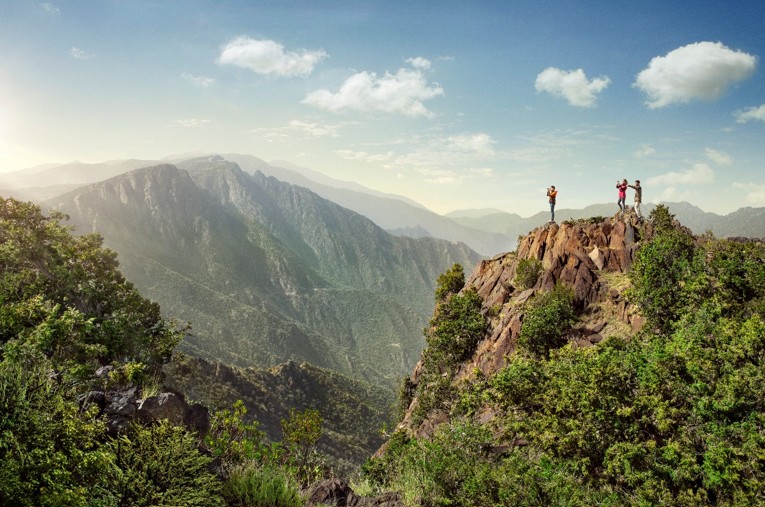
High in the southwest of Saudi, Aseer offers a distinctive summer landscape shaped by elevation, heritage, and nature. Cooler temperatures, mountain peaks, forested slopes, and terraced valleys create an environment unlike anywhere else in Saudi. With temperatures often significantly cooler than many lowland areas during summer, Aseer has long served as a seasonal retreat for visitors seeking outdoor experiences, mountain scenery, and cultural discovery. Across the region, life remains closely tied to the land, from stone villages set along ridgelines to terrace farms producing coffee, grains, and seasonal crops.
Cooler Weather in the Mountains
Aseer’s elevation creates a cooler climate during summer, with peaks such as Al Soudah rising above 3,000 meters. Cloud cover, fresh air, and wide views across valleys and ridgelines define the setting, while cafés, walking paths, and open viewpoints are built directly into the landscape. Trails connect key viewpoints and highland routes, including areas stretching toward Rijal Almaa, encouraging visitors to explore the landscape at a slower pace.
Outdoor Spaces Across Abha
In Abha, parks, hillside districts, and viewpoints are integrated into everyday spaces, offering continuous access to open air and elevated views. Abu Kheyal Park and High City overlook the surrounding terrain, while connected walking routes link green spaces across the city. Art Street combines cafés, galleries, and public seating in open-air settings that remain active from day into evening.
This sense of activity builds further throughout the season. During summer, the Sound of Abha Fest brings live music, food experiences, shopping and family-friendly programing to multiple locations across the city.
Rather than taking place in a single venue, the festival extends across cultural districts, public spaces, and outdoor stages, creating a city-wide atmosphere. Alongside this, venues such as Talal
Maddah Theater host concerts and performances, adding to a calendar that keeps the city visibly active.
Heritage Within the Landscape
Aseer’s cultural identity is shaped by generations of mountain communities, where traditions continue through architecture, craftsmanship, and everyday life. Al-Qatt Al-Asiri, a traditional interior art form rooted in Aseeri homes and created primarily by women, is inscribed on UNESCO’s Representative List of the Intangible Cultural Heritage of Humanity and remains an important expression of regional identity today.
And UNESCO World Heritage Site, Rijal Almaa village, once a key stop along ancient trade routes linking Yemen with Makkah and Madinah, remains one of the region’s most recognizable sites. It is known for its distinctive multi story stone buildings set among the mountains and more than 900 years of history that reflect its exceptional cultural value, unique Aseeri architecture, and role as a living record of traditional Saudi life.
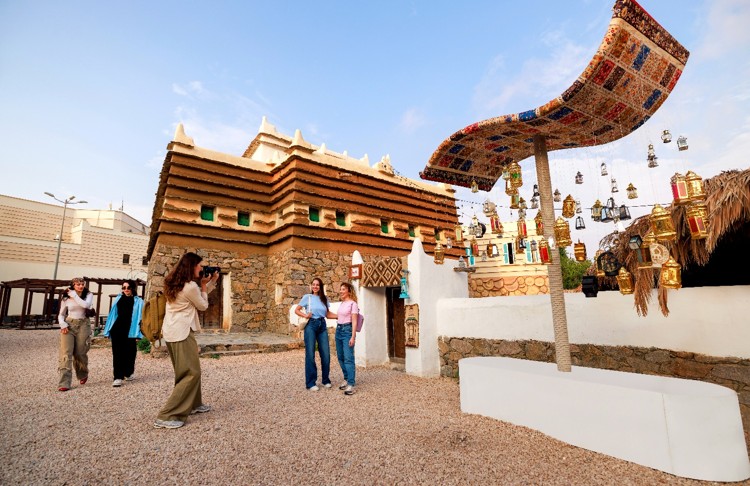
Across the region, heritage sites such as Abu Nugtah heritage castles and Al-Asabla Palaces host craft displays, performances, and cultural gatherings, while Souq Al Thulatha offers a regular setting for local products and exchange and Al Muftaha District connects traditional Aseeri design to galleries and workshops. Seasonal events celebrate these traditions through music, dress, artisan crafts, and local storytelling, keeping cultural practices visible and accessible. Al-Qatt Al-Asiri remains a visible part of this identity, linking creative practice to everyday spaces.
Across the Highlands and Terraced Valleys
Beyond the cultural landmarks, Aseer is equally defined by its terraced mountainsides and agriculture traditions. Terraced fields carved into steep slopes create striking patterns across the landscape, supported by generations-old stone walls and irrigation systems designed to manage seasonal rainfall. These terraces support crops including coffee and grains, reflecting agricultural traditions adapted to the region’s unique topography.
Experiences extend into working landscapes through visits to local farms, where agriculture remains part of daily life, while hiking, camping, and outdoor recreation allow visitors to engage directly with the surrounding environment. Sites such as Al Habala Park, Al Sahab Park, and the Dabbab Walkway provide different perspectives across the highlands, each offering its own view of the surrounding landscape.
Beyond Aseer, the wider southwest highlands continue into neighboring Al-Baha, where forested landscapes, cool temperatures, and mountain viewpoints offer additional opportunities for outdoor exploration. Together, these regions showcase the diversity of Saudi’s highland environments during the summer months.
Aseer in Saudi
Aseer offers a summer experience shaped by cool mountain landscapes, living traditions, and communities closely connected to the land. From terraced valleys and heritage villages to outdoor festivals and panoramic viewpoints, the region reveals a distinctive side of Saudi where nature, culture, and everyday life remain deeply intertwined.
Truly, it has never been easier to visit Saudi – visa initiatives have been continuously developed, with the eVisa program now including 66 countries and special administrative regions, and the GCC residents visa and free 96-hour Stopover Visa. UK, US, or Schengen visa holders, as well as residents of the UK, US, or European Union countries, are eligible for the instant eVisa.
Direct nonstop flights operate daily from London Heathrow and Gatwick to Jeddah’s King Abdulaziz International Airport (JED).
Should you need, Visit Saudi has a 24/7 tourist helpline (dial 930) for travelers who require assistance or have any concerns.