


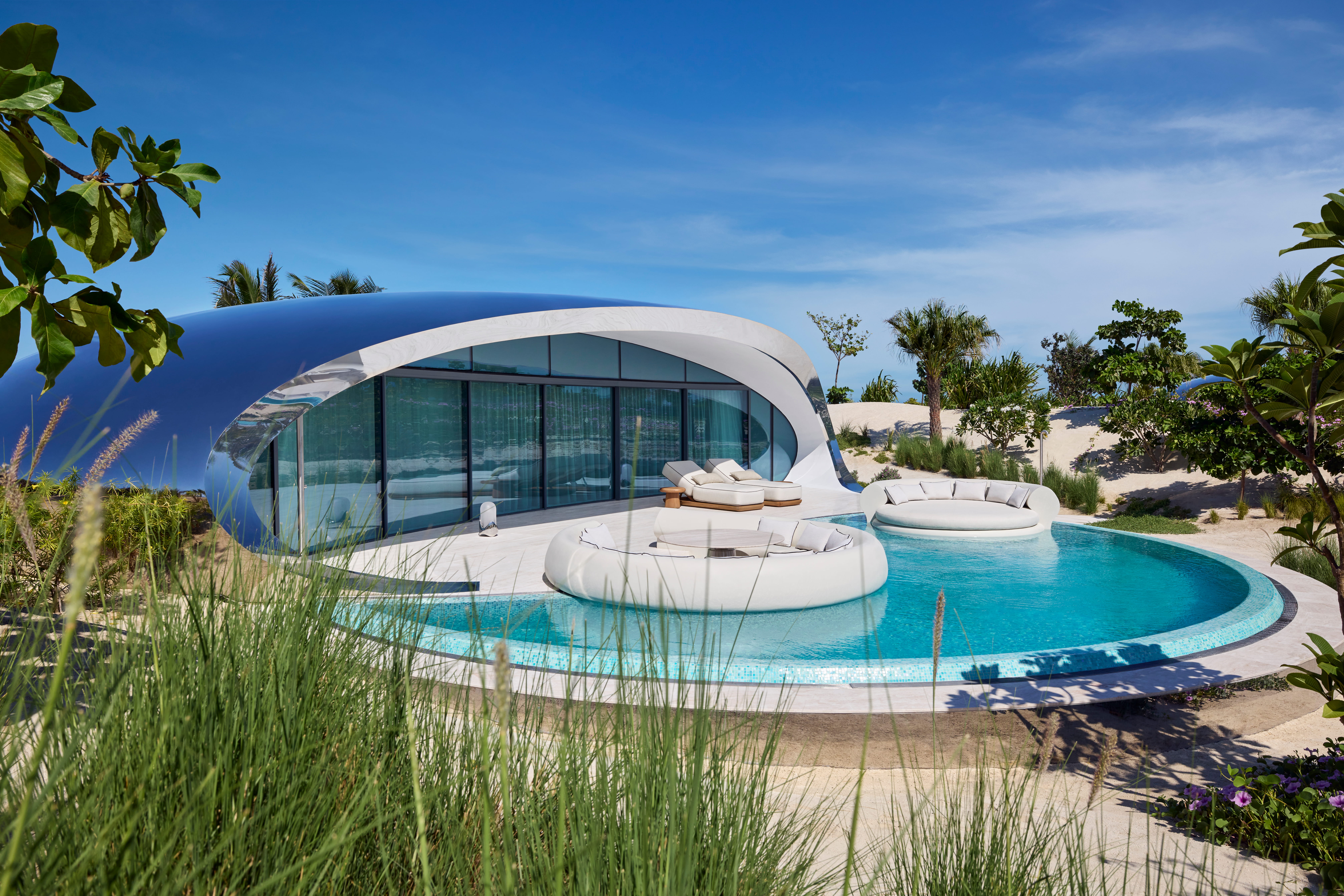
Design: 5 Ways The Red Sea Resorts Do Things Differently
Sustainability defines how The Red Sea in Saudi has been built, shaping a destination positioned at the highest end of the global travel market. The destination spans 28,000 square kilometers, covering more than 90 islands and one of the world’s largest barrier reef systems, with tightly controlled development. It is designed to operate on 100% renewable energy and is working toward a 30% net conservation benefit by 2040, shaping everything from infrastructure to resort design.
1. A destination powered entirely by renewable energy The Red Sea is being developed to run fully on renewable energy, supported by solar infrastructure and large-scale battery storage. This system already powers the first phase, including resorts, transport, and utilities, without reliance on the national grid. At full capacity, it is expected to prevent hundreds of thousands of tons of CO₂ emissions annually, supporting a seamless, high-end guest experience.
2. Development is limited by design Despite its scale, construction is tightly restricted. Less than 1% of the destination is developed, with 75% of islands left untouched to preserve natural habitats. Visitor numbers are capped at one million per year, reinforcing a controlled, lower-density model. This shapes the resort portfolio. Properties such as The St. Regis Red Sea Resort and Nujuma, a Ritz-Carlton Reserve sit within largely untouched landscapes, creating a strong sense of privacy and exclusivity that is inherent to the destination itself.
3. Conservation is backed by measurable outcomes The Red Sea’s environmental strategy is structured around a 30% net conservation benefit by 2040, supported by long-term monitoring and restoration. Early progress includes more than 5 million plants cultivated, 600,000 mangrove seedlings planted, and 46,350 tons of CO₂ emissions avoided, with ongoing studies across the coastline informing how development progresses. The focus is on active restoration alongside resort development, ensuring the natural environment remains central to the experience.
4. Movement is designed around lower-impact mobility Transport is integrated into the sustainability model. The destination has introduced an electric mobility network, with more than 150 charging stations supporting EV transfers. That fleet will expand its vehicle capacity as the destination grows. Movement between the airport, islands, and inland resorts is coordinated, with boats and seaplanes completing the system.
5. A growing resort portfolio, built on the same framework The Red Sea is expanding in phases, with each resort aligned to the same sustainability structure. On Shura Island, the destination’s central development hub, plans include 11 resorts, with brands such as EDITION, SLS, and InterContinental forming part of the initial openings, creating a more connected, lifestyle-led center within the wider destination.
Recent openings add another layer to the mix. Miraval The Red Sea introduces an adult-only, wellness-led retreat, bringing a more immersive, longer-stay dimension while maintaining the same design, privacy, and sustainability principles. The resort aligns with The Red Sea’s commitment to regenerative tourism, including being powered solely by renewable energy and implementing advanced waste and water management systems to minimize environmental impact while enhancing biodiversity.
Across the wider destination, the portfolio already spans a mix of private island stays, design-led properties, and inland resorts. Nujuma, a Ritz-Carlton Reserve, Shebara, and The St. Regis Red Sea Resort anchor the island experience, while Desert Rock integrates into the landscape and Six Senses Southern Dunes reflects the surrounding landscape and environment. Each property differs in design and pace but operates within the same system, with a consistent emphasis on high-end design, space, privacy, and exclusivity.