


May 21 : In Punjab, the idea of home has long carried an emotion far deeper than ownership. For generations, the kothi stood as a symbol of stability, family pride, and personal achievement — a space built not just with money, but with memories, legacy, and the aspiration to create something lasting for future generations. But as lifestyles evolve, so do housing expectations. Younger homebuyers today are leading far more professionally driven lives, often within smaller nuclear family setups where convenience, security, and ease of living matter as much as space itself. With busier routines and changing urban priorities, many buyers are gradually moving towards gated communities and integrated developments that offer managed infrastructure, shared amenities, and a stronger sense of everyday convenience alongside modern community living.
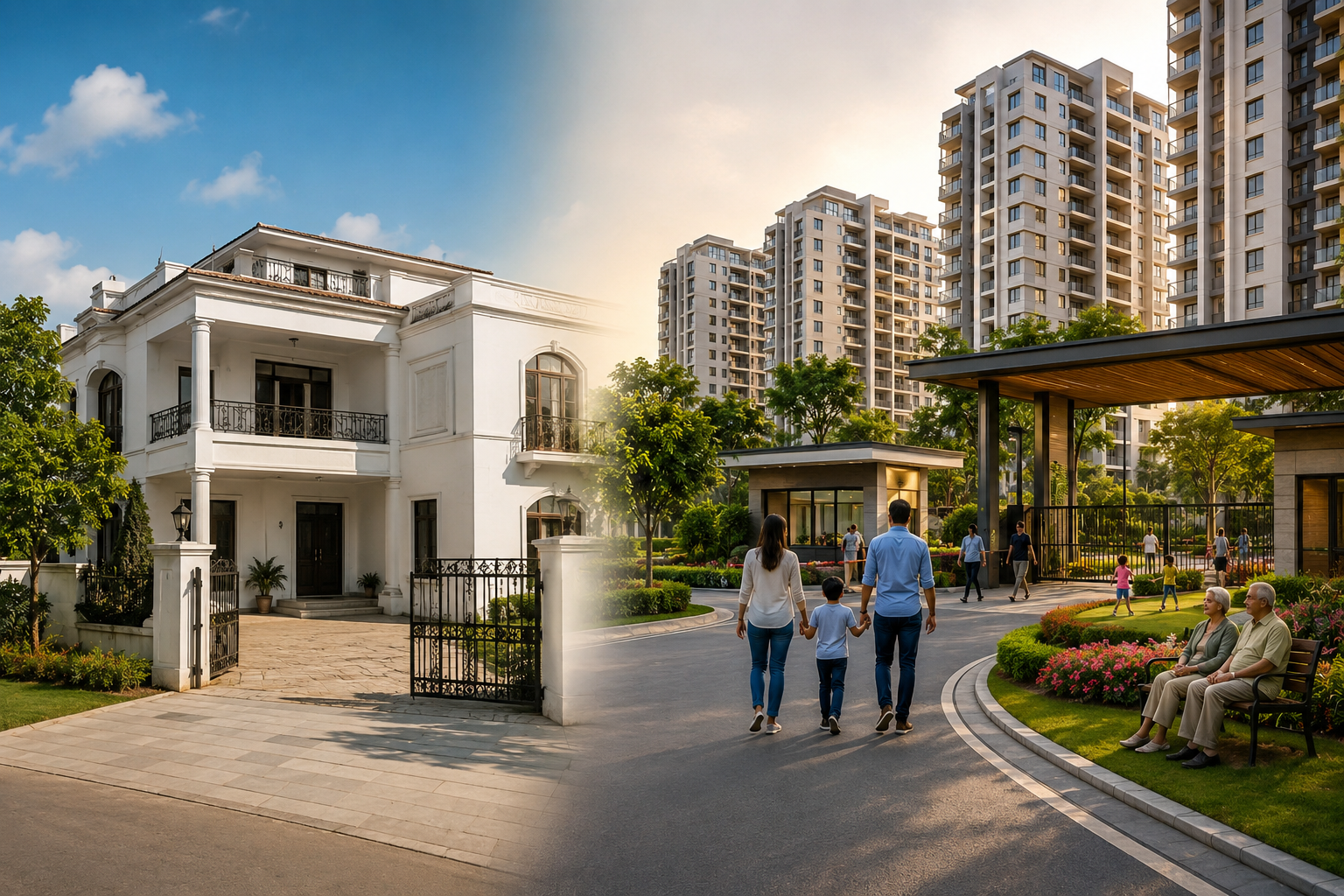
What is driving this shift, however, goes beyond changing architecture; it reflects changing priorities. For today’s homebuyers, especially younger families, security has become just as important as space. Gated access, surveillance systems, child-friendly surroundings, and safer environments for senior citizens are increasingly influencing buying decisions, as people now value peace of mind alongside ownership.
At the same time, the idea of lifestyle has become far more community-oriented. Clubhouses, fitness centres, green spaces, walking tracks, and shared recreational zones are no longer seen as add-ons, but as part of everyday living. Buyers want the comfort of privacy while still being part of a connected social ecosystem.
Alongside this, the limitations of many traditional plotted colonies, from parking concerns and inconsistent maintenance to drainage and traffic management issues, have made professionally managed developments more appealing, particularly in growing urban centres like Mohali, Ludhiana, Zirakpur, and Jalandhar. Exposure to metro-city and global lifestyles has also reshaped aspirations among Punjab’s younger buyers, many of whom now seek smarter, wellness-driven living environments with organized infrastructure, professional maintenance, and integrated experiences that extend beyond the four walls of a home.
Besides, according to the Top 5 Luxury Micro-Markets in Tier-2 & Tier-3 cities set for high growth in 2026 report, Tier II markets have recorded an average capital appreciation of around 17.6%. Project land prices in these cities will rise between 25% and 100% over the next 2–4 years, driven directly by infrastructure expansion and industrial growth.
Further, as assessed by KPMG India in February 2026, infrastructure investments in Tier II and Tier III cities are expected to support sustained appreciation in real estate values as these cities transition into regional economic hubs.
Umang Jindal, CEO, Homeland Group, says,
“Punjab’s housing market is moving towards a more evolved and ecosystem-driven phase of urban development. Homebuyers today are no longer evaluating projects only on the basis of size or location; they are looking at how seamlessly a development supports everyday life. Integrated communities with organized infrastructure, green spaces, wellness amenities, and social interaction are becoming increasingly important because people now value convenience and quality of living together. This shift reflects the growing maturity of Punjab’s urban landscape and the changing expectations of a more aware and aspirational buyer base.”
Tejpreet Gill, Managing Director, Gillco Group, says,
“The meaning of home has changed significantly for modern families. Earlier, larger independent homes were often the biggest aspiration, but today people are equally focused on the environment in which their families grow and live every day. Parents want safer spaces where children can play freely, elderly family members feel secure, and neighbours interact more naturally. Shared amenities and community spaces help create a more balanced lifestyle where people experience both privacy and togetherness. In many ways, gated communities are responding to emotional as well as practical needs, because buyers today are seeking comfort, connection, and peace of mind within their living environments.”
Moreover, this transition is also closely tied to the larger evolution of Punjab’s urban landscape itself. Cities across the state are no longer expanding in the unstructured manner they once did; they are gradually moving towards more professionally planned and infrastructure-led growth. As urban centres become denser and more aspirational, developers too are shifting their focus from creating standalone residential projects to building complete living ecosystems that integrate housing with wellness, recreation, retail, green spaces, and everyday convenience.
Udit Jain, Director, ONE Group, says,
“The aspirations of Punjab’s homebuyers have evolved considerably with greater exposure to metro-city and global lifestyles. This shift is especially visible among younger buyers who value experiences and overall quality of life more strongly than previous generations. Wellness amenities, green spaces, fitness infrastructure, social interaction zones, and professionally maintained environments are becoming an important part of this segment’s expectations. Aspirational living today is being defined as much by the ecosystem around a home as the home itself.”
Piyush Kansal, Executive Director, Royale Estate, says,
“There has been a noticeable shift in buyer behaviour across Punjab over the last few years. Earlier, homeownership was largely driven by the idea of owning land or building a standalone house, but today the conversation is increasingly centred around lifestyle, convenience, and long-term livability. Buyers are becoming more practical and quality-conscious in their decision-making. Organized communities offer a level of predictability and efficiency that many traditional residential setups often struggle to provide, which is why demand for integrated developments continues to grow steadily.”
Thus, Punjab’s housing market today is being shaped by far more than the traditional aspiration of ownership alone. The gradual shift from independent kothis to integrated communities, therefore, reflects something much larger than a change in residential formats. It signals an evolving mindset among modern families, where the definition of a “good home” is no longer limited to size or individuality, but extends to everyday livability, social connection, wellness, and long-term quality of life.