


Mumbai, India’s financial capital continues to grapple with an increasingly pressing reality space is no longer a luxury; it is a constraint. With dense urban development, limited land parcels, and ever-growing population pressures, the city is nearing saturation. In such a scenario, the idea of developing large-scale artificial water bodies within Mumbai’s core is not just challenging, but almost impractical.
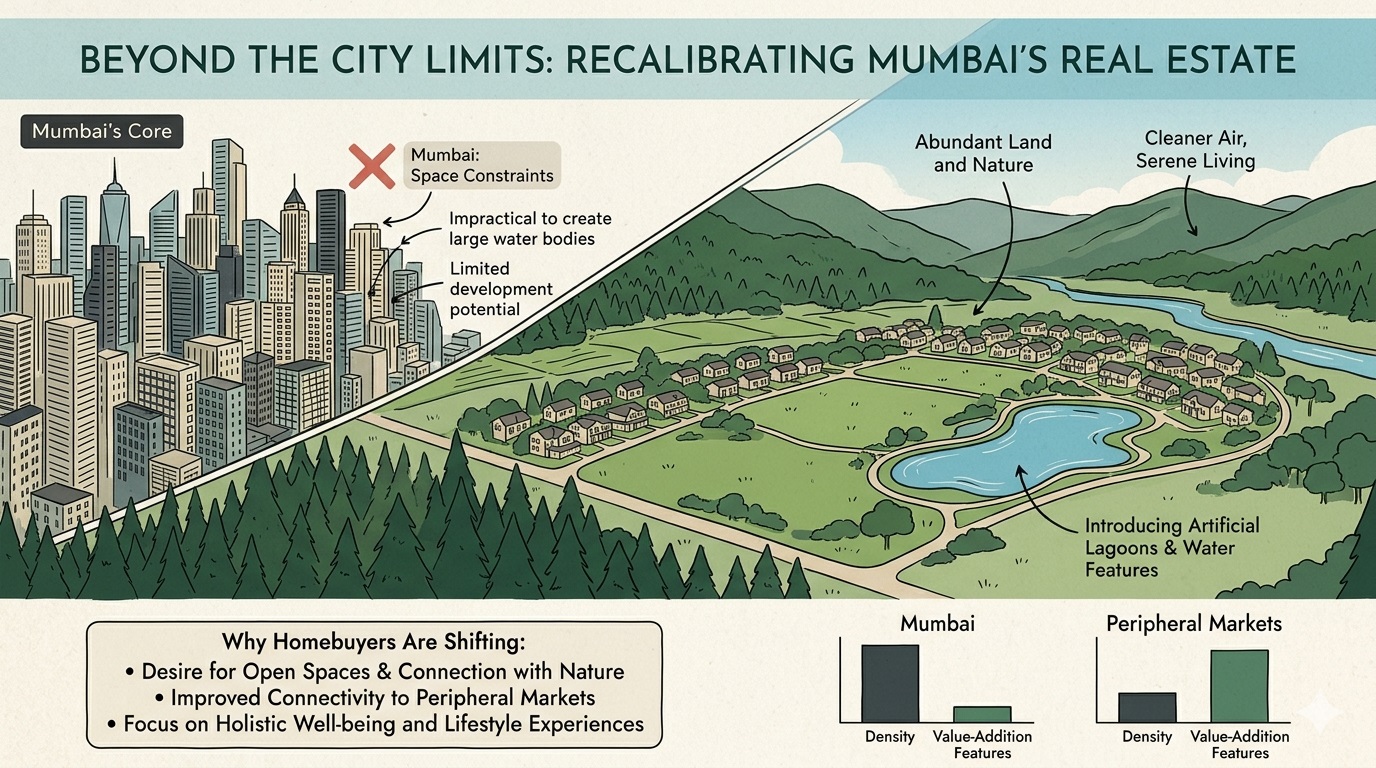
As the Maximum City stretches to accommodate its expanding population, homebuyers are recalibrating their preferences. The focus is gradually shifting from compact, high-density living to open spaces, cleaner air, and a closer connection with nature. This shift has placed peripheral locations such as Karjat, Neral, Panvel, Khopoli, Lonavala and Alibaug firmly on the radar of both developers and investors.
These regions, once considered secondary or weekend destinations, are now emerging as preferred residential and investment hubs. The reasons are clear; improved connectivity, abundant land availability, relatively lower density, better air quality, and the presence of natural elements such as hills, rivers, and greenery. Unlike Mumbai, these locations offer developers the freedom to conceptualize expansive projects that blend lifestyle with nature.
Interestingly, while nature itself is a major draw, developers in these regions are going a step further by introducing artificial water bodies such as man-made lakes, lagoons and water features within or around their projects. These additions are designed to enhance the overall aesthetic appeal and create a resort-like living experience for residents. In many cases, such features are positioned as premium value additions, complementing the already existing natural surroundings.
This trend highlights a shift in buyer psychology. Today’s homebuyers are not just investing in square footage; they are investing in experiences. The presence of water bodies, even artificial ones evokes a sense of tranquility, exclusivity, and well-being, making projects more attractive in a competitive market.
Ms. Unnati Varma, Director, ORA Land (by ORA Group) shares,
“Mumbai has reached a point where creating large-scale lifestyle features like artificial water bodies is extremely difficult due to space constraints. However, peripheral markets such as Karjat and Neral offer a unique advantage they already have the natural ecosystem that buyers are seeking. Developers are simply enhancing this appeal with thoughtfully designed water features, making these projects more experiential and aligned with evolving buyer aspirations. Large water bodies and lagoons also contribute towards creating a cooler microclimate, enhancing scenic appeal, promoting wellness-driven living and offering residents a resort-like experience amidst nature. At ORA Group, we are already taking this a step further by developing a man-made lagoon within our project in Karjat, offering residents a unique waterfront living experience surrounded by greenery and open spaces.”
Echoing a similar sentiment, Mr. Ram Naik, Co-founder & CEO, The Guardians Real Estate Advisory adds,
“We are witnessing a clear shift in demand from congested city living to more open, nature-driven environments. Peripheral locations are benefiting immensely from this trend, especially as improved infrastructure continues to enhance connectivity and accessibility. For early movers, these markets offer strong appreciation potential and a compelling long-term investment upside as social and physical infrastructure matures. Additionally, we are seeing growing interest from branded developers entering these regions, which is further strengthening buyer confidence and driving sustained demand from both end-users and investors.”
As infrastructure connectivity improves and hybrid work models continue to gain traction, the appeal of these peripheral micro-markets is expected to grow further. What Mumbai cannot accommodate due to its spatial limitations, its surrounding regions are readily offering i.e. space, serenity, and a more balanced way of life.
In the evolving narrative of Mumbai’s real estate, artificial water bodies may not find room within the city, but they are certainly making waves just beyond its boundaries.