


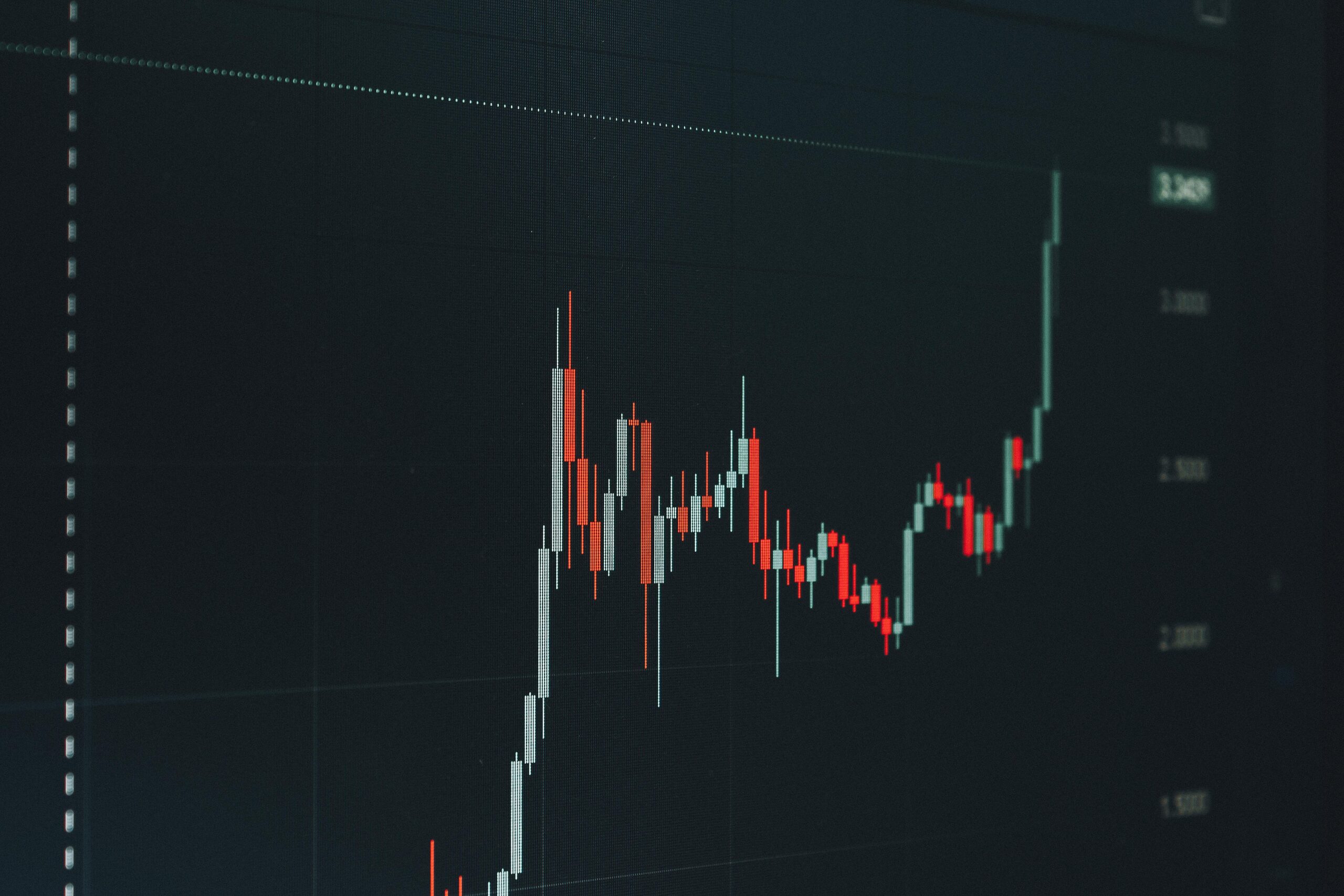
The modern financial ecosystem processes information at terrifying speeds. Trading volume across global forecasting platforms reached unprecedented levels recently, driven largely by retail participants wagering capital on geopolitical shifts, economic data releases, and election outcomes.
Does the average trader truly understand the underlying mechanism pricing that risk? Probably not. For founders and developers, the core mechanics of these digital arenas are relatively straightforward to code. The regulatory reality surrounding them is entirely different.
Prediction markets exist in a precarious gray area, sitting directly between financial derivatives and games of chance. LegalBison, a boutique legal and business services firm, routinely navigates this divide for operators entering the space.
The firm observes technical teams building complex smart contracts, only to face immediate jurisdictional roadblocks. This guide breaks down exactly how these digital environments function under the hood, exploring why their legal classification breaks traditional frameworks.
The Mechanics: How Pricing Equals Probability
The foundational concept relies entirely on binary outcomes. A contract asks a specific, verifiable question. Will a certain candidate win the election? Will a central bank cut interest rates by a specific date? Traders buy shares representing either the affirmative or the negative outcome.
Prices trade between $0.00 and $1.00, and the current price of a “Yes” share directly correlates to the market’s perceived probability of that event occurring. If a “Yes” share trades at $0.65, the participants collectively believe there is a 65% chance the event will happen (Wolfers & Zitzewitz, 2004).
If the event occurs, the contract resolves, paying out exactly $1.00 per winning share. If the event does not occur, the shares expire worthless.
The technical execution of these trades involves heterogeneous mechanisms. On blockchain-based platforms, a trade often requires share minting and burning alongside conventional exchange routing. When two traders take opposite sides of a new position, their capital is locked as collateral in a smart contract.
The contract mints equal amounts of affirmative and negative shares, distributing them to the respective buyers. Logarithmic Market Scoring Rules are frequently deployed to act as automated market makers, subsidizing trading to accurately predict the likelihood of each outcome (Gao et al., 2009).
This continuous minting, burning, and automated pricing process ensures the system remains fully collateralized at all times.
Liquidity, Manipulation, and Kyle’s Lambda
A speculative forecasting platform is only as accurate as its liquidity depth. Is a forecasting environment actually reliable if only a few people participate? A shallow order book allows large account holders to distort prices with very little capital.
Financial researchers quantify this price impact using a metric known as Kyle’s lambda, which measures the equilibrium price impact of order flow (Collin-Dufresne & Fos, 2012). A high lambda value indicates that a small net order flow will move the price drastically, exposing a vulnerable, illiquid environment (Collin-Dufresne & Fos, 2012).
Deep liquidity creates resistance against manipulation. It forces participants to risk massive amounts of capital if they want to artificially inflate the probability of a specific outcome. If noise trading volatility changes stochastically over time, the price impact measures will move accordingly, prompting informed insiders to adjust their trading to exploit moments of greater liquidity (Collin-Dufresne & Fos, 2012).
The integrity of the entire ecosystem depends on having enough independent actors to absorb anomalous trades without permanently skewing the probability matrix.
The Accuracy Debate: Markets Versus Traditional Polls
Financial incentives create sharper accuracy over long horizons compared to traditional surveys. Political scientists and forecasters constantly debate whether crowd-sourced financial speculation provides better data than traditional surveys.
A comprehensive historical assessment comparing market prices to trial heat polls across presidential elections demonstrated that market prices predicted elections almost on par with modern scientific polling, and were far superior during periods before scientific polling existed (Erikson & Wlezien, 2012).
Why does putting money on the line change human behavior so drastically? Polls measure public sentiment at a specific snapshot in time, carrying inherent errors regarding voter turnout and sample bias. Speculative forecasting forces participants to absorb financial risk based on their convictions.
In anonymous financial environments, virtue-signaling disappears completely. The market aggregates diverse opinions weighted directly by an individual’s willingness to back their opinion with capital. This financial incentive ensures that new information is priced in almost immediately. If a candidate stumbles in a debate or a central bank releases unexpected inflation data, traders race to update their positions to capture profit.
Interestingly, while speculative pricing aggregates information efficiently, some research indicates that combining market prices with simple self-reported beliefs yields even greater predictive accuracy (Dana et al., 2019).
Self-reports can contain incrementally useful information that market prices alone fail to capture efficiently (Dana et al., 2019). The financial mechanism remains a premier tool for real-time probability assessment.
The Regulatory Labyrinth: Mapping Architecture to Licensing
The specific mechanics of a platform dictate its regulatory burden. Determining the correct operational path requires rigorous digital-asset regulation expertise. You cannot simply build an interface and expect government agencies to ignore it. The central legal friction lies in classification. Does the platform constitute a game of chance, or is it a regulated financial derivative?
If a user wagers capital on the outcome of a football match, regulators almost universally view this as gaming. The operator requires an online betting setup, complete with proper licensing and consumer protection measures. If the user wagers on the future price of a commodity or an inflation metric, financial regulators step in.
They classify the contract as a binary option or a swap. In the United States, agencies like the Commodity Futures Trading Commission aggressively assert jurisdiction over event contracts that mimic financial derivatives or commodities.
The gray area emerges when the underlying event is geopolitical. Wagering on an election result or a supreme court ruling does not fit neatly into traditional securities law, nor does it look like a casino game. Securing a corporate service provider capable of translating these technical nuances into legal realities is non-negotiable for long-term survival. The legal foundation must match the code executing on the blockchain exactly.
The Verdict on Predictive Ecosystems
The architecture powering these platforms represents a brilliant application of financial incentives to aggregate human knowledge.
They process information faster than traditional polls, providing a real-time gauge of global sentiment driven by raw economic participation. Building a successful platform, however, requires much more than just deploying a clever automated market maker or securing initial liquidity.
It requires a resilient corporate architecture capable of withstanding severe regulatory scrutiny. Founders who treat compliance as an afterthought inevitably hit operational walls, bleeding capital into legal defense rather than product development.
Those who secure the proper legal foundations and licensing structures build platforms that can scale safely within the modern digital economy. The intersection of code and law is unforgiving, but with precise structuring, it is entirely navigable.
References
Collin-Dufresne, P., & Fos, V. (2012). Insider Trading, Stochastic Liquidity and Equilibrium Prices. SSRN Electronic Journal.
Dana, J., Atanasov, P., Tetlock, P., & Mellers, B. (2019). Are markets more accurate than polls? The surprising informational value of “just asking”. Judgment and Decision Making, 14(2), 135–147.
Erikson, R. S., & Wlezien, C. (2012). Markets vs. polls as election predictors: An historical assessment. Electoral Studies, 31(3), 532–539.
Gao, X., Chen, Y., & Pennock, D. M. (2009). Betting on the Real Line. Lecture Notes in Computer Science, 553–560.
Wolfers, J., & Zitzewitz, E. (2004). Prediction Markets. Journal of Economic Perspectives, 18(2), 107–126.