


Pune, April 23: A landmark two-year survey across the Western Ghats has revealed a worrying gap in the region’s biodiversity: researchers were able to document only about 65% of the dragonfly and damselfly species historically recorded in the region, pointing to a potential shortfall of nearly 35% of these ecologically critical insects.
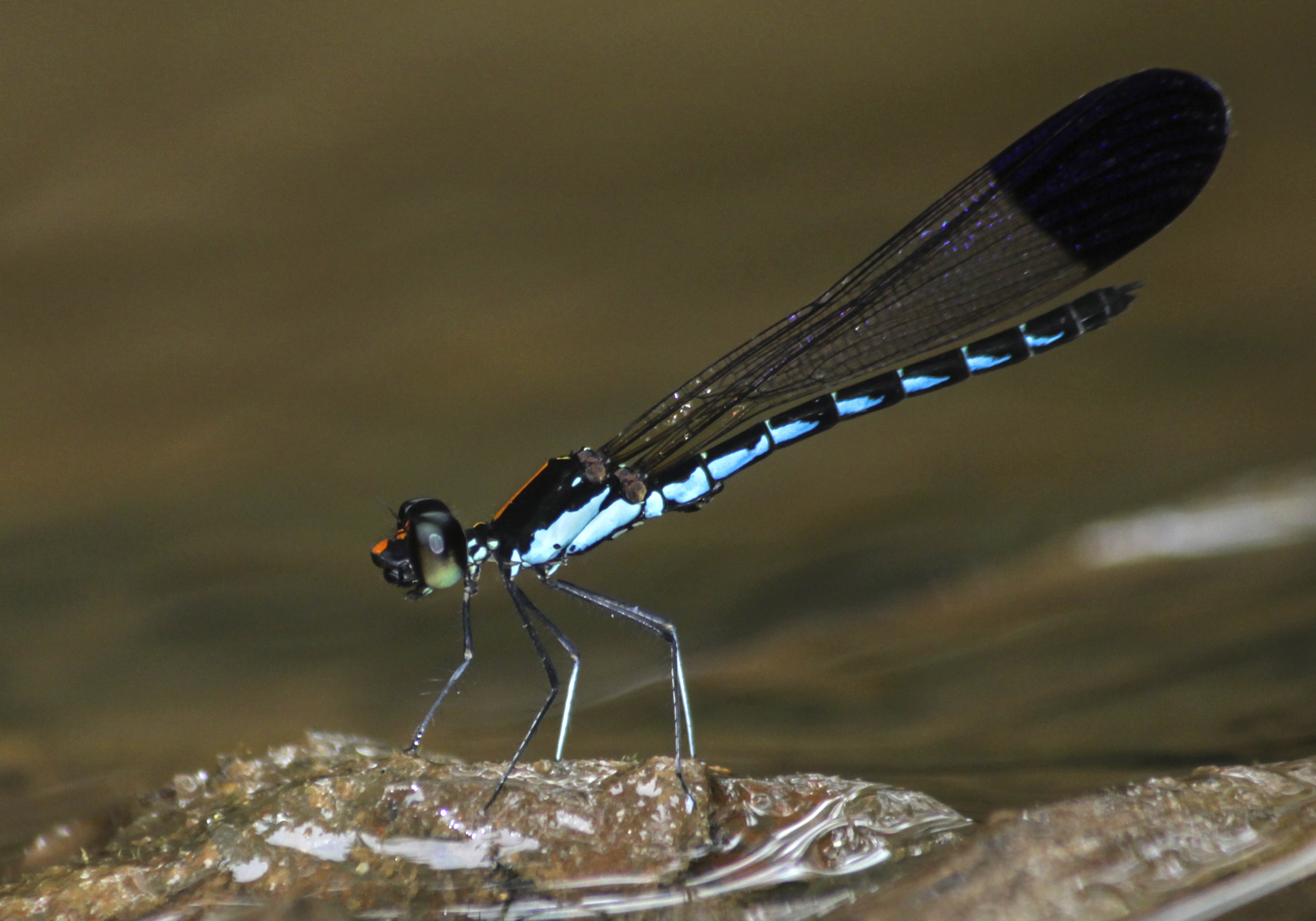
Conducted between February 2021 and March 2023, the study mapped “Odonata” populations, an order of insects comprising dragonflies and damselflies, across 144 sites spanning five states. The scale and spread of the survey make it one of the most extensive recent efforts to assess freshwater biodiversity in the Western Ghats, a 1,600-kilometre mountain chain along India’s west coast and a globally recognised biodiversity hotspot.
The research team, Dr. Pankaj Koparde (Assistant Professor, MIT-WPU Pune), Arajush Payra (PhD Scholar, MIT-WPU Pune), Amey Deshpande (MSc Student, MIT-WPU Pune), and Reji Chandran (Society for Odonate Studies, Kerala), undertook rigorous fieldwork across a wide range of freshwater habitats, including rivers, streams, waterfalls, ponds, lakes, and dams. Many of these locations were remote and difficult to access, with logistical challenges compounded by terrain and the need for official permissions.
Over the course of the study, the team recorded 143 distinct odonate species, including 40 species endemic to the Western Ghats. However, the overall count represents only around 65% of the species historically known from the region, an alarming gap that raises concerns about species decline and habitat degradation.
Odonates are highly sensitive to environmental changes because they depend entirely on freshwater ecosystems for reproduction. As a result, they are widely regarded as “indicator taxa,” meaning their presence, or absence, directly reflects the ecological health of water bodies. The missing species, researchers suggest, may be early indicators of deeper ecological stress.
The study points to multiple, intensifying threats across the Western Ghats. These include linear infrastructure development, hydropower projects, severe pollution, and large-scale land-use changes. Additional pressures such as unregulated tourism, recurring forest fires, and the growing impact of climate change are further fragmenting and degrading these ecosystems.
The conservation status of the species that were recorded also adds to the concern. While Three species, Elattoneura souteri, Protosticta sanguinostigma and Cyclogomphus ypsilon, are currently classified as “Vulnerable,” while most of the observed species fall under the “Data Deficient” and “Not Evaluated” category on the IUCN Red-List of Threatened Species, indicating significant gaps in scientific understanding.
The study also highlights variations across states. Maharashtra, where the highest number of sites (105) were surveyed, recorded 100 species, including 12 endemic ones. Kerala, despite fewer sampled sites (14), showed a high concentration of endemic diversity with 33 endemic species among 83 recorded. Karnataka (17 sites) recorded 64 species with 6 endemics, Goa (3 sites) documented 35 species including 4 endemics, while Gujarat (5 sites) recorded 18 species with no endemic species observed.
Reflecting on the findings, Dr. Pankaj Koparde emphasised the urgency of expanding research efforts. “This study is a result of one of the most extensive Odonata surveys across the Ghats. We see a south to north compositional turnover, which needs to be studied further. Our surveys could recover only 65% of known Odonata fauna of the Ghats, indicating plausible loss of species and habitats,” he said. He added that the research “adds value to current literature, fills an important gap, and lays the foundation for prioritising Odonata-rich areas for conservation.”
The 144-site survey establishes a critical baseline for future ecological monitoring in the Western Ghats. At the same time, it serves as a stark warning: without urgent and sustained efforts to address pollution, habitat loss, and ecosystem fragmentation, the region risks losing not just individual species, but the delicate freshwater systems they help sustain.
