


Swami Vivekananda Health Mission Society (SVHMS) is set to inaugurate its long-awaited ‘Kedarnath Dham Hospital’, driven by its motto ‘Nar Sewa, Narayan Sewa’, to serve humanity and God. The inauguration will take place on the auspicious occasion of Shukla Paksha Ekadashi, which is also the commencement date of the Char DhamYatra for 2026.
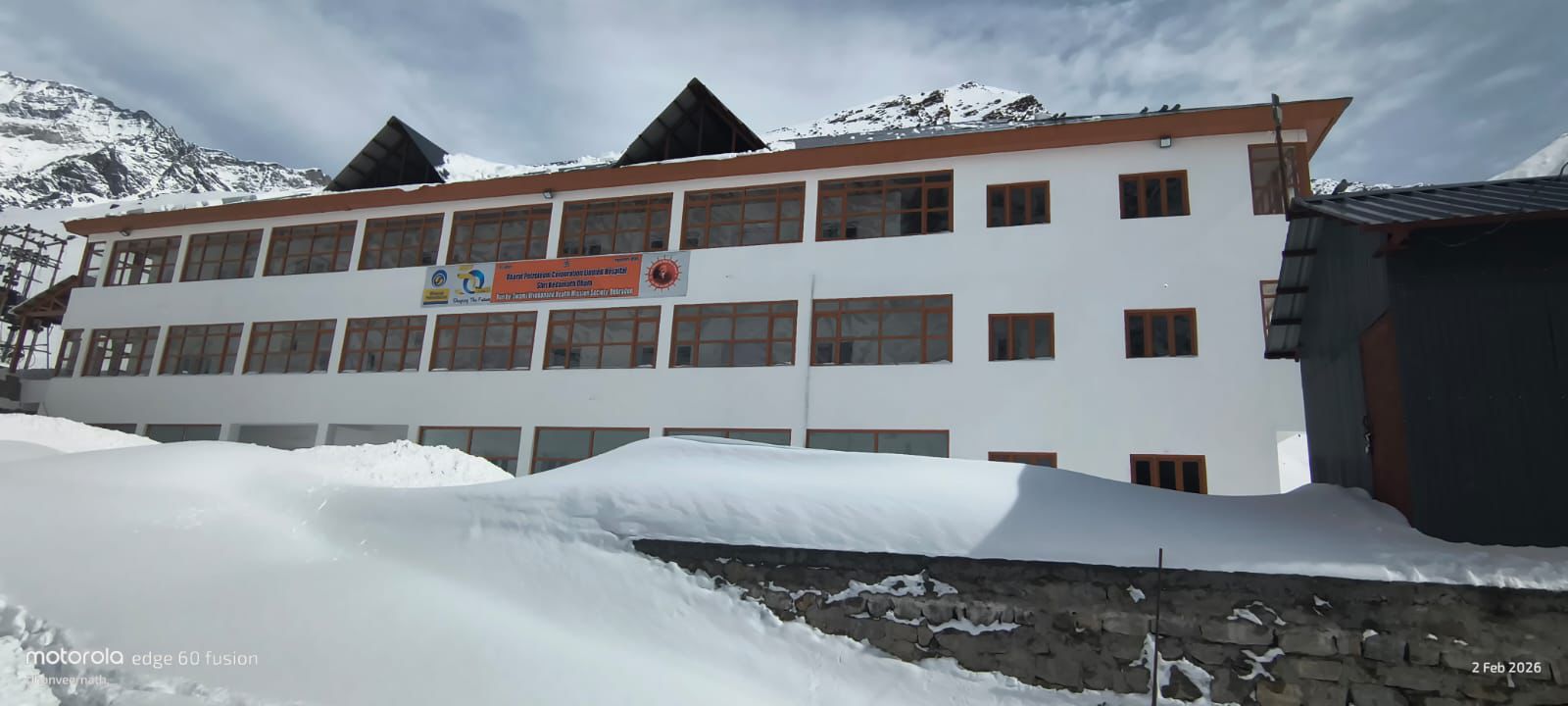
The Kedarnath Dham Hospital is located at an altitude of around 12,000 feet and will act as a significant healthcare facility for pilgrims undertaking one of India’s most challenging spiritual journeys. SVHMS’s facilities have been consistently serving 1,200-1,600 pilgrims, of which nearly 20 per cent are acute emergencies. The number remains constant even during the harsh weather conditions and logistical limitations. It not only provides medical care but also essentials such as hot water, tea and warm clothing to those who need it.
This charitable institution has continuously evolved to meet the growing healthcare demands in the region. What began on September 2, 2019, as a modest 8-bedded hospital to address high mortality rates and critical health challenges at such altitudes has now expanded into a 50-bed, fully equipped facility. Over 30 lakh individuals, including nearly 10 lakh pilgrims from India and abroad during the Char Dham Yatra alone, have been served by SVHMS and its dedicated staff.
Built over three years through the unwavering commitment of karyakartas, doctors, and the support of philanthropists and CSR initiatives such as BPCL, Gauriputra Estate Holders Pvt Ltd, Asclepius Wellness Foundation, Asclepius Wellness Pvt Ltd, and many other indivisible donors, the hospital stands as a testament to collective dedication and service. This upgraded facility will significantly strengthen emergency response and critical care services, particularly for altitude-related illnesses, cardiac conditions, and hypothermia, serving as a vital lifeline in one of the most demanding terrains.
Additionally, the institution has been consistently setting up medical camps and community health initiatives, especially addressing issues, including women’s health, cancer screening, and preventive care in remote mountainous regions. This support from SVHMS to society reflects how it is increasingly being recognised as a high-impact NGO, leading to many individuals and organisations considering it a meaningful source for donations that contribute to social service and humanitarian causes.
On the occasion of the upcoming expansion, Dr. Praveen Kumar Reddy, Director, Swami Vivekananda Health Mission Society, said,
“With the inauguration of Kedarnath Dham hospital, we aim to show our commitment to serve humanity first and foremost, especially in its most vulnerable moments. Building and operating a healthcare facility in such high-altitude and extreme-weather conditions not only displays an infrastructural achievement but also the collaborative efforts of our community, harbouring compassion and determination. With the Char Dham Yatra drawing millions of devotees, our mission is to ensure the safety of every pilgrim while taking care of them every step of the way.”
From its first, modest dispensary in Dharmawala near Dehradun to a network of multi-speciality charitable hospitals, SVHMS has had an inspiring journey by serving some of the most remote and inaccessible communities. While providing medical care, it also extends its contribution to society by creating opportunities for local employment and strengthening social infrastructure.
With the inauguration of the Kedarnath Dham hospital, SVHMS achieves another milestone in its mission to address healthcare gaps and brings significant solutions, especially for pilgrims and underserved communities in the mountainous terrains.
Swami Vivekananda Health Mission Society was founded in 2012 by a group of young doctors and philanthropists to deliver free and accessible healthcare across remote and mountainous areas, which have been underserved for far too long. The organisation has 14 charitable hospitals that are already operating across Uttarakhand, Uttar Pradesh, and Delhi, and now is transforming healthcare access along the Char Dham routes. By establishing hospitals at Badrinath, Kedarnath and Gangotri, the facility has reduced pilgrim fatalities by nearly 90 per cent.
