


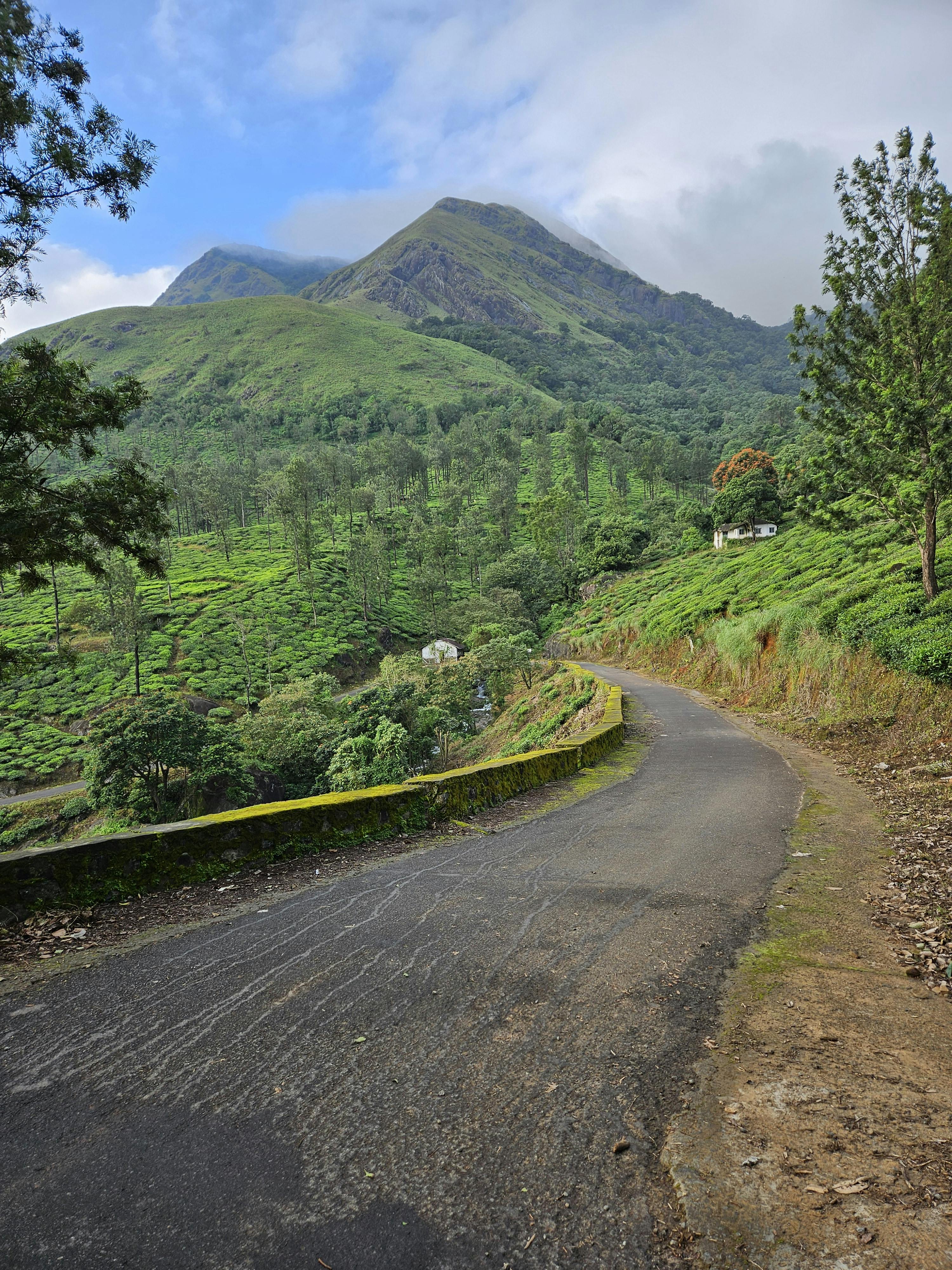
Why Mountains Matter More Than We Realise
Most people look at mountains and see beauty. That’s the surface. What they miss is the role these mountains quietly play in keeping the country stable—economically, environmentally, and even emotionally.
India’s major ranges—the Himalayas, Western Ghats, and Eastern Ghats—are not just geographical features. They are systems that support water, agriculture, livelihoods, and entire local economies.
They are not just natural assets—they are economic engines.
The Spiritual Economy Behind the Mountains
India’s connection with mountains has always been spiritual. People travel long distances not just for tourism, but for meaning, peace, and reflection.
But here’s what is often ignored—this spiritual movement creates a steady flow of economic activity.
Travel, accommodation, food, transport, and local businesses all depend on this continuous inflow of people. Unlike seasonal tourism, this is more consistent. It doesn’t depend entirely on trends.
So while the purpose may be spiritual, the impact is economic. Entire local communities survive on this cycle.
Water and Agriculture The Real Backbone
If you remove the mountains, you weaken India’s agriculture. It’s that simple.
The Himalayas feed major rivers that supply water across large parts of the country. Without this, farming at scale becomes difficult, if not impossible.
The Western Ghats influence rainfall patterns, which directly decide how crops grow, when they grow, and how much they produce.
And agriculture is not a small sector. It supports nearly 40 percent of India’s workforce. That means a large part of the country’s livelihood depends, indirectly, on mountain systems.
This is not just geography. This is economic stability.
Expanding Economic Activities Beyond Agriculture
Mountain economies are no longer limited to basic activities.
There is a gradual shift happening. Tourism is expanding beyond sightseeing into experiences. Local products, traditional crafts, and natural resources are finding new markets.
There is also growing interest in plant-based and herbal industries, which depend heavily on mountain biodiversity. These are not massive industries yet, but they are growing steadily.
The important shift is this—income sources are becoming more diverse. That reduces risk and creates more stability for people living in these regions.
Energy Generation and Infrastructure Development
Mountains also contribute in ways most people don’t think about.
Hydropower generation from Himalayan rivers supports energy needs. It feeds into the larger system that powers homes, industries, and cities.
At the same time, infrastructure is slowly improving. Roads, tunnels, and connectivity projects are making remote areas more accessible.
This does two things. It reduces isolation and increases economic activity. Goods move faster, services reach further, and local businesses get access to larger markets.
It may not look dramatic, but the impact is real.
A Hidden Advantage in Trade and Strategy
Mountains also play a role in how regions connect and trade.
They act as natural boundaries, but with improved infrastructure, they are also becoming corridors for movement and exchange. Better connectivity in these areas can influence trade routes and regional economic activity.
This is where geography starts influencing economics at a larger scale.
Environmental Protection Is Economic Protection
Mountains are not just supporting systems—they are protecting them. Forests in these regions regulate climate, protect soil, and maintain water cycles.
If this balance is disturbed, the impact shows up everywhere—crop failures, water shortages, and even economic losses.
Environmental stability is not separate from economic stability. It is directly connected.
The Cost of Neglect
Here’s the uncomfortable truth. Development in mountain regions is not always planned well.
Construction without understanding the terrain, deforestation, and climate changes are putting pressure on already fragile ecosystems.
When landslides increase or water systems become unstable, the cost is not limited to those regions. It affects supply chains, agriculture, and infrastructure.
Short-term gains creates long-term risks.
Mountains Are Not Just Landscapes
India’s mountain ranges are doing more than people realise.
They support agriculture, drive local economies, enable tourism, generate energy, and maintain environmental balance. They influence how people live, earn, and even think.
They are not just part of the country’s geography. They are part of its foundation.
The Way Forward
The question is not whether mountains are important. That is already clear.
The real question is how they are managed.
Growth is necessary, but it cannot come at the cost of stability. Infrastructure, tourism, and industry need to be balanced with sustainability.
Because once these systems weaken, rebuilding them is not easy.
Mountains don’t demand attention. They don’t make noise.
But they hold things together. And if they start to fail, the impact will not stay in the hills—it will spread across the entire country.
