


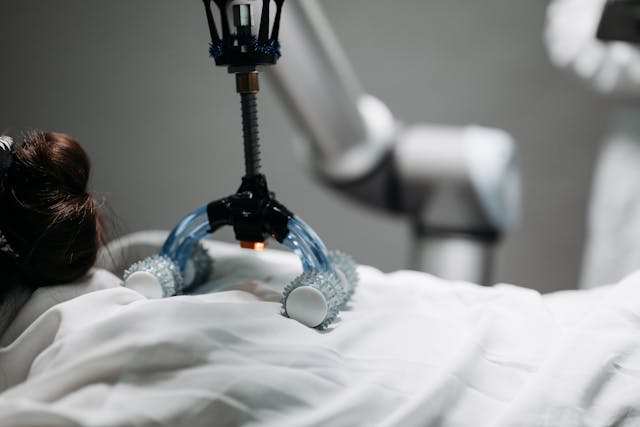
Automating routine tasks and improving patient care for a more efficient healthcare system
The healthcare industry is undergoing a quiet revolution. Hospitals and clinics are increasingly turning to technology to streamline operations, reduce administrative burdens, and enhance patient care. Among the most transformative innovations are robotic process automation (RPA) and artificial intelligence (AI)-driven workflows, which are reshaping how healthcare institutions operate on a daily basis.
Automating Routine Tasks with Robotics
Administrative work—such as billing, coding, and claims processing—is essential, but it can also be time-consuming and prone to human error. This is where robotic process automation comes in. RPA can handle repetitive tasks efficiently, performing them faster and more accurately than manual processes.
By automating these administrative functions, hospitals can reduce errors, accelerate revenue cycles, and free up staff to focus on patient care. This not only improves operational efficiency but also allows healthcare workers to spend more time on meaningful clinical activities rather than paperwork, improving both productivity and job satisfaction.
AI-Driven Workflows Enhance Care Coordination
Beyond RPA, AI-driven workflow systems are revolutionizing hospital management. AI can identify gaps in patient care, trigger timely follow-ups, and track the completion of critical interventions. In value-based care models—where providers are rewarded for outcomes rather than volume—these systems play a crucial role in improving quality and efficiency.
For example, AI agents can scan patient records to detect missed screenings or follow-ups and automatically alert care coordinators. This reduces denials, minimizes rework, and ensures that care protocols are consistently followed. The result is smoother workflows, better care delivery, and improved patient outcomes.
Benefits for Medical Staff and Patients
The integration of robotics and AI benefits both hospital staff and patients. For healthcare professionals, automation reduces the burden of repetitive tasks, allowing them to focus on clinical decision-making and patient interactions. This can significantly reduce stress and burnout, a major concern in the healthcare industry.
Patients benefit from more accurate billing, faster claims processing, and timely interventions. AI-supported workflows ensure that preventive care and follow-ups are not missed, leading to better health outcomes and a more seamless care experience. In essence, technology is enabling hospitals to deliver both faster and higher-quality care.
Streamlining Hospital Operations
At the organizational level, robotics and AI help hospitals operate more efficiently. Automated workflows improve resource allocation, ensuring that staff are available where they are needed most. AI analytics provide insights into patient trends, operational bottlenecks, and performance metrics, helping administrators make data-driven decisions.
By reducing administrative overhead and improving workflow efficiency, hospitals can manage costs better, increase throughput, and maintain high-quality patient care—even as patient volumes grow.
Supporting Value-Based Care
One of the most important contributions of RPA and AI is in value-based care, which prioritizes patient outcomes and cost-effectiveness over the sheer number of services provided. By ensuring that care gaps are addressed and administrative errors minimized, AI systems help hospitals meet quality benchmarks and optimize reimbursements.
Moreover, these technologies allow providers to focus on preventive care and chronic disease management rather than being bogged down by paperwork. The result is a healthcare system that is both patient-centered and financially sustainable.
Looking Ahead: The Future of Healthcare IT
The role of robotics and AI in healthcare is only expected to grow. From predictive analytics and intelligent scheduling to automated clinical decision support, hospitals will increasingly rely on technology to optimize operations and improve patient care.
However, these innovations are not about replacing humans—they are about enhancing human potential. By taking over repetitive administrative work, robotics and AI free medical professionals to focus on what truly matters: delivering compassionate, high-quality care.
Conclusion
Robotic process automation and AI-driven workflows are transforming hospital operations from the inside out. They improve efficiency, reduce errors, and enhance the patient experience, while also supporting staff by reducing administrative burden. For the healthcare system as a whole, these technologies lead to better resource utilization, stronger patient outcomes, and a more resilient infrastructure.
As hospitals embrace these innovations, the future of healthcare promises to be smarter, faster, and more patient-focused than ever before.